
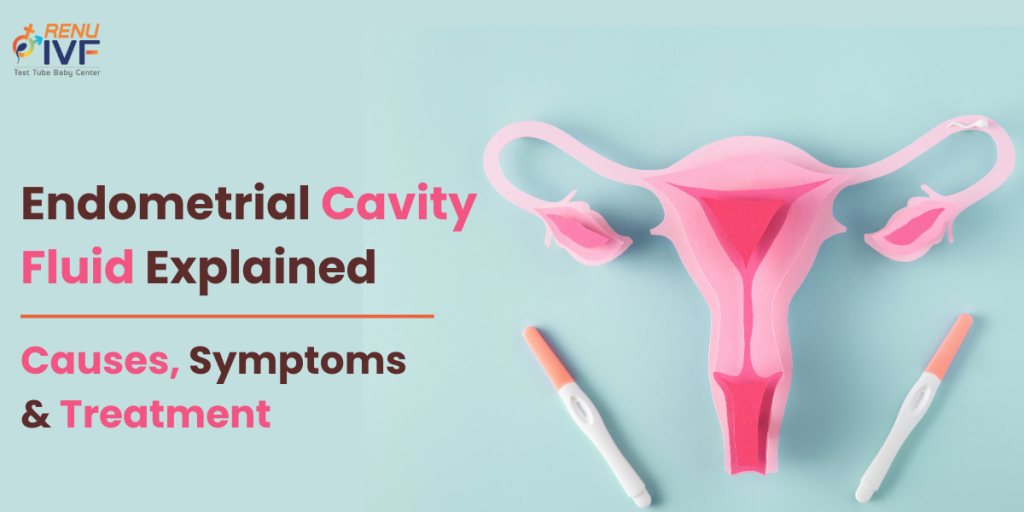
Every so often, while reviewing scans at Renu IVF, a woman walks in genuinely caught off guard by a term she’s never heard before: fluid in endometrial cavity. It’s not something most people discuss casually, nor something you’d expect your doctor to point out unless you’re trying to conceive. Yet this small pocket of fluid, barely a few millimetres in many cases, can spark a lot of questions — and understandably so. The uterus is the one place where precision matters most when you’re hoping for pregnancy.
This article attempts to break things down in a realistic way. Not just the medical explanation, but also what fertility specialists repeatedly observe in real practice. Think of it as a journalist’s deep-dive, shaped by conversations with experts from the leading Fertility clinic in Kanpur, Renu IVF.
The Endometrial Cavity: A Space That Matters More Than You Think
Inside the uterus lies a delicate space called the endometrial cavity in uterus, and it’s truly remarkable how much depends on this tiny, protected area. During each menstrual cycle, it prepares a fresh lining, anticipating an embryo. For many women, nothing unusual ever shows up during routine imaging. For others, a small accumulation of fluid may appear, and that discovery often becomes the starting point of a longer fertility investigation.
Unlike other reproductive issues that come with obvious symptoms, fluid in this cavity is sneaky. Sometimes it’s silent. Sometimes it comes with vague discomfort. The significance isn’t the fluid itself but what it points toward beneath the surface.
Fluid in Endometrial Cavity Causes-
When sitting down with specialists at Renu IVF, one thing becomes clear quickly: there is no single universal cause of fluid in endometrial cavity. Instead, it behaves like a clue—a hint that something somewhere in the reproductive system may need attention. Here are the causes doctors most frequently identify, explained in a way that doesn’t demand a medical degree to understand.
Hydrosalpinx
Perhaps the most talked-about cause. When fallopian tubes are blocked and fill with watery fluid, that fluid can seep into the uterus. Doctors often describe this as “unwelcoming” fluid because it can disturb embryo implantation. In IVF cases, hydrosalpinx is treated proactively to protect pregnancy chances.
Inflammation or Infection
An inflamed uterine lining (endometritis) doesn’t always scream for attention. Sometimes the only giveaway is this fluid. Women are often surprised to learn they may have had a lingering infection for months without realizing it.
Hormone Imbalance
The lining of the uterus responds dramatically to hormones. If progesterone is too low or estrogen behaves unpredictably, you may see more fluid than usual during certain phases of the cycle.
Structural Blockages
Polyps, fibroids, or even a slightly narrowed cervix can trap moisture inside the uterus. A simple obstruction can shift how the uterus drains.
Endometriosis
This condition deserves a category of its own. It’s far more common than many realize, and to the question — can endometriosis cause infertility? Absolutely, yes. In fact, it’s one of the leading causes of delayed conception. The inflammation and hormonal disruption associated with endometriosis can encourage fluid buildup inside the uterus, directly affecting implantation.
Symptoms: When the Body Tries to Speak
Some women feel completely normal and only learn about the fluid during a scan. Others report issues, though the symptoms are often subtle. When asking specialists what patients most often describe, the list usually includes:
- A watery or unexpected discharge
- A mild heaviness in the pelvic area
- Irregular cycles
- Painful periods or discomfort that doesn’t “feel like the usual”
- Trouble conceiving despite trying for months
- Occasional bloating or pelvic tugs
These symptoms overlap with a variety of conditions, which is why doctors look deeper instead of jumping to conclusions about what are the symptoms of an endometrial cavity problem.
How Does This Fluid Affect Fertility?
Here’s where fertility specialists tend to get a bit more serious. The uterus may be a small organ, but the conditions inside it must be nearly perfect for an embryo to embed itself comfortably. Fluid inside the cavity can disturb this harmony.
It may dilute the natural chemicals that uterus produces to welcome an embryo. It may interfere with how the lining develops. In IVF, it might even physically wash away the embryo before it has a chance to attach.
And perhaps most important: fluid often signals another issue — like hydrosalpinx or endometriosis — that requires attention.
Diagnosing the Problem: How Clinics Approach It
At Renu IVF, diagnosis is not treated as a single test but a layered process. Doctors look for patterns. They compare scans across cycles. They check whether the fluid comes and goes or stays consistently. Below are the tools most often used:
Ultrasound
The starting point. It reveals whether the fluid is thin, thick, localized, or widespread.
Hormone Tests
Estrogen, progesterone, thyroid hormones — all play a role. When levels shift, the uterus responds.
Infection Screening
Simple tests sometimes uncover lingering inflammation.
Hysteroscopy
A small camera gives a clear view inside the uterus. Journalists who’ve witnessed this procedure often remark how surprisingly simple yet revealing it is.
Tube Evaluation
Since hydrosalpinx is a major concern, doctors rarely skip checking the fallopian tubes when fluid is persistent.
Fluid in Endometrial Cavity Treatment: What Doctors Recommend
Treatment isn’t just about removing the fluid — it’s about addressing why it’s there. Specialists at Renu IVF often emphasize this difference. Here are the most common fluid in endometrial cavity treatment approaches:
Antibiotics
When infection is the culprit, this is often the easiest solution.
Hormonal Therapy
This may regulate the lining, especially if the issue only appears during specific cycle phases.
Laparoscopy
For conditions like endometriosis or hydrosalpinx, minimally invasive surgery often makes a meaningful difference. Many women at Renu IVF have shared how their symptoms changed dramatically after this procedure.
Cervical Correction
Sometimes the cervix needs gentle widening to restore normal uterine drainage.
Pre-IVF Uterine Preparation
In certain IVF cases, specialists remove the fluid during the cycle to protect the embryo. But long-term success requires addressing the root cause.
Endometriosis Treatment
Many women searching online for endometriosis treatment don’t realize how personalized it becomes in a clinical setting. Medication, surgery, hormonal balancing — the plan depends entirely on how deeply the condition affects the pelvis and uterus.
Can Lifestyle Cause Endometriosis?
Not directly — and doctors usually clarify this quickly. But lifestyle can influence how endometriosis behaves. Chronic stress, poor sleep, inflammatory diets, heavy caffeine intake, and hormonal disruption can aggravate symptoms.
A healthier lifestyle won’t cure endometriosis, but it can certainly make management easier.
What Is the Best Medication for Endometriosis?
There’s simply no universal answer. Some respond well to progesterone-based therapies. Others need GnRH agonists. Some rely on pain medication; others require surgery before medication becomes effective. Fertility goals heavily influence this choice.
FAQs
1. What causes fluid in the endometrial cavity?
Most often hydrosalpinx, hormonal imbalance, infection, endometriosis, fibroids, polyps, or cervical blockage.
2. How is fluid in the endometrial cavity treated?
Treatment ranges from antibiotics and hormone therapy to laparoscopy and drainage, depending on the cause.
3. Can lifestyle cause endometriosis?
Lifestyle doesn’t cause it, but unhealthy habits can worsen flare-ups.
4. What is the best medication for endometriosis?
It varies — progesterone, GnRH agonists, birth control pills, and pain medications are common options.
5. What are the symptoms of an endometrial cavity?
Some experience watery discharge, irregular periods, pelvic pressure, or infertility; many have no symptoms at all.
Final Thoughts
The presence of fluid in endometrial cavity is not a diagnosis by itself — it’s a message. And when interpreted correctly by experienced clinicians, it often leads to answers that have been long overdue. At Renu IVF, specialists work closely with each patient to identify the cause, develop a tailored plan, and restore the conditions necessary for a healthy pregnancy.
If you’ve recently received this finding on a scan or suspect something may be off, consulting a specialist — ideally at a trusted centre like Renu IVF — can bring clarity faster than you might expe