
What Is the Follicular Phase?
If you have ever wondered what is the follicular phase of the menstrual cycle here is the simplest answer:
The follicular phase is the first phase of your menstrual cycle. It starts on Day 1 of your period and ends when you ovulate. During this time, your body is preparing to release an egg.
The word “follicular” comes from “follicle” small sacs in your ovaries that hold your eggs. Each month, several follicles start to grow, but usually only one becomes dominant and releases an egg at ovulation.
This phase is also called the proliferative phase because your uterine lining grows and thickens during this time to prepare for a possible pregnancy.
How Long Is the Follicular Phase?
One of the most common questions is how long does the follicular phase last?
- The follicular phase typically lasts 10 to 17 days.
- The average is around 13 to 14 days.
- It ends the moment you ovulate.
Because ovulation timing can vary, the follicular phase is the most variable phase of your cycle. Your luteal phase (after ovulation) is usually fixed at 12–14 days, but your follicular phase can change month to month.
| Cycle Type | Follicular Phase Length |
| Short cycle (21 days) | Around 7–9 days |
| Average cycle (28 days) | Around 13–14 days |
| Long cycle (35+ days) | Around 18–21 days |
So if you have a long cycle, you likely have a long follicular phase this is very common and usually nothing to worry about.
When Is the Follicular Phase?
The follicular phase of the menstrual cycle starts on Day 1 the first day of your period and continues until ovulation.
Here is a simple breakdown of the full menstrual cycle:
| Phase | Days (Average 28-day cycle) |
| Follicular Phase | Day 1 – Day 13/14 |
| Ovulation | Day 14 |
| Luteal Phase | Day 15 – Day 28 |
| Period (new cycle begins) | Day 1 again |
So the follicular phase after your period technically overlaps your period is happening during the early days of your follicular phase.
What Happens in the Follicular Phase?
Here is what is going on inside your body during this phase, in simple terms:
Step 1 — Your brain sends a signal Your pituitary gland releases a hormone called FSH (Follicle Stimulating Hormone). This hormone tells your ovaries to start growing follicles.
Step 2 — Follicles start to grow Several follicles begin to develop in your ovaries. Each follicle contains one egg. Follicles grow approximately 1 to 2 mm per day during the stimulated phase.
Step 3 — One follicle becomes dominant Out of all the follicles growing, usually only one becomes the “dominant follicle.” This is the one that will release an egg at ovulation. On average, one dominant follicle develops per cycle.
Step 4 — Estrogen rises As follicles grow, they produce estrogen. Rising estrogen makes you feel good, energetic, and clear-headed.
Step 5 — Uterine lining thickens Estrogen also helps your uterine lining (endometrium) grow thick and ready just in case a fertilized egg needs to implant.
Step 6 — Ovulation is triggered When estrogen reaches a peak, it signals the brain to release LH (Luteinizing Hormone). This LH surge triggers ovulation the dominant follicle bursts and releases the egg.
How Do You Feel During the Follicular Phase?
This is one of the best phases of your cycle to be in. Most women feel noticeably better during the follicular phase compared to the days just before their period.
Here is how you typically feel during the follicular phase:
- More energy and motivation
- Better mood and positive thinking
- Clearer mind and better focus
- More social and outgoing
- Higher confidence
- Increased creativity
- Better sleep quality
- More comfortable in your body
This is because estrogen your “feel good” hormone is rising steadily throughout this phase. Emotions during the follicular phase tend to be more stable and upbeat compared to the premenstrual phase.
Early follicular phase (during your period, Days 1–5) can still feel a bit heavy due to cramping and fatigue. But as your period ends and you enter the mid follicular phase, energy picks up quickly.
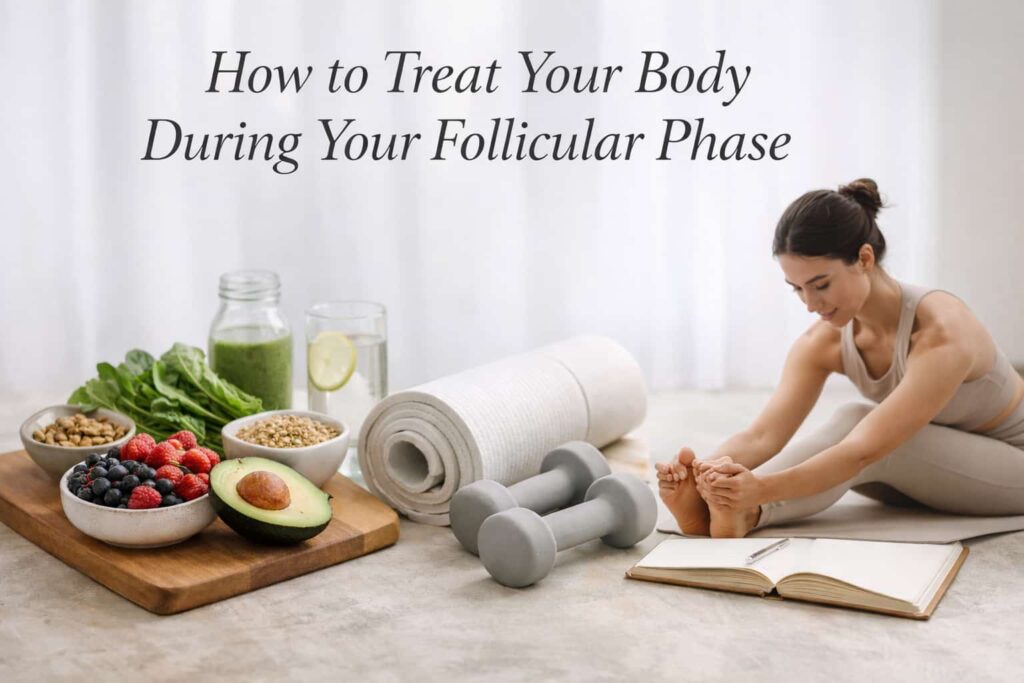
Follicular Phase Self Care — How to Treat Your Body
This section is the heart of this blog. Here is exactly what to do during your follicular phase to feel your absolute best and support your body naturally.
1. Eat the Right Foods
What to eat during the follicular phase matters more than most people realize. Your body needs specific nutrients to support follicle growth and rising estrogen levels.
Best foods to eat during the follicular phase:
| Food Group | Examples | Why It Helps |
| Lean Proteins | Eggs, chicken, lentils, tofu | Supports follicle development |
| Fermented Foods | Yogurt, kimchi, kefir | Supports healthy estrogen metabolism |
| Zinc-rich Foods | Pumpkin seeds, chickpeas, nuts | Supports egg quality and follicle growth |
| Iron-rich Foods | Spinach, red meat, beans | Replaces iron lost during period |
| Complex Carbs | Oats, sweet potato, quinoa | Steady energy throughout the day |
| Vitamin E Foods | Almonds, sunflower seeds, avocado | Supports uterine lining growth |
| Cruciferous Veggies | Broccoli, cabbage, Brussels sprouts | Helps body process estrogen properly |
| Fresh Fruits | Berries, oranges, pomegranate | Antioxidants for egg health |
Foods to reduce during this phase:
- Processed sugar can spike inflammation
- Alcohol disrupts hormone balance
- Excess caffeine can affect cortisol and estrogen
Simple follicular phase meal idea: Oats with berries and pumpkin seeds for breakfast. A spinach and chickpea salad for lunch. Grilled chicken or tofu with roasted broccoli and sweet potato for dinner.
2. Move Your Body More
The follicular phase is the best time to exercise. Your energy is rising, your body is strong, and recovery is faster.
What workouts work best during the follicular phase:
- Strength training — your muscles respond better to resistance training during this phase
- Running or cardio — your stamina is higher
- Yoga and Pilates — great for flexibility and body awareness
- Cycling, hiking, swimming — enjoy outdoor or high-energy activities
- Dance classes — social and fun matches your elevated mood
Your pain tolerance is also higher during this phase, so pushing yourself a little more is fine. However, always listen to your body especially during the early follicular phase when your period is ending.
3. Prioritise Sleep
Even though you have more energy during this phase, sleep is still essential for hormone balance.
Follicular phase self care tips for sleep:
- Aim for 7–9 hours every night
- Keep a consistent sleep schedule
- Avoid screens 30–60 minutes before bed
- A cool, dark room helps you sleep deeper
- Rising estrogen can sometimes make sleep lighter a magnesium supplement before bed can help
Good sleep during the follicular phase directly supports healthy follicle development and estrogen production.
4. Support Your Skin
Why do I break out during the follicular phase? this is a question many women ask.
During the early follicular phase, your skin might still be dealing with hormonal changes from your period. As estrogen rises, skin usually clears up and starts to glow. But in the transition days, breakouts can happen.
Skin care during the follicular phase:
- Keep your skin clean and well-hydrated
- Use a gentle exfoliator 1–2 times per week cell turnover improves during this phase
- Apply SPF daily rising estrogen can make skin slightly more sensitive to sun
- Drink plenty of water
- Add Vitamin C serum works well when estrogen is rising
- Reduce heavy, pore-clogging products
Your skin usually looks its best by mid to late follicular phase this is when that natural “glow” appears.
5. Use Your Mental Energy Wisely
Your brain is sharper during this phase. Rising estrogen improves memory, verbal skills, and creative thinking.
What to do during the follicular phase mentally:
- Start new projects or ideas
- Have important conversations or presentations
- Learn something new your brain absorbs information faster
- Set goals for the month ahead
- Brainstorm and plan this is your most creative time
- Social meetings, networking, dates your confidence is naturally higher
Mood during the follicular phase is generally positive and outward-facing. Use this energy well it is a natural gift your body gives you every month.
6. Manage Stress
Even though you feel better during this phase, stress still affects your hormones. High cortisol (stress hormone) can disrupt estrogen and delay ovulation, which would shorten your follicular phase or cause a prolonged follicular phase.
Stress management tips:
- Morning walks in sunlight (regulates cortisol naturally)
- Journaling or meditation even 10 minutes helps
- Breathwork exercises
- Reduce over-scheduling during this phase
- Say no to things that drain your energy
- Spend time with people who uplift you
7. Stay Hydrated
As estrogen rises and your body becomes more active, hydration becomes very important.
- Drink at least 2–3 litres of water per day
- Add electrolytes if you are exercising heavily
- Herbal teas like spearmint, raspberry leaf, or green tea are great during this phase
- Reduce fizzy drinks and excess salt they cause bloating
8. Consider Supportive Supplements
Always check with your doctor before starting supplements. But here are some that many women find helpful during the follicular phase:
| Supplement | Benefit |
| Folate / Folic Acid | Essential for egg health and early pregnancy |
| Vitamin D | Supports follicle development |
| Coenzyme Q10 (CoQ10) | Improves egg quality |
| Iron | Replaces what is lost during period |
| Zinc | Supports healthy follicle growth |
| Omega-3 Fatty Acids | Reduces inflammation, supports hormones |
| Magnesium | Helps sleep and reduces stress |
At Renu IVF, our specialists can recommend a personalised supplement plan based on your fertility goals and hormone levels.
Can You Get Pregnant During the Follicular Phase?
Yes you can get pregnant during the follicular phase, but only toward the end of it, around ovulation.
Here is how it works:
- Sperm can survive inside the body for up to 5 days.
- If you have unprotected sex during the late follicular phase (a few days before ovulation), sperm can still be present when the egg is released.
- This is actually one of the best times to try to conceive.
So the answer to can you get pregnant on your follicular phase is yes, especially in the days just before ovulation.
If you are trying to get pregnant, the follicular phase is the time to:
- Track your LH surge with an ovulation test
- Have regular intercourse every 1–2 days as ovulation approaches
- Monitor your cervical mucus it becomes clear and stretchy like egg white as ovulation gets closer
Follicular Phase and Pregnancy — What Is the Connection?
The follicular phase and pregnancy are closely linked. A healthy follicular phase means:
- Good quality follicles are growing
- Estrogen is rising properly
- The uterine lining is getting thick enough for implantation
- Ovulation is likely to happen on time
A prolonged follicular phase (longer than 21 days) may mean ovulation is delayed. A shortened follicular phase (less than 10 days) may not give the follicle enough time to mature properly. Both can affect fertility.
If your follicular phase is consistently too long or too short, it is worth speaking to a fertility specialist.
How to Lengthen or Shorten the Follicular Phase
How to lengthen the follicular phase (if it is too short):
- Reduce stress
- Eat more nutrient-dense foods
- Get enough sleep
- Avoid over-exercising
- Check thyroid function (thyroid issues can shorten cycles)
- Speak to your doctor about hormone support
How to shorten the follicular phase (if it is too long):
- Manage stress effectively
- Maintain a healthy body weight
- Check for PCOS a very common cause of long follicular phases
- Acupuncture has shown some benefit in regulating cycle length
- Medical support may be needed – speak to Renu IVF
How to increase follicle size naturally:
- Eat folate-rich foods (leafy greens, lentils)
- Take CoQ10 and Vitamin D supplements
- Stay well-hydrated
- Reduce alcohol and smoking
- Get adequate sleep
Early vs. Late Follicular Phase — What Is the Difference?
| Early Follicular Phase | Late Follicular Phase | |
| Days | Day 1–7 | Day 8 to ovulation |
| How you feel | Period symptoms, low energy | High energy, confident, social |
| Hormones | FSH rising, estrogen low | Estrogen peaking |
| Skin | May still be breaking out | Clearer, glowing |
| Exercise | Light to moderate | High intensity is fine |
| Fertility | Low | High — approaching ovulation |
Early follicular phase symptoms include mild cramping, fatigue, and low motivation as your period winds down. Late follicular phase symptoms feel like the opposite high energy, good mood, and a sense of confidence.
What Comes After the Follicular Phase?
After the follicular phase comes ovulation when the dominant follicle releases a mature egg. This egg travels down the fallopian tube and can be fertilized by sperm.
After ovulation, you enter the luteal phase the second half of your cycle. During this phase, the empty follicle transforms into something called the corpus luteum, which produces progesterone to prepare the uterus for pregnancy.
If pregnancy does not occur, progesterone drops, the uterine lining sheds, and your period begins starting the whole cycle again with a new follicular phase.
Final Words — Listen to Your Body
Your menstrual cycle is not just about your period. Each phase including the follicular phase is your body giving you information and energy to use.
When you understand what the follicular phase means and how to care for yourself during it, you feel more in control of your health, your energy, and your fertility.
At Renu IVF, we help women understand their cycles, their hormones, and their fertility with care, honesty, and expert support. Whether you are trying to conceive, planning for the future, or simply wanting to understand your body better we are here for you.
📞 Book a consultation with Renu IVF today and take the first step toward understanding your cycle and supporting your fertility the right way.