

Nausea and vomiting are common in the early months of pregnancy. This is usually called morning sickness, but the severity of symptoms can vary from woman to woman. When vomiting becomes excessive and persistent, the woman is unable to hold down food or fluids, weight loss occurs, and dehydration develops, this is called Hyperemesis Gravidarum (HG). It is a much more severe condition than normal morning sickness, and in some cases may require medical treatment or hospital admission. Hyperemesis gravidarum affects approximately 1–3% of pregnancies.
What Is Hyperemesis Gravidarum?
Hyperemesis Gravidarum is a condition of severe nausea and vomiting during pregnancy. In normal morning sickness, a woman may experience nausea or vomiting, but she is usually able to keep down some food and fluids, and symptoms gradually improve. In HG, vomiting can be so severe that the woman vomits repeatedly, finds it difficult to even drink water, has reduced and dark urine, feels weakness and dizziness, and also loses weight. According to ACOG, HG can commonly be diagnosed in the context of significant weight loss especially around 5% of pre-pregnancy weight along with dehydration or related problems.
This condition should not be dismissed by simply saying “vomiting happens in pregnancy anyway.” Early treatment is important because prolonged vomiting can lead to dehydration, electrolyte imbalance, and nutritional deficiency.
Difference Between Normal Morning Sickness and Hyperemesis Gravidarum
| Normal Morning Sickness | Hyperemesis Gravidarum |
| Nausea/vomiting is relatively manageable | Vomiting can be severe and frequent |
| Woman is usually able to keep down some food and fluids | Difficult to hold down food and fluids |
| Usually no severe dehydration | High risk of dehydration |
| Usually no major weight loss | Significant weight loss possible |
| Daily activities mildly affected | Daily life seriously affected |
| Symptoms usually improve in early weeks of pregnancy | Symptoms can continue for weeks or months |
| Home care is usually sufficient | May need medicines, IV fluids, or hospital treatment |
Normal pregnancy sickness commonly improves around 12–20 weeks, although in some women symptoms may last longer. In HG, symptoms can continue even after 20 weeks, and in some severe cases may remain until later stages of pregnancy.
What Causes Hyperemesis Gravidarum?
The exact single cause of hyperemesis gravidarum is not clearly established yet. Major hormonal changes occur during pregnancy, and these hormonal changes may play a role in severe nausea and vomiting. In some women, sensitivity to smell and taste also increases due to pregnancy hormones, which is why certain foods or smells can trigger vomiting.
Some factors can increase the risk of HG:
- History of severe nausea or vomiting in a previous pregnancy.
- Mother or sister having a history of severe vomiting in pregnancy.
- Twin or multiple pregnancy.
- History of motion sickness or migraine.
- Increased sensitivity to certain hormonal changes.
- Having had Hyperemesis Gravidarum in a previous pregnancy.
If a woman has had HG in a previous pregnancy, the risk in the next pregnancy is comparatively higher. So it’s useful to inform the doctor about previous history while planning a pregnancy.
Symptoms of Hyperemesis Gravidarum
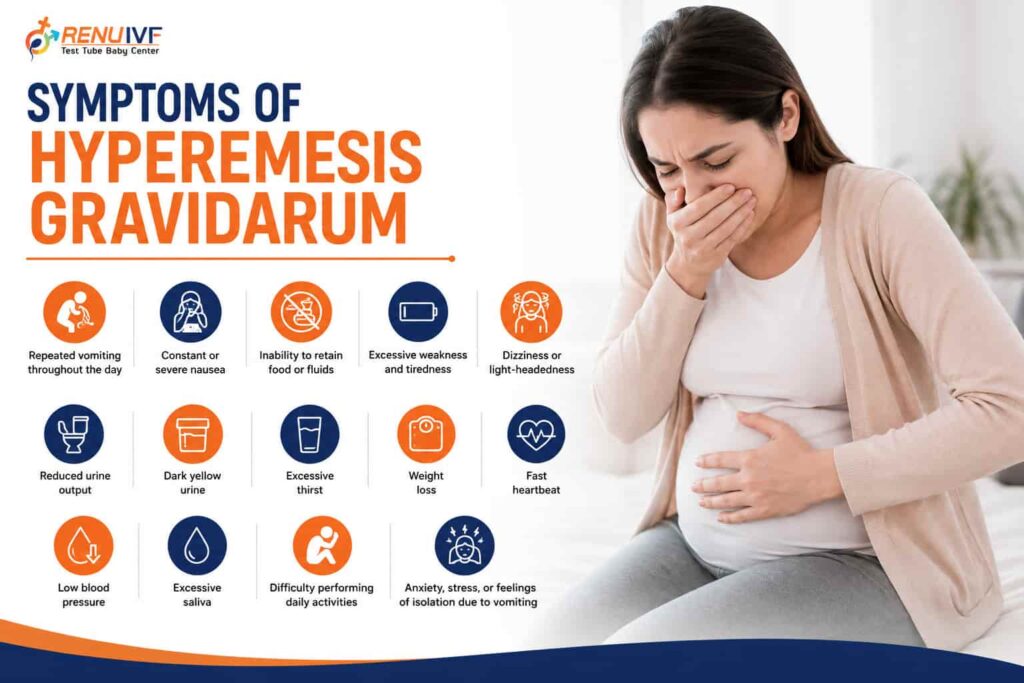
The most important symptom of HG is severe and persistent vomiting, but along with this, symptoms of dehydration and nutritional deficiency can also develop.
Common symptoms include:
- Repeated vomiting throughout the day.
- Constant or severe nausea.
- Inability to retain food or fluids.
- Excessive weakness and tiredness.
- Dizziness or light-headedness.
- Reduced urine output.
- Dark yellow urine.
- Excessive thirst.
- Weight loss.
- Fast heartbeat.
- Low blood pressure.
- Excessive saliva.
- Difficulty performing daily activities.
- Anxiety, stress, or feelings of isolation due to vomiting.
Signs of dehydration should not be ignored. If urine output is very low, urine is dark, fluids aren’t staying down, or there is dizziness/fainting on standing, medical assessment is necessary.
When Should You Contact a Doctor Immediately?
Vomiting during pregnancy isn’t always considered an emergency, but certain warning signs demand medical attention. If a pregnant woman cannot keep down even water, urine output is very low, there’s severe dizziness, rapid heartbeat, or noticeable weight loss, she should contact a doctor promptly.
If vomiting is accompanied by abdominal pain, fever, severe headache, or unusual symptoms, the doctor may also need to rule out other possible medical causes. Nausea and vomiting in pregnancy can sometimes be related to other conditions, such as infection, thyroid problems, gallbladder disease, or gastrointestinal problems.
How Is Hyperemesis Gravidarum Diagnosed?
HG isn’t diagnosed just based on how many times vomiting has occurred. The doctor evaluates pregnancy history, symptoms, weight change, hydration status, and overall health. Urine and blood tests may also be done as needed.
Assessment may include:
- Weight check.
- Blood pressure and pulse check.
- Dehydration assessment.
- Urine test.
- Blood tests for electrolytes and other abnormalities.
- Liver function assessment when required.
- Ruling out other causes of vomiting.
The doctor assesses the severity of symptoms to decide whether home treatment is sufficient or IV fluids and hospital-based care are needed.
Treatment of Hyperemesis Gravidarum
The main goal of treatment is to control vomiting, correct dehydration, and provide adequate nutrition to the mother and baby. Treatment varies according to the severity of symptoms.
1. Fluids and Hydration
If a woman is unable to drink fluids or has become dehydrated, IV fluids may be given. Through an IV drip, the body can be provided with fluids and required electrolytes. In severe cases, hospital treatment may be needed.
2. Anti-Vomiting Medicines
The doctor may prescribe anti-sickness medicines that are safe to use during pregnancy. Vitamin B6 and doxylamine are commonly considered options, and in severe symptoms, other antiemetic medicines may also be prescribed by the doctor depending on the situation. No anti-vomiting medicine should be started on your own during pregnancy.
3. Diet and Eating Pattern
If vomiting is manageable, small frequent meals instead of large meals can be helpful. An empty stomach can worsen nausea in some women. Bland foods, crackers, toast, rice, bananas, and other easily tolerated foods can be tried.
Helpful approaches:
- Don’t eat too much food at once.
- Have small meals frequently.
- Prioritize whatever food is tolerable.
- Avoid strong smells and known triggers.
- Take fluids in small sips frequently.
- Try to maintain adequate nutrition during pregnancy.
ACOG also suggests measures like small frequent meals, bland foods, adequate fluids, and avoiding trigger smells.
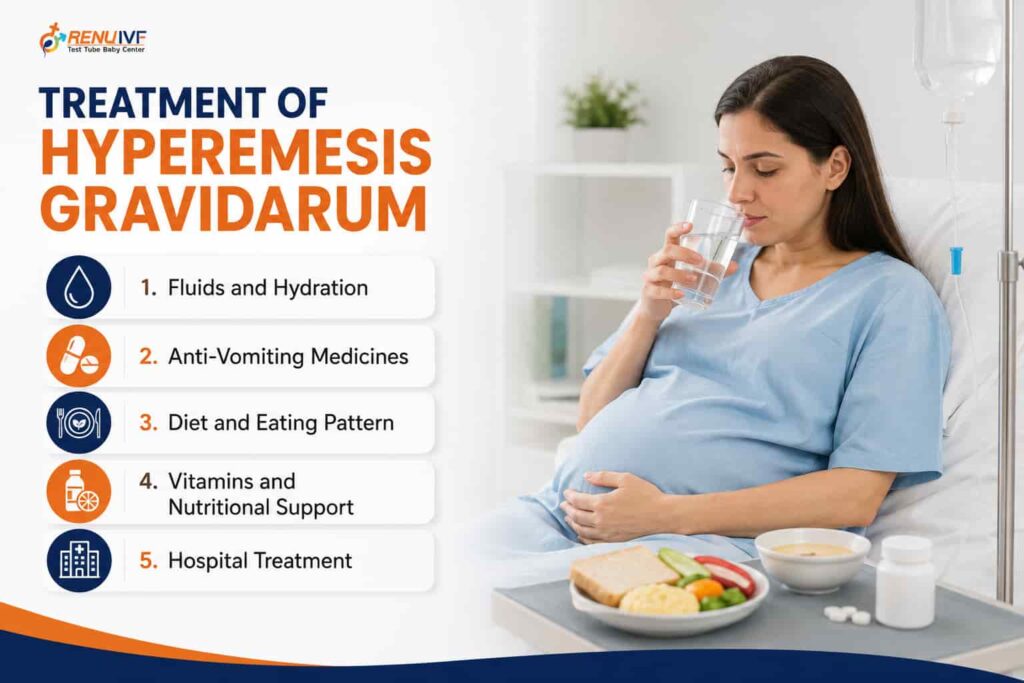
4. Vitamins and Nutritional Support
Long-lasting vomiting can lead to nutritional deficiencies. The doctor may recommend prenatal vitamins and specific vitamin supplementation. In cases requiring prolonged vomiting and IV hydration, thiamine (vitamin B1) supplementation can be particularly important because prolonged vomiting carries a risk of rare but serious neurological complications.
5. Hospital Treatment
If vomiting isn’t controlled despite medicines, the woman is severely dehydrated, weight continues to decrease, or food and fluids can’t be maintained, hospital admission may be needed. In the hospital, IV fluids, vitamins, anti-vomiting medicines, and monitoring can be given. In cases of severe prolonged nutritional problems, feeding support may also be considered.
What Should You Eat With Hyperemesis Gravidarum?
Every woman’s triggers are different, so a single diet isn’t suitable for everyone. The goal should be to take small quantities of whatever food is comfortably tolerated.
| Food/Approach | How It Can Help |
| Dry crackers/toast | Helps avoid an empty stomach |
| Banana/rice | Generally easy-to-digest options |
| Yogurt/curd | Can provide protein if tolerated |
| Nuts/seeds | Can provide calories/protein in small quantities |
| Ginger-containing foods/drinks | Can reduce nausea in some women |
| Small frequent meals | Easier to tolerate compared to large meals |
| Small sips of fluids | Can help maintain hydration |
If the smell or taste of a particular food is triggering vomiting, it may be practical to avoid it temporarily.
Hyperemesis Gravidarum Recovery Time: How Many Days Does It Take to Recover?
Recovery time is different for every woman. So it wouldn’t be correct to state a fixed recovery period for HG. Normal pregnancy sickness commonly improves by 12–20 weeks, but in HG, symptoms can last longer. Some women see significant improvement around 20 weeks, while in others symptoms can continue into later months of pregnancy. Rarely, severe symptoms can persist even until delivery.
After treatment starts, dehydration and vomiting can improve relatively quickly, but overall recovery depends on how severe the vomiting is, how much weight loss has occurred, whether there are nutritional deficiencies, and how effectively symptoms are controlled with medicines.
To Improve Recovery
- Take doctor-prescribed medicines regularly.
- Don’t ignore signs of dehydration.
- Keep taking fluids in small sips if tolerated.
- Avoid long gaps between meals.
- Identify and avoid triggering smells and foods.
- Get adequate rest.
- Report weight loss or worsening vomiting to the doctor.
- Don’t stop or change your medicines on your own.
Is Hyperemesis Gravidarum Dangerous for the Baby?
HG doesn’t mean the baby will automatically be unhealthy. With proper treatment and monitoring, many women can continue a healthy pregnancy. But severe untreated vomiting can lead to dehydration, nutritional deficiency, and significant weight loss. Significant maternal weight loss can, in some cases, affect the baby’s birth weight. This is why it’s important to treat severe symptoms at an early stage.
If you’re experiencing severe vomiting in pregnancy and also have fertility or previous pregnancy-related concerns, it can be helpful to have timely consultation with an experienced IVF specialist in Kanpur or obstetrician. Pregnancy after fertility treatment also needs regular pregnancy monitoring; severe vomiting shouldn’t be unnecessarily delayed by treating it as a normal pregnancy symptom.
How Can Hyperemesis Gravidarum Be Prevented?
There’s no guaranteed way to completely prevent HG. But if severe vomiting occurred in a previous pregnancy, it can be useful to discuss this with a doctor before planning the next pregnancy. For patients with a previous HG history, the doctor can create a plan regarding early symptom management and medicines.
Women who are planning pregnancy and undergoing fertility-related evaluation or treatment should clearly inform their doctor about their previous pregnancy history, medications, and any history of severe morning sickness. In such cases, consultation with an experienced fertility and pregnancy care team, such as Best Fertility Clinic in Kanpur, can provide guidance in pregnancy planning and early monitoring.
Frequently Asked Questions (FAQs)
1. What is the difference between Hyperemesis Gravidarum and morning sickness?
Morning sickness is a common pregnancy symptom and is usually manageable. Hyperemesis gravidarum is a severe form that can involve persistent vomiting, dehydration, inability to keep fluids down, and weight loss.
2. When does Hyperemesis Gravidarum start?
Pregnancy-related nausea and vomiting generally start early in pregnancy, often before 9 weeks. HG also commonly develops early in pregnancy, although the duration of symptoms differs from woman to woman.
3. Is Hyperemesis Gravidarum normal in pregnancy?
HG can occur in pregnancy, but it shouldn’t be dismissed as normal morning sickness. Severe vomiting and dehydration can demand medical treatment.
4. Does Hyperemesis Gravidarum cause weight loss?
Yes. Significant weight loss can occur when food and fluids aren’t properly maintained due to severe vomiting. Weight loss is an important warning sign of HG.
5. Can Hyperemesis Gravidarum require hospitalization?
Yes. If vomiting is severe, dehydration is occurring, or oral food and fluids can’t be maintained, IV fluids, medicines, and monitoring may be needed in the hospital.
Conclusion
Hyperemesis Gravidarum is not just normal morning sickness. If vomiting during pregnancy becomes so severe that food and water can’t be retained, urine output decreases, dizziness occurs, dehydration develops, or weight continuously decreases, medical help should not be delayed. Early diagnosis, proper hydration, suitable medicines, nutrition support, and regular pregnancy monitoring play an important role in controlling symptoms and reducing the risk of complications.
Renu IVF focuses on proper evaluation and personalised medical guidance for pregnancy and fertility care. Rather than ignoring severe vomiting or a pregnancy-related concern, timely consultation is the safer approach for both mother and baby.