

If you have just been told you have uterine fibroids and you are trying to conceive, the first thing that likely crosses your mind is whether pregnancy is still possible. This fear is understandable, but it is also important to replace anxiety with accurate, medically grounded information. The relationship between uterine fibroids and fertility is nuanced it is neither a simple yes nor a flat-out no. Some fibroids genuinely interfere with conception and pregnancy. Others sit quietly in the uterus for years without causing any reproductive disruption at all. What determines the outcome is not merely the presence of fibroids, but their size, number, location, and how they interact with your specific reproductive anatomy. Understanding this distinction is the first and most important step toward making informed decisions about your fertility.
What Are Uterine Fibroids?
Uterine fibroids, medically referred to as leiomyomas or myomas, are non-cancerous growths that develop from the smooth muscular tissue of the uterus. They are among the most common gynecological conditions, affecting a significant proportion of women during their reproductive years estimates suggest that up to 70–80% of women will develop fibroids by the age of 50, though many will never know because fibroids frequently cause no symptoms whatsoever. Their size can range from microscopic nodules that require high-magnification imaging to detect, all the way to large masses that visibly enlarge the uterus and cause measurable physical discomfort. The vast majority of fibroids are benign, meaning they carry no risk of becoming cancerous, but that does not mean they are always harmless from a fertility standpoint. The real damage when damage occurs is mechanical and hormonal, related to where they grow and how they alter the uterine environment.
Types of Fibroids and Their Fertility Impact
Not all fibroids are created equal. The single most important variable in assessing whether a fibroid threatens fertility is its location within or around the uterus. Clinicians classify fibroids into four primary types based on where they develop, and each type carries a different level of fertility risk.
| Fibroid Type | Location | Fertility Impact |
| Submucosal | Inside the uterine cavity | Highest impact — directly interferes with implantation |
| Intramural | Within the uterine muscle wall | Moderate impact if large enough to distort the cavity |
| Subserosal | On the outer surface of the uterus | Usually minimal impact on fertility |
| Pedunculated | Attached to uterus via a stalk | Impact depends on size and position |
Submucosal fibroids are the most clinically significant from a fertility perspective. Because they protrude into the uterine cavity itself, they directly interfere with the environment an embryo needs to implant and grow. Even a small submucosal fibroid can reduce conception rates measurably. Intramural fibroids are more variable a small intramural fibroid in a woman with no other fertility concerns may not require any intervention at all, while a large one that pushes inward and distorts the cavity shape can meaningfully reduce both natural conception and IVF success rates. Subserosal fibroids, by contrast, generally pose the least fertility risk because they grow outward and leave the uterine cavity undisturbed, though very large ones can occasionally affect blood supply or tubal function. Understanding which type you have is not optional it is foundational to every treatment decision that follows.
What Causes Uterine Fibroids?
The precise origin of fibroids remains an area of active medical research, but several contributing factors are well established. Estrogen and progesterone the two primary female reproductive hormones are known to stimulate fibroid growth, which is why fibroids tend to appear during reproductive years and typically shrink after menopause when hormonal levels drop. Women with a family history of fibroids face a higher risk, suggesting a genetic predisposition. Obesity is also a recognized risk factor, as excess body fat increases circulating estrogen levels, creating a hormonal environment that encourages fibroid development. Other factors that have been associated with increased fibroid risk include early onset of menstruation, Vitamin D deficiency, delayed first pregnancy, and certain dietary patterns heavy in red meat and low in green vegetables. It is important to note that having one or several of these risk factors does not guarantee fibroid development, and the absence of risk factors does not make a woman immune. Fibroids can and do appear across all body types, ethnicities, and lifestyles, though they are statistically more prevalent in women of African descent.
Symptoms of Uterine Fibroids — When to Pay Attention
A substantial number of women with fibroids never experience a single symptom, which is part of why the condition often goes undetected until a routine pelvic exam or ultrasound picks it up incidentally. However, when fibroids do produce symptoms, those symptoms can range from mildly inconvenient to significantly disruptive to daily life and reproductive health. The most common symptoms include:
- Heavy menstrual bleeding — often the most prominent symptom, sometimes severe enough to cause iron-deficiency anemia
- Prolonged menstrual periods — periods lasting longer than seven days
- Pelvic pain or pressure — a feeling of heaviness or fullness in the lower abdomen
- Frequent urination — caused by fibroids pressing against the bladder
- Constipation or bloating — from pressure on the bowel
- Lower back or leg pain — in cases where fibroids compress nearby nerves
- Pain during intercourse
- Difficulty conceiving despite regular unprotected intercourse
- Recurrent miscarriages without any other identified cause
If you are experiencing heavy bleeding combined with difficulty conceiving or recurrent pregnancy loss, fibroids should be investigated promptly. These are not just discomfort issues they are clinical signals that the uterine environment may be compromised.
How Do Uterine Fibroids Affect Fertility Specifically?
This is the question that matters most for women trying to conceive. Fibroids can interfere with fertility through several distinct biological mechanisms, and understanding each one helps clarify why location and size are so critical in evaluating a particular case.
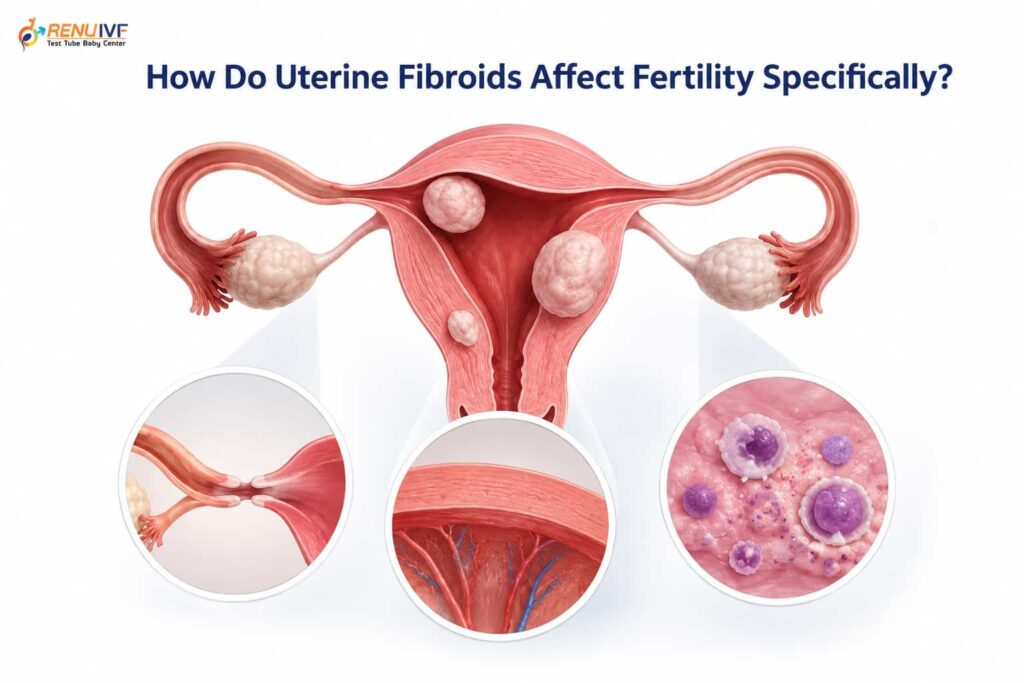
Distortion of the uterine cavity is the most well-documented mechanism. When a submucosal or large intramural fibroid alters the shape of the uterine cavity, the embryo has a structurally compromised surface for implantation. The uterine lining the endometrium needs to be uniform and well-vascularized for an embryo to successfully attach. A fibroid pushing into this space creates mechanical obstruction and local tissue changes that work against successful implantation.
Impaired blood supply to the endometrium is another mechanism worth understanding. Fibroids can divert blood flow away from the uterine lining, reducing the quality and thickness of the endometrium. A thin or poorly vascularized endometrium is associated with lower implantation rates in both natural conception and IVF cycles.
Blockage of the fallopian tubes can occur when fibroids grow near the junction where the tubes meet the uterus. This can prevent sperm from reaching the egg or block the fertilized egg from traveling into the uterus, functionally creating a mechanical version of tubal infertility.
Altered cervical anatomy from large fibroids can also impair sperm transport. If a fibroid changes the shape or position of the cervix, sperm movement through the cervical canal becomes less efficient.
Local inflammatory changes within the uterus are also linked to certain fibroid types. Some fibroids appear to trigger a local inflammatory response that makes the uterine environment hostile to implantation, independent of any structural distortion.
Can Fibroids Be the Sole Cause of Infertility?
Technically, yes but this is relatively uncommon. Research suggests that fibroids are the sole identifiable cause of infertility in only about 2–3% of infertile women. In the majority of cases where fibroids are present alongside infertility, there are often other contributing factors such as age-related ovarian decline, male factor infertility, or hormonal imbalances. This is why a complete fertility workup not just a fibroid assessment is always necessary before attributing infertility to fibroids alone. The risk of misattributing infertility to fibroids and undergoing unnecessary surgery is real. Equally, the risk of dismissing fibroids as irrelevant when they are in fact the primary obstacle is also real. The only way to navigate this correctly is through proper diagnostic evaluation.
Diagnosing Fibroids — What Tests Are Used?
Accurate diagnosis is the foundation of appropriate treatment. Several imaging and diagnostic tools are used to evaluate fibroids:
| Diagnostic Method | What It Reveals |
| Transvaginal Ultrasound | Size, number, and location of fibroids — first-line investigation |
| Sonohysterography (SIS) | Injects saline into the uterus to better visualize cavity distortion |
| MRI Scan | Most detailed mapping of fibroid size and position, especially pre-surgery |
| Hysteroscopy | Direct visual examination of the uterine cavity — gold standard for submucosal fibroids |
| Laparoscopy | Used when external fibroids or associated conditions like endometriosis are suspected |
A transvaginal ultrasound is typically the first step, but it does not always provide enough detail about how a fibroid interacts with the uterine cavity. Sonohysterography or hysteroscopy is often needed to get a complete clinical picture, particularly when submucosal involvement is suspected. At a specialized fertility centre, this evaluation is done as part of a broader fertility workup rather than in isolation.
Can You Get Pregnant Naturally with Fibroids?
Yes — and this is important to understand clearly. The presence of fibroids does not automatically disqualify natural conception. Many women with fibroids, including women with multiple fibroids, conceive naturally without any intervention and carry their pregnancies to full term without complications. The likelihood of this depends on the type, size, and location of the fibroids. Women with small subserosal fibroids and no other fertility concerns have fertility rates comparable to women without fibroids. Women with intramural fibroids that do not distort the uterine cavity also often conceive without difficulty. The group most likely to face fertility challenges from fibroids specifically are those with submucosal fibroids or large intramural fibroids that significantly alter the uterine cavity.
If you are under 35, have been trying to conceive for less than a year, and have fibroids that do not distort the cavity, the standard recommendation is to continue trying naturally while being monitored. Immediate surgical intervention purely on the basis of fibroid presence without confirmed fertility impact is not always the right approach and carries its own risks, including the possibility of uterine scarring from the procedure itself.
Fibroid Treatment Options
| Treatment | Best For | Key Consideration |
| Hysteroscopic Myomectomy | Submucosal fibroids | Minimally invasive, no abdominal incision, excellent fertility outcomes |
| Laparoscopic Myomectomy | Subserosal or intramural fibroids | Small incisions, faster recovery than open surgery |
| Open (Abdominal) Myomectomy | Large or multiple fibroids | Most access, longer recovery, risk of adhesions |
| Uterine Artery Embolization (UAE) | Symptom control, not fertility-seeking | Not recommended for women wanting pregnancy |
| GnRH Agonists (Medication) | Temporary shrinkage before surgery | Not a standalone solution; fibroids regrow after stopping |
| Watchful Waiting | Small fibroids, no cavity distortion | Appropriate for many cases, especially near menopause |
Myomectomy surgical removal of fibroids while preserving the uterus remains the gold standard for women who want to maintain fertility. The approach (hysteroscopic, laparoscopic, or open) depends on fibroid size, number, and location, and should be determined by a surgeon with specific experience in fertility-preserving procedures.
Fibroids During Pregnancy — What Are the Risks?
Women who conceive with fibroids present are not automatically in a high-risk category, but certain pregnancy complications occur at higher rates in women with fibroids compared to those without. These include:
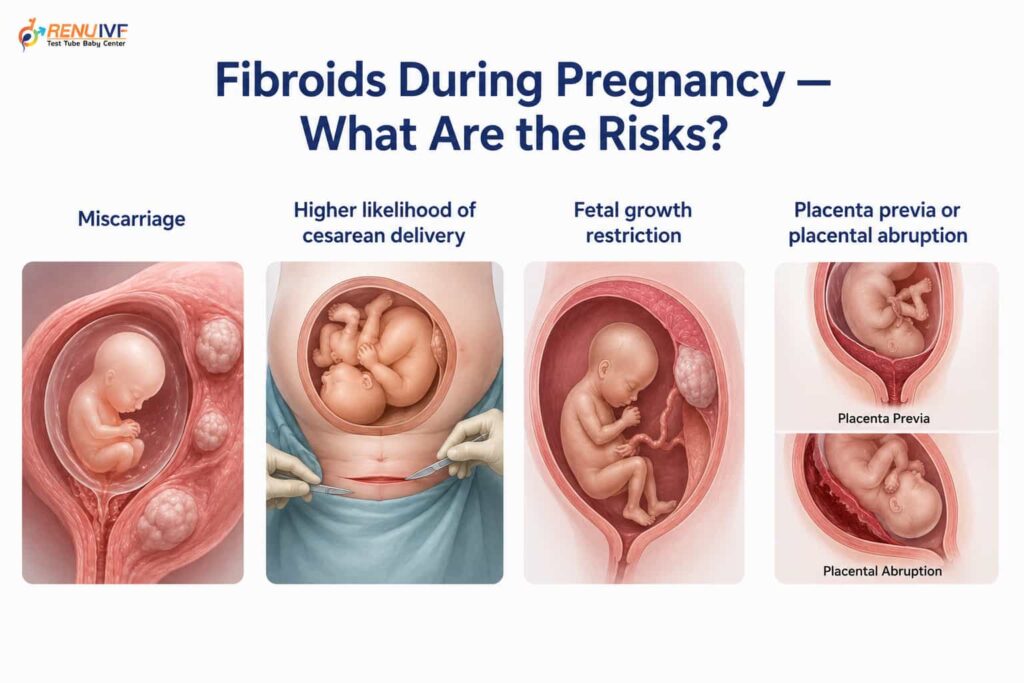
- Miscarriage — particularly in the first trimester, more common with submucosal fibroids
- Preterm labor — fibroids can increase uterine irritability
- Placenta previa or placental abruption — when fibroids affect placental positioning
- Fetal growth restriction — if blood supply is compromised
- Malpresentation — the baby may not settle in the optimal head-down position if fibroids occupy significant uterine space
- Higher likelihood of cesarean delivery
- Postpartum hemorrhage — fibroids can impair uterine contraction after delivery
Most of these risks are elevated but not dramatically so, and many pregnancies in women with fibroids proceed without any of these complications. Close prenatal monitoring is the key management tool.
Frequently Asked Questions
Q: Can I get pregnant with fibroids?
Yes, you can. Many women with fibroids conceive naturally and have uncomplicated pregnancies. The critical factors are the location and size of the fibroids, not merely their existence. Small subserosal or intramural fibroids that do not distort the uterine cavity often have no meaningful impact on fertility. Submucosal fibroids or large fibroids that alter the uterine shape are more likely to require treatment before conception becomes straightforward. A proper evaluation including an ultrasound and possibly a hysteroscopy will give you a definitive picture of whether your specific fibroids are likely to interfere with pregnancy.
Q: Should I remove fibroids before IVF?
Not necessarily, and this is an important nuance. Submucosal fibroids that distort the uterine cavity should almost always be removed before IVF because the evidence strongly supports better outcomes after removal. For intramural fibroids that do not distort the cavity, the benefit of removal before IVF is less clear-cut, and surgery itself carries risks. The decision should be based on a thorough evaluation of fibroid type and location, your age, ovarian reserve, and whether previous IVF cycles have failed without another explanation. A blanket policy of removing all fibroids before IVF is not medically justified and in some cases may cause more harm than benefit.
Q: Do fibroids grow during pregnancy?
Some fibroids grow during the first trimester due to elevated hormone levels, but many remain stable or even shrink during pregnancy, particularly in the second and third trimesters. The behavior of individual fibroids during pregnancy is unpredictable, which is why regular monitoring by a specialist is recommended.
Q: Will fibroids come back after surgery?
Myomectomy removes existing fibroids but does not prevent new ones from forming. Recurrence rates vary studies suggest that within 5 years of myomectomy, a meaningful proportion of women will develop new fibroids, though not all of these will require further treatment or affect fertility. This is one reason why, in women close to the age when they plan to conceive, the timing of myomectomy relative to fertility treatment deserves careful planning.
Conclusion
Uterine fibroids and fertility exist on a spectrum the outcome for any individual woman depends entirely on the clinical specifics of her case, not on generalized assumptions about what fibroids do or do not allow. Many women with fibroids conceive naturally, carry pregnancies without incident, and deliver healthy babies. Others need targeted intervention to optimize their chances. The difference between these outcomes lies in accurate diagnosis, appropriate treatment selection, and individualized care from specialists who understand both the reproductive anatomy and the emotional weight of fertility challenges.
If you are navigating fibroid-related fertility concerns and looking for fibroid treatment in Kanpur, Renu IVF offers a comprehensive, evidence-based approach to fertility evaluation and treatment. Under the guidance of Dr. Renu Singh Gahlaut, patients receive individualized care that goes beyond generic protocols with precise diagnostic workups, surgical expertise in fertility-preserving fibroid removal, and advanced IVF protocols tailored to each patient’s specific clinical picture. As one of the best IVF centres in Kanpur, Renu IVF is committed to helping you make decisions based on what your case actually requires, not what a standard algorithm prescribes.
Your path to parenthood deserves clarity, not guesswork. Start with a proper evaluation.