


बच्चेदानी यानी uterus महिलाओं के reproductive system का एक बहुत महत्वपूर्ण अंग है, जहां pregnancy के दौरान baby का development होता है। लेकिन अगर बच्चेदानी के अंदर किसी uterus infection की वजह से मवाद (pus) जमा होने लगे, तो यह एक गंभीर स्थिति बन सकती है। Medical language में uterus के अंदर pus जमा होने की condition को Pyometra कहा जाता है।
अगर इसका समय पर diagnosis और treatment न किया जाए, तो infection uterus की lining और आसपास के reproductive organs को प्रभावित कर सकता है, और कुछ मामलों में आगे चलकर fertility problems का कारण बन सकता है। खासकर उन महिलाओं को, जिन्हें पहले abortion, miscarriage के बाद uterine cleaning, delivery के बाद infection, या कोई भी uterine procedure हुई हो, symptoms को नजरअंदाज नहीं करना चाहिए।
इस article में हम विस्तार से समझेंगे कि uterus infection symptoms क्या होते हैं, इसका diagnosis और uterus infection treatment कैसे किया जाता है, और सबसे जरूरी क्या इसका infertility से कोई सीधा संबंध है।
इसे विस्तार से समझने के लिए यह वीडियो देखें।
बच्चेदानी में मवाद (Pyometra) क्या होता है?
Pyometra का मतलब है uterus के अंदर pus या infected fluid का जमा होना। यह आमतौर पर किसी uterus infection के कारण होता है, जो uterus की cavity तक पहुंचकर वहां inflammation और pus formation पैदा कर सकता है।
कुछ महिलाओं में इसके symptoms बहुत स्पष्ट होते हैं, जबकि कुछ cases में symptoms इतने हल्के होते हैं कि condition का पता देर से चलता है। इसलिए केवल symptoms के आधार पर इसे identify करना मुश्किल हो सकता है, और proper examination तथा imaging की जरूरत पड़ती है।
बच्चेदानी में मवाद बनने के मुख्य कारण
Uterus में pus बनने के कई कारण हो सकते हैं, और हर patient में कारण एक जैसा नहीं होता।
1. Abortion या miscarriage के बाद infection
अगर pregnancy loss या abortion के बाद proper care न ली जाए, तो infection uterus की cavity तक पहुंच सकता है। Timely treatment न होने पर यह infection बढ़कर pyometra तक भी पहुंच सकता है।
2. Uterus में pregnancy tissue रह जाना
कभी-कभी miscarriage या abortion के बाद pregnancy tissue का कुछ हिस्सा uterus में रह जाता है, जिसे retained products of conception कहा जाता है। इसके आसपास infection develop हो सकता है।
3. Uterine procedure (D&C) के बाद infection
D&C या uterus की सफाई जैसी procedures के बाद, अगर proper sterile care न हो, तो infection का risk बढ़ सकता है।

4. Delivery के बाद infection
Normal या C-section delivery के बाद भी uterus में infection हो सकता है, अगर hygiene या wound care सही न हो।
5. Cervix में blockage
कुछ cases में cervix यानी बच्चेदानी के मुंह में narrowing या blockage के कारण infected fluid बाहर नहीं निकल पाता और uterus के अंदर ही जमा होने लगता है।
6. Untreated pelvic infections
कुछ pelvic infections धीरे-धीरे uterus और reproductive tract तक पहुंच जाते हैं, और समय पर treatment न होने पर chronic inflammation और scarring का कारण बन सकते हैं।
Uterus Infection Symptoms — कैसे पहचानें?
बहुत सी महिलाओं का सवाल होता है कि uterus infection symptoms क्या होते हैं, या what are the symptoms of uterus infection जिन्हें ignore नहीं करना चाहिए। ये symptoms हर महिला में अलग हो सकते हैं, लेकिन कुछ common warning signs इस प्रकार हैं:
- लगातार या बार-बार होने वाला lower abdominal ya pelvic pain
- fever या chills
- बदबूदार vaginal discharge
- abnormal या heavy vaginal bleeding
- periods में अचानक बदलाव
- periods बहुत कम आना
- periods के दौरान असामान्य दर्द
- लगातार कमजोरी या अस्वस्थ महसूस होना
- pregnancy loss या abortion के बाद symptoms का लंबे समय तक बने रहना
महत्वपूर्ण बात — इनमें से किसी एक symptom का होना हमेशा pyometra या serious infection का संकेत नहीं होता, और कभी-कभी infection होने के बावजूद भी symptoms हल्के रह सकते हैं। इसलिए self-diagnosis करने के बजाय proper gynecological evaluation कराना जरूरी है।
बच्चेदानी में मवाद की जांच कैसे की जाती है?
Doctor सबसे पहले patient की history पूछते हैं क्या पहले abortion, miscarriage, delivery, या कोई uterine procedure हुई थी, क्या fever या infection का history है, और periods में कब से बदलाव आया है।
इसके बाद जरूरत के अनुसार investigations की जा सकती हैं:
Pelvic/Transvaginal Ultrasound — uterus के अंदर fluid collection, retained tissue, या किसी भी abnormality को देखने में मदद करता है।
3D Ultrasound — uterus की cavity और structure को अधिक detail में evaluate करने के लिए कुछ cases में उपयोगी होता है।
Hysteroscopy — एक thin camera की मदद से uterus की अंदरूनी cavity को directly देखा जाता है, जिससे adhesions, scar tissue, या retained tissue identify करने में मदद मिलती है।
Pus Culture Testing — अगर uterus से pus drain किया जाता है, तो sample को laboratory में भेजकर bacteria identify किया जाता है, ताकि सही antibiotic चुना जा सके।
बच्चेदानी में मवाद का इलाज — Uterus Infection Treatment
Uterus infection treatment हमेशा underlying cause पर depend करता है — केवल antibiotics ले लेने से हर case solve नहीं होता।
1. Infection को control करना
Bacterial infection होने पर doctor appropriate antibiotics देते हैं। गंभीर cases में hospital-based treatment और IV antibiotics की आवश्यकता भी हो सकती है।
2. Pus को drain करना
अगर uterus के अंदर significant pus जमा है, तो उसे safely drain करना treatment का महत्वपूर्ण हिस्सा होता है। Drainage का method patient की condition और anatomy के अनुसार doctor decide करते हैं।
3. Retained tissue को remove करना
अगर abortion या miscarriage के बाद कोई pregnancy tissue uterus में रह गया है, तो उसे हटाना पड़ता है, अक्सर hysteroscopic method से।
4. Hysteroscopy से adhesions की जांच और treatment
अगर infection के बाद uterus में adhesions यानी जाला बन गया है, तो hysteroscopy से cavity को देखा जा सकता है, और selected cases में treat भी किया जा सकता है।
क्या Uterus Infection से Infertility हो सकती है?
यह सबसे जरूरी सवाल है — हां, कुछ cases में uterus का severe या लंबे समय तक रहने वाला infection fertility को प्रभावित कर सकता है। लेकिन इसका मतलब यह नहीं है कि हर महिला जिसे uterus infection हुआ है, वह pregnant नहीं हो सकती।
Fertility पर असर इन factors पर depend करता है:
- infection कितना severe था
- infection कितने समय तक रहा
- uterus की lining कितनी प्रभावित हुई
- कोई retained tissue मौजूद था या नहीं
- uterus में scar tissue बना या नहीं
- fallopian tubes प्रभावित हुईं या नहीं
- ovulation और ovarian reserve कैसी है
- male partner की fertility कैसी है
इसलिए केवल “uterus में infection हुआ था” के आधार पर infertility का conclusion निकालना medically सही नहीं है।
See in Detail: Infection के बाद Periods कम होना और बच्चेदानी में जाला
अगर किसी महिला के periods पहले normal थे, लेकिन abortion, miscarriage, delivery, या uterus cleaning के बाद अचानक बहुत कम हो गए हैं, तो इसे सिर्फ hormonal problem मान लेना सही नहीं होगा।
लंबे समय तक रहने वाली inflammation या किसी procedure के बाद uterus की अंदरूनी surfaces आपस में चिपक सकती हैं, जिससे scar tissue या adhesions बन सकते हैं इस condition को Asherman syndrome कहा जाता है।
इसके symptoms में शामिल हो सकता है:
- periods बहुत कम हो जाना
- periods बंद हो जाना
- बार-बार miscarriage होना
- implantation में समस्या
- infertility
- pregnancy complications का बढ़ता risk
ऐसी situation में doctor पहले ultrasound या 3D ultrasound से शुरुआत कर सकते हैं, और जरूरत पड़ने पर hysteroscopy से uterus की cavity को directly examine कर सकते हैं। अगर adhesions limited हैं, तो hysteroscopic treatment के बाद cavity को restore करने की कोशिश की जा सकती है — लेकिन अगर adhesions extensive हैं, तो treatment ज्यादा challenging हो सकता है और pregnancy chances individual case के अनुसार बदल सकते हैं। इसलिए “जाला बन गया है मतलब pregnancy नहीं होगी” कहना सही नहीं है — evaluation के बिना यह conclusion निकालना गलत होगा।
क्या Fallopian Tubes भी प्रभावित हो सकती हैं?
कुछ pelvic infections reproductive tract में inflammation और scarring पैदा कर सकते हैं, जिसकी वजह से fallopian tubes भी प्रभावित हो सकती हैं। अगर tubes blocked या severely damaged हों, तो natural conception मुश्किल हो सकता है।
लेकिन हर uterus infection में tubes बंद नहीं होतीं। Tube की condition जानने के लिए doctor case के अनुसार HSG, HyCoSy, या laparoscopy जैसी investigations suggest कर सकते हैं।
अगर दोनों tubes severely blocked हों, तो IVF एक important treatment option बन जाता है, क्योंकि IVF में fertilization के लिए fallopian tubes की आवश्यकता नहीं पड़ती। लेकिन यह कहना कि हर tube blockage में सिर्फ IVF ही एकमात्र option है, medically oversimplified होगा — treatment blockage की location, severity, patient की age, ovarian reserve और partner के semen parameters पर depend करता है।
Uterus Infection Se Bachaav Kaise Karein?
हर infection को prevent करना possible नहीं होता, लेकिन risk कम करने के लिए कुछ basic precautions महत्वपूर्ण हैं:
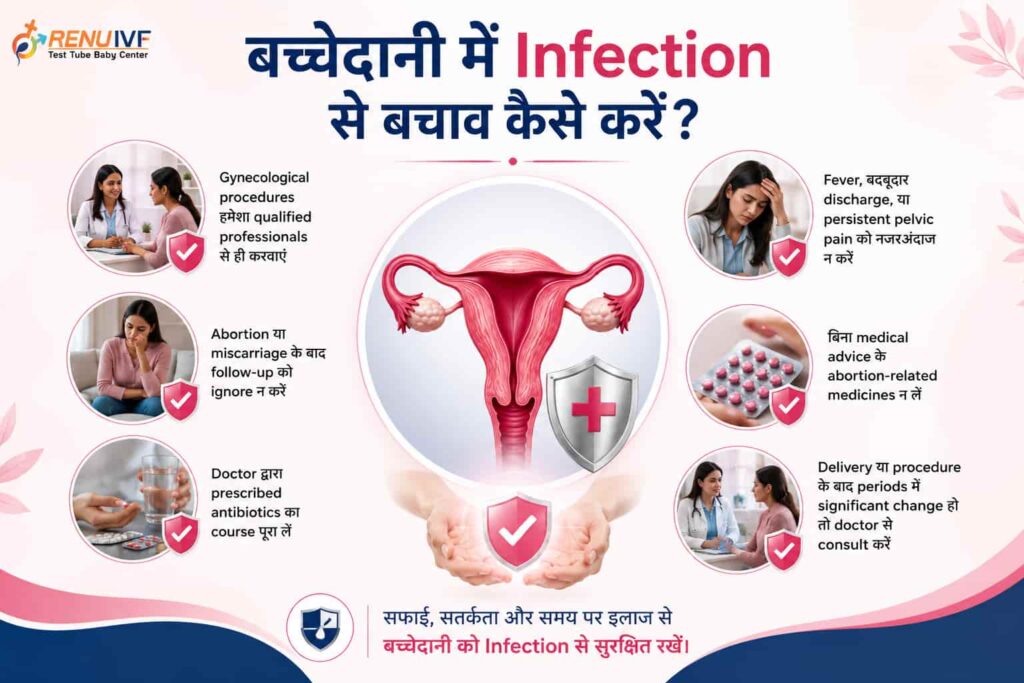
- Gynecological procedures हमेशा qualified professionals से ही करवाएं
- Abortion या miscarriage के बाद follow-up को ignore न करें
- Doctor द्वारा prescribed antibiotics का course पूरा लें
- Fever, बदबूदार discharge, या persistent pelvic pain को नजरअंदाज न करें
- बिना medical advice के abortion-related medicines न लें
- Delivery या procedure के बाद periods में significant change हो तो doctor से consult करें
Infertility Specialist से कब मिलना चाहिए?
अगर infection के बाद pregnancy नहीं हो रही, periods बहुत कम हो गए हैं, पहले uterine cleaning हुई थी, या ultrasound में uterus cavity में कोई abnormality दिख रही है, तो fertility evaluation को delay नहीं करना चाहिए।
अगर आप best infertility clinic in Kanpur ढूंढ रहे हैं, तो सिर्फ clinic के नाम या success claims पर भरोसा करने के बजाय यह भी देखें कि वहां hysteroscopy, laparoscopy, tubal assessment, और individualized fertility treatment की सुविधा उपलब्ध है या नहीं। एक experienced infertility specialist in Kanpur patient की पूरी history, uterus की condition, tubes, ovarian reserve, और partner के semen parameters को साथ में देखकर ही सही treatment plan बना सकता है।
FAQs
Q1. बच्चेदानी में इन्फेक्शन होने से क्या होता है?
बच्चेदानी में infection होने से pelvic pain, fever, abnormal discharge, और periods में बदलाव हो सकता है। अगर infection लंबे समय तक untreated रहे, तो यह pyometra, retained tissue infection, या intrauterine adhesions जैसी conditions का कारण बन सकता है, जो आगे चलकर fertility को भी प्रभावित कर सकती हैं। लेकिन timely diagnosis और treatment से इसका management संभव है।
Q2. बच्चेदानी में इन्फेक्शन क्यों होता है?
बच्चेदानी में infection के कई कारण हो सकते हैं abortion या miscarriage के बाद incomplete treatment, retained pregnancy tissue, uterine procedure (जैसे D&C) के बाद hygiene की कमी, delivery के बाद infection, या cervix में कोई blockage जिसकी वजह से infected fluid uterus से बाहर नहीं निकल पाता।
Q3. क्या uterus infection के बाद normal pregnancy possible है?
हां, ज्यादातर cases में infection के proper treatment के बाद normal pregnancy possible है। Fertility पर असर infection की severity, uterus की recovery, और क्या tubes या lining प्रभावित हुई थी इन factors पर depend करता है। इसलिए “infection हुआ था” का मतलब automatically infertility नहीं होता, लेकिन evaluation जरूरी होता है।
Conclusion
बच्चेदानी में मवाद बनना, यानी Pyometra, एक ऐसी condition है जिसे ignore नहीं करना चाहिए। इसका treatment सिर्फ infection को दबाने तक सीमित नहीं होना चाहिए underlying cause को identify करना भी उतना ही जरूरी है। अगर retained tissue है तो उसे remove करना पड़ेगा, अगर infection है तो उसे control करना जरूरी है, और अगर adhesions बन गए हैं, तो hysteroscopy जैसी procedure से उनकी evaluation और selected cases में treatment किया जा सकता है।
सबसे महत्वपूर्ण बात यह है कि uterus में infection होने का मतलब automatically infertility नहीं है लेकिन untreated infection, severe inflammation, या tubal damage fertility को प्रभावित कर सकते हैं। इसलिए सही समय पर diagnosis और appropriate treatment बहुत जरूरी है।
अगर आपको abortion, miscarriage, delivery, या किसी uterine procedure के बाद infection, periods कम होना, pelvic pain, abnormal discharge, या pregnancy conceive करने में difficulty हो रही है, तो qualified gynecologist या fertility specialist से evaluation कराएं। Renu IVF में fertility से जुड़ी समस्याओं के evaluation और treatment के लिए patient की individual condition के अनुसार आगे की जांच और treatment options पर guidance दी जाती है।