


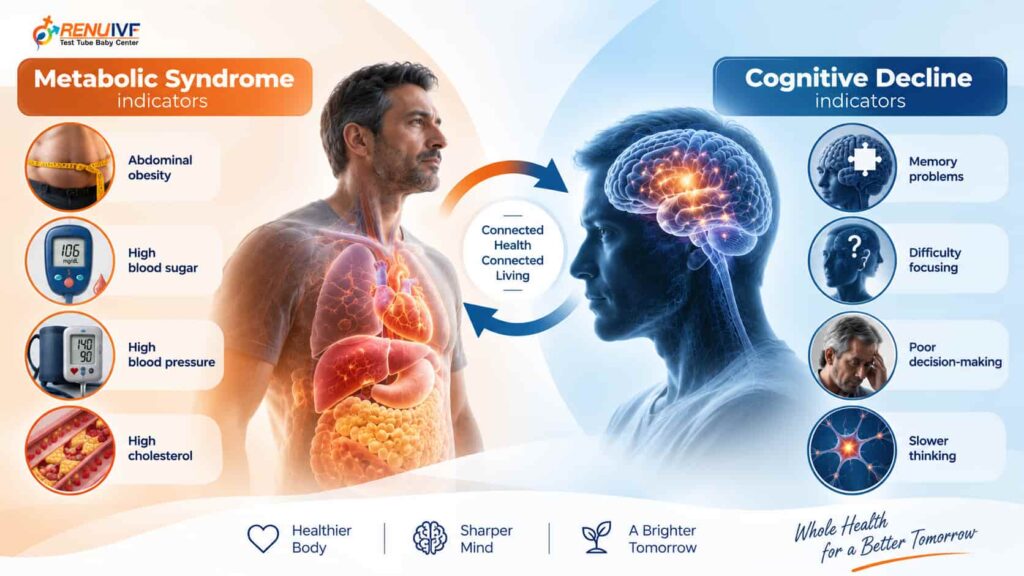
Your metabolism does not just control your weight. It affects your heart, your blood vessels, and, as more research is now showing, your brain too. When several health problems like high blood sugar, high blood pressure, and extra belly fat happen together, doctors call this metabolic syndrome. Over time, this combination does not just raise the risk of diabetes and heart disease it may also raise the risk of cognitive decline, which means slow changes in memory, focus, and thinking ability.
This blog breaks down what metabolic syndrome is, how it may affect your brain, and what you can do about it in simple words, with tables and bullet points so it is easy to follow.
What Is Metabolic Syndrome?
If you are searching “what is metabolic syndrome,” here is the simple answer: it is not one disease. It is a group of five risk factors that tend to show up together in the same person. When you have three or more of these at once, doctors label it as metabolic syndrome.
The metabolic syndrome meaning, in plain language, is this: your body is struggling to manage sugar, fat, and blood pressure all at the same time, and this combination puts extra strain on your heart, blood vessels, and possibly your brain.
Metabolic Syndrome Definition (With Numbers)
Unlike a single disease, the metabolic syndrome definition is based on measurable numbers. According to widely used clinical guidelines, a person is considered to have metabolic syndrome if they have three or more of the following:
| Risk Factor | Threshold |
| Waist circumference | Men: above 40 inches (102 cm); Women: above 35 inches (88 cm) |
| Blood pressure | 130/85 mmHg or higher, or on BP medication |
| Fasting blood sugar | 100 mg/dL or higher, or on diabetes medication |
| Triglycerides | 150 mg/dL or higher |
| HDL cholesterol | Men: below 40 mg/dL; Women: below 50 mg/dL |
Exact cut-offs can vary slightly between guidelines and populations, but this table gives you a working reference not just a vague description.
What Are the Symptoms of Metabolic Syndrome?
One tricky thing about metabolic syndrome symptoms is that most of them are silent. You will not “feel” high triglycerides or borderline blood sugar. This is why regular check-ups matter, even when you feel fine.
Common signs and findings include:
- Increased belly fat or a growing waistline
- High blood pressure readings
- High fasting blood sugar
- High triglycerides on a blood test
- Low HDL (“good”) cholesterol
- Insulin resistance
- Constant tiredness or low energy
- Difficulty losing weight despite effort
A single item on this list does not mean you have metabolic syndrome. A doctor looks at the full picture using the table above.
How Does Metabolic Syndrome Affect the Brain?
Your brain runs on a constant, steady supply of oxygen and nutrients, delivered through small blood vessels. When blood sugar, blood pressure, and cholesterol stay out of range for years, they can gradually damage these vessels. Damaged blood flow to the brain is one of the pathways researchers link to slower thinking, memory lapses, and long-term brain health problems.
## Watch: How Metabolic Syndrome Affects Your Brain
*In this video, we break down how high blood sugar, blood pressure, and cholesterol can gradually affect blood flow to the brain, and what that means for long-term cognitive health.*
Here is how each factor plays a role:
- High blood pressure — puts extra pressure on blood vessel walls, including the small vessels feeding the brain.
- High blood sugar — can damage blood vessels over time and disturb how brain cells use energy.
- Insulin resistance — makes it harder for the body to regulate sugar, which may also affect brain cell signaling.
- Abnormal cholesterol and triglycerides — contribute to plaque buildup in blood vessels, restricting circulation.
- Excess belly fat — is linked to inflammation, which can affect multiple organs, including the brain.
Important: having metabolic syndrome does not mean a person will definitely develop dementia or memory loss. It means the risk is higher, especially when combined with age, genetics, smoking, or poor sleep.
What Is Cognitive Decline?
In simple words, it is a gradual drop in mental abilities memory, focus, reasoning, language, or decision-making. Occasional forgetfulness (like misplacing keys) is normal. Cognitive decline is when it becomes frequent, progressive, and starts affecting daily life.
The cognitive decline meaning is often misunderstood as “just old age.” That’s not accurate cognitive decline can happen earlier than expected, and it has many possible causes, of which poor metabolic health is only one.
Cognitive Decline Symptoms
Common cognitive decline symptoms to watch for include:
- Forgetting recent conversations or information
- Trouble concentrating on tasks
- Taking longer than usual to finish familiar work
- Struggling to find the right words
- Losing or misplacing items often
- Difficulty planning or organizing
- Confusion about dates, time, or place
- Needing more help than before with everyday tasks
If these symptoms are frequent or getting worse, it’s time to consult a doctor rather than assuming it’s “just stress” or “just age.”
Metabolic Syndrome and Brain Ageing: What Influences the Risk?
Not everyone with metabolic syndrome experiences the same effect on brain health. The extent of impact depends on:
| Factor | Why It Matters |
| Age | Older brains have less recovery capacity |
| Duration of metabolic problems | Longer exposure = more vascular strain |
| Blood pressure control | Poor control increases vessel damage |
| Blood sugar control | Poor control accelerates vascular ageing |
| Physical activity | Improves circulation and insulin sensitivity |
| Sleep quality | Poor sleep worsens metabolic and brain health |
| Smoking/alcohol | Both increase vascular damage |
Metabolic Syndrome Treatment
The good news: metabolic syndrome treatment is largely about consistent lifestyle changes, not one magic pill.

- Cut down added sugar — sodas, sweets, and processed snacks are the biggest contributors.
- Eat a balanced diet — vegetables, whole grains, lean protein, nuts, and healthy fats.
- Move daily — even a 30-minute walk helps insulin sensitivity and blood pressure.
- Maintain a healthy weight — losing even 5-10% of body weight can improve multiple markers at once.
- Sleep 7-9 hours — poor sleep worsens blood sugar and appetite control.
- Manage stress — chronic stress raises blood sugar and blood pressure.
- Avoid smoking — it accelerates blood vessel damage.
- Take prescribed medication — for blood pressure, sugar, or cholesterol, exactly as advised.
Metabolic Health and Male Fertility
Metabolic problems don’t just affect the heart and brain they can also affect male reproductive health, which is where male infertility comes in. Obesity, insulin resistance, and poor cardiovascular health are linked to hormonal imbalances that can disrupt spermatogenesis the process by which sperm are produced in the testes.
A few fertility-related conditions worth knowing about:
- Oligospermia — a lower-than-normal sperm count. In mild oligospermia, sperm are still present but in reduced numbers, and the cause needs proper evaluation rather than guesswork.
- Testosterone therapy — some men assume this improves fertility, but external testosterone can actually suppress the body’s natural sperm-producing signals and lower sperm count further. It should never be self-started when fertility is a goal.
- Retrograde ejaculation and dry orgasm — conditions where semen enters the bladder instead of exiting normally, sometimes linked to diabetes or nerve-related changes, both of which connect back to poor metabolic health.
- Sperm capacitation — a natural functional process sperm undergo before they’re able to fertilize an egg; it’s separate from just sperm count or motility, and is one more reason a basic semen report doesn’t tell the whole fertility story.
If you’re facing any of these concerns, don’t rely on self-diagnosis. Consulting a qualified fertility specialist in Kanpur can help identify the exact cause through proper hormonal and semen evaluation.
When Should You See a Doctor?
- If you have three or more metabolic risk factors from the table above
- If memory or concentration problems are frequent or worsening
- If you notice sudden confusion, slurred speech, or facial drooping (seek emergency care immediately)
- If you or your partner have been trying to conceive for over a year without success
Frequently Asked Questions
1. Is metabolic syndrome and fatty liver the same thing?
No. They are closely related but not identical. Fatty liver (specifically metabolic-associated fatty liver disease) often occurs alongside metabolic syndrome because both share causes like insulin resistance and obesity, but you can have one without a formal diagnosis of the other. Many doctors now consider fatty liver a marker that should prompt screening for metabolic syndrome.
2. Is metabolic syndrome genetic?
Genetics can influence your risk some people are more prone to insulin resistance or high triglycerides due to family history. But genetics is not the whole story. Diet, activity levels, sleep, and weight play a major role, which is why lifestyle changes can meaningfully lower risk even in people with a genetic tendency.
3. Does metabolic syndrome cause cognitive decline?
Not directly or definitely. It raises the risk by affecting blood vessels and circulation to the brain over time, but many other factors age, genetics, overall health also matter.
4. Can metabolic syndrome affect male fertility?
Yes, indirectly. Conditions like obesity and insulin resistance can disrupt hormone balance and sperm production, contributing to male infertility in some men though it’s rarely the only cause.
Conclusion
Metabolic syndrome is more than a weight or blood sugar issue left unmanaged, it can affect your heart, blood vessels, brain, and even reproductive health. The encouraging part is that most of these risk factors respond well to consistent lifestyle changes and timely medical care.
If you’re dealing with metabolic health concerns, fertility difficulties, or both, Renu IVF offers personalized evaluation and treatment planning to help you address the root cause not just the symptoms.