

Introduction
When you’re planning for a baby and natural conception isn’t happening easily, it’s normal to feel confused about which fertility treatment to try: IUI vs IVF. Both are scientifically proven options that can help couples overcome infertility, but each works differently and suits different medical situations.
Let’s explore how IUI (Intrauterine Insemination) and IVF (In Vitro Fertilization) differ – so you can make the best decision for your journey to parenthood. If you’re struggling to conceive naturally, you may be wondering which fertility treatment suits you better — IUI treatment and its benefits or IVF treatment.
What Is IUI Treatment?
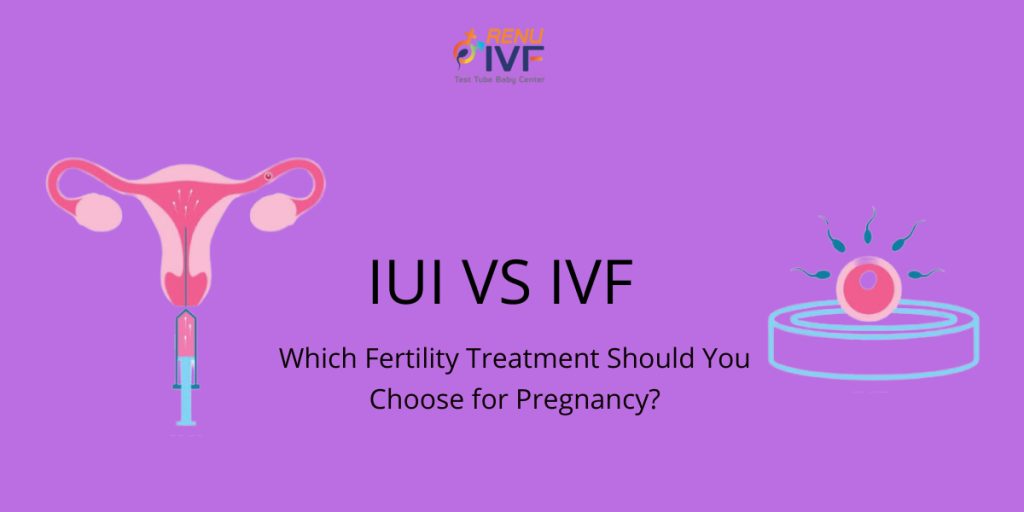
IUI (Intrauterine Insemination) is a simple and less invasive procedure that increases your chance of pregnancy by placing washed and concentrated sperm directly into the uterus during ovulation.
This method helps the sperm reach the egg more efficiently, especially when sperm motility or count is slightly low.
Doctors usually recommend IUI when:
- There is mild male infertility or low sperm motility
- The cause of infertility is unexplained
- There are issues with cervical mucus
- Donor sperm is being used
IUI is cost-effective, quick, and often the first line of treatment before trying advanced procedures like IVF. You can read more about how IUI treatment works and its benefits to understand if it’s suitable for your situation.
What Is IVF Treatment?
IVF (In Vitro Fertilization) is a more advanced fertility treatment where eggs are retrieved from the woman’s ovaries and fertilized with sperm in a lab. The resulting embryo is then transferred to the uterus.
IVF is commonly recommended when:
- The fallopian tubes are blocked or damaged
- There is severe male infertility
- The woman has PCOS or endometriosis
- IUI cycles have failed
- Age or ovarian reserve is a concern
Because the fertilization happens outside the body, IVF offers more control over embryo quality and improves the chance of success per cycle.
IUI vs IVF: What’s the Real Difference?
| Aspect | IUI | IVF |
| Procedure | Sperm placed inside uterus for natural fertilization | Eggs and sperm fertilized in a lab, then embryo transferred |
| Duration | Simple process within one cycle | Takes 4-6 weeks per cycle |
| Invasiveness | Non-surgical, minimal medication | Surgical egg retrieval, more medication |
| Cost (India) | Rs10,000 – Rs20,000 per cycle | Rs1,00,000 – Rs2,50,000 per cycle |
| Success Rate | 10-20% per cycle | 40-60% per cycle (varies by age) |
| Ideal For | Mild infertility, younger couples | Complex infertility, older age, failed IUI cases |
You can also read our guide on IUI vs IVF: Understanding Which Fertility Treatment Is Right for You for an even more detailed comparison.
Which Treatment Is Right for You?
The decision between IVF and IUI depends on your age, fertility diagnosis, medical history, and emotional readiness.
- If you’re under 35 and your infertility cause is mild or unexplained, IUI may be the best starting point.
- If you’ve already undergone multiple IUI cycles or have issues like blocked tubes or low egg count, IVF may provide faster and more reliable results.
Your fertility specialist will assess your hormonal reports, ovarian reserve, and partner’s sperm health before guiding you toward the most suitable option.
When to Move from IUI to IVF
While IUI can be successful in some couples, doctors often suggest moving to IVF if:
- You’ve had 3-4 unsuccessful IUI cycles
- You’re above 35 years and time is crucial
- There are structural or genetic infertility issues
- You have endometriosis or low ovarian reserve
Choosing IVF after multiple IUI failures can save valuable time and increase pregnancy chances.
Cost Consideration: IUI vs IVF
In India, IUI treatment is more affordable and often chosen first. However, since IUI success rates per cycle are lower, couples may need multiple attempts, which increases the overall cost.
IVF requires a higher investment but often leads to results faster, especially in women over 35 or with advanced infertility conditions.
At Renu IVF Centre, Kanpur, treatment plans are personalized to suit each couple’s medical and financial needs, ensuring transparency and comfort throughout the process.
Emotional Readiness & Support
Fertility treatments can be emotionally challenging. It’s important to have support from your partner, family, and medical team. Maintaining a healthy lifestyle, reducing stress, and following medical advice can make a big difference in treatment outcomes.
Our team provides fertility counseling and emotional support throughout your treatment journey.
Conclusion
Both IVF and IUI are valuable fertility treatments that bring hope to couples longing for a child. The right choice depends on your individual fertility profile, health, and how soon you wish to conceive.
At Renu IVF Centre, our fertility experts help you choose the best path with compassion, medical precision, and full support, guiding you from diagnosis to delivery.
Frequently Asked Questions (FAQs) on IUI vs IVF
1. Is IUI better than IVF for getting pregnant?
It depends on your fertility condition. IUI is simpler, less expensive, and works best for mild infertility or unexplained cases. IVF, on the other hand, is more advanced and effective for complex fertility issues, blocked tubes, or low egg/sperm quality.
2. How many IUI cycles should I try before moving to IVF?
Most fertility experts recommend 3 to 4 IUI cycles before switching to IVF. If you don’t conceive within that time, IVF offers better chances, especially for women over 35.
3. Which treatment has a higher success rate — IUI or IVF?
IVF has a higher success rate, ranging between 40–60% per cycle, depending on age and fertility factors. IUI typically has a 10–20% success rate per cycle but is less invasive and more affordable.
4. What is the cost difference between IVF and IUI in India?
IUI usually costs ₹10,000–₹20,000 per cycle, while IVF can range from ₹1,00,000–₹2,50,000 per cycle. The exact cost depends on the clinic, medications, and personalized treatment plan.
5. Can IUI or IVF help with PCOS or male infertility?
Yes. IUI can be effective for mild male infertility or PCOS with regular ovulation monitoring. IVF is usually recommended for severe PCOS, poor sperm quality, or when IUI doesn’t result in pregnancy after several attempts.