


Planning a pregnancy is about more than eating well and staying active. Doctors and researchers are now looking closely at environmental factors too, and one topic that keeps coming up is microplastics. These are tiny pieces of plastic that have quietly become part of everyday life found in drinking water, packaged food, the air indoors, and even inside the human body. In Hindi, they are called सूक्ष्म प्लास्टिक. Because they are so small, most people are exposed to them without ever noticing. This has led to a fair question that more and more couples are asking: can microplastics affect fertility?
The research on this is still growing, but early studies suggest that long-term exposure may play some role in reproductive health for both men and women. Scientists are trying to understand whether these particles affect hormone levels, sperm quality, egg quality, and pregnancy outcomes. There’s no need to panic about this, but it’s worth understanding the basics and making a few simple changes where possible. This blog covers what microplastics are, how they get into the body, what the science currently says about fertility, and practical steps you can take.
What Are Microplastics?
Microplastics are plastic particles smaller than 5 millimeters. Some are manufactured that small on purpose for use in cosmetics or personal care products while others form when larger plastic items like bottles, bags, and packaging slowly break down from sunlight, heat, and everyday wear.
They’re hard to see with the naked eye, but they show up almost everywhere: in rivers and oceans, bottled water, seafood, fruits and vegetables, table salt, household dust, and the air we breathe indoors. More recently, researchers have found them in human blood, lung tissue, the placenta, and reproductive organs which is exactly why fertility researchers have started paying attention.
Common everyday sources of microplastics include:
- Plastic water bottles
- Single-use plastic packaging
- Food stored or heated in plastic containers
- Plastic kitchen utensils and cutting boards
- Synthetic clothing (polyester, nylon)
- Household dust
- Seafood and fish
- Tea bags made with plastic mesh
- Disposable cups and plates
Avoiding all of these completely isn’t realistic for most people. But knowing where they come from is the first step toward cutting down exposure where it’s easy to do so.
How Do Microplastics Enter the Body?
Microplastics mainly enter the body through what we eat, drink, and breathe.
Through food: Seafood, salt, fresh produce, and processed foods have all tested positive for small amounts of microplastics, largely due to environmental contamination and packaging.
Through drinking water: Both tap and bottled water can contain microplastics, with some studies finding higher levels in bottled water because of the plastic packaging itself.
Through air: Synthetic fibers from clothing, carpets, and furniture can become airborne indoors and get inhaled during normal breathing.
Through food storage and heating: Microwaving food in plastic containers is thought to increase the release of tiny plastic particles into the food. Switching to glass or stainless steel is a simple fix here.
Why Are Scientists Looking at Fertility Specifically?
Reproductive organs are sensitive to environmental changes. Fertility depends on stable hormone levels, healthy eggs, healthy sperm, and a reproductive system that isn’t under constant stress or inflammation. Anything that disrupts these processes is worth studying and that’s the space microplastics research currently sits in.
Most of the strong evidence so far comes from lab and animal studies, where exposure levels are often much higher than what a person would encounter in daily life. Human studies exist but are still small in number, which makes it difficult to say for certain that microplastics cause fertility problems rather than simply being present alongside them.
Areas currently under investigation include:
- Hormone balance
- Sperm count and motility
- Egg quality
- Ovarian function
- Testicular health
- Embryo development
- Pregnancy outcomes
How Might Microplastics Affect Male Fertility?
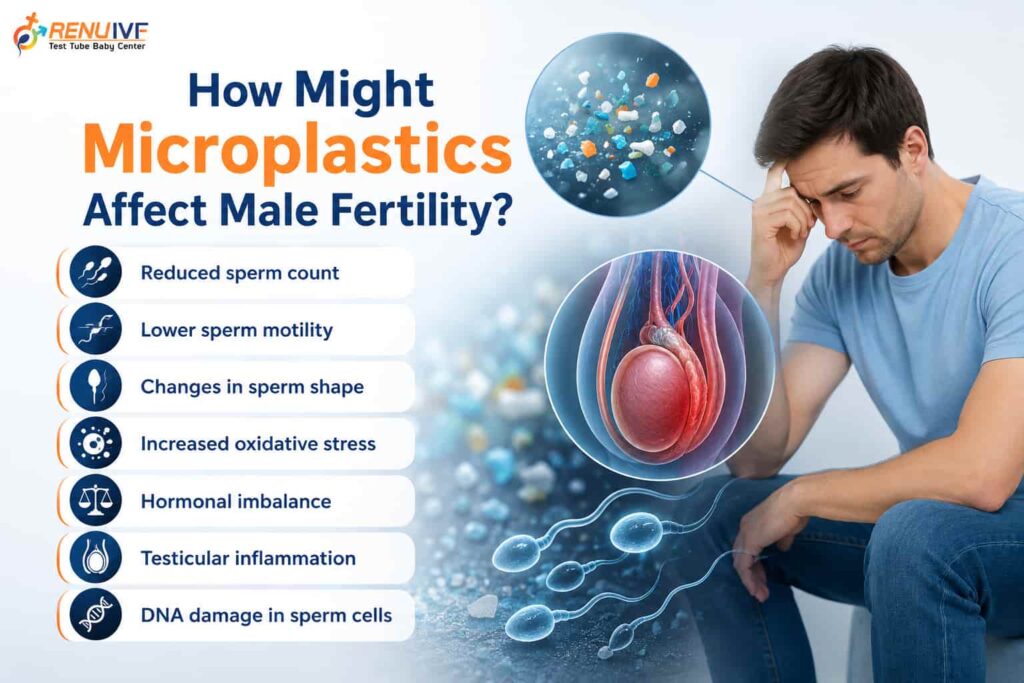
Male fertility depends on healthy sperm production, good sperm movement, and stable hormone levels. Researchers don’t believe microplastics cause infertility on their own the working theory is that they may create conditions in the body that make healthy sperm production harder over time, possibly by increasing oxidative stress, triggering low-grade inflammation, or carrying other harmful chemicals that interfere with hormone signaling.
Possible effects being studied in men:
- Reduced sperm count
- Lower sperm motility
- Changes in sperm shape
- Increased oxidative stress
- Hormonal imbalance
- Testicular inflammation
- DNA damage in sperm cells
It’s worth repeating: this doesn’t mean every man exposed to microplastics will struggle with fertility. Smoking, obesity, poor diet, inactivity, alcohol use, chronic stress, and diabetes remain far better-established causes of male fertility problems than environmental plastic exposure.
How Might Microplastics Affect Female Fertility?
Female fertility depends on healthy ovaries, good egg quality, balanced hormones, and a healthy uterus. Some studies suggest microplastics may accumulate in reproductive tissue and could interfere with normal ovarian function, possibly through inflammation or oxidative stress that affects egg quality. But again, there isn’t enough human evidence yet to call this a direct cause of infertility.
Possible effects being studied in women:
- Reduced egg quality
- Hormonal changes
- Ovarian inflammation
- Changes in menstrual health
- Difficulty with embryo development
- Pregnancy complications
What Does the Current Research Actually Say?
Here’s a simple summary of where the science stands right now:
| Area | Current Evidence |
| Presence in the human body | Found in blood, placenta, lungs, semen, and other tissues |
| Effect on male fertility | Some studies suggest possible impact on sperm quality; more human research needed |
| Effect on female fertility | Ongoing research into egg quality and ovarian health |
| Pregnancy | Scientists are studying possible effects on fetal development and outcomes |
| Overall scientific certainty | No definitive proof that microplastics alone cause infertility |
The honest answer to “can microplastics really affect fertility?” is: possibly, but it’s not settled. Microplastics have been found in reproductive tissue, which is enough to justify further study, but most of the strongest findings still come from labs and animals rather than large human trials. Reducing unnecessary exposure is a reasonable, low-effort precaution not a guaranteed fix.
Who Should Pay Closer Attention?
Everyone is exposed to some degree, but a few groups may benefit from being a bit more mindful:
- Couples actively planning pregnancy
- Individuals undergoing fertility treatment
- Women with PCOS or endometriosis
- Men with a diagnosed low sperm count
- Couples dealing with unexplained infertility
- People who eat a lot of packaged or processed food
- Anyone who regularly heats food in plastic containers
If you fall into one of these groups, it doesn’t mean microplastics are the reason behind your fertility concerns. It simply means reducing unnecessary exposure can be one small piece of a broader, healthier routine alongside proper nutrition, exercise, sleep, and medical evaluation.
If you’ve been trying to conceive without success, this is exactly the point where speaking to an affordable IVF centre in Kanpur makes more sense than guessing at causes on your own. A proper evaluation can tell you what’s actually going on instead of leaving you to wonder whether food packaging is to blame.
Simple Ways to Reduce Microplastic Exposure
You can’t avoid microplastics entirely they’re too embedded in daily life for that. But a few small habits can meaningfully cut down your exposure without complicating your routine.
Better food storage:
- Store food in glass containers instead of plastic
- Use a stainless-steel water bottle
- Avoid heating food in plastic, especially in the microwave
- Replace old or scratched plastic containers
Cleaner drinking water:
- Use a good water filter if available
- Cut back on bottled water where practical
- Carry a reusable steel or glass bottle

Smarter shopping:
- Choose products with minimal plastic packaging
- Use cloth shopping bags
- Prefer glass jars and wooden or steel kitchen tools over plastic
More fresh food:
Fresh fruits, vegetables, whole grains, and home-cooked meals generally involve far less plastic packaging than processed or ready-to-eat food.
A cleaner home:
Regular dusting and vacuuming can help reduce airborne plastic fibers that settle indoors over time.
Lifestyle Still Matters More Than Anything Else
This is worth saying plainly: for most couples, general health has a far bigger impact on fertility than any single environmental factor, including microplastics. A fertility-friendly routine looks like this:
- Maintaining a healthy body weight
- Eating a balanced diet
- Exercising regularly
- Sleeping 7–8 hours a night
- Managing stress
- Avoiding smoking and excess alcohol
- Getting regular health check-ups
If you’ve been trying to conceive for several months without success, don’t default to blaming plastic exposure get evaluated. A best infertility specialist in Kanpur can look at both partners together and identify what’s actually causing the delay, rather than leaving you to guess based on general health articles online.
When Should You See a Fertility Specialist?
Consider booking an evaluation if:
- You’re under 35 and have been trying for more than 12 months without success
- You’re 35 or older and have been trying for more than 6 months
- Your periods are irregular or absent
- You’ve been diagnosed with PCOS, endometriosis, or fibroids
- You’ve had repeated miscarriages
- Your partner has a low sperm count or other male fertility concerns
- You’ve had cancer treatment or surgery affecting reproductive organs
- You simply want a fertility check-up before trying to conceive
A specialist will typically review medical history, run blood tests, do an ultrasound, and check semen analysis for the male partner giving you an evidence-based picture instead of assumptions.
Myths vs Facts
| Myth | Fact |
| Microplastics always cause infertility | There’s no proof yet that microplastics alone cause infertility in humans |
| If microplastics are in your body, pregnancy is impossible | They’ve been detected in human tissue, but long-term effects are still being studied |
| Only women need to worry about fertility | Male fertility matters equally, and researchers are studying both sexes |
| Avoiding plastic completely guarantees pregnancy | Fertility depends on age, hormones, genetics, and lifestyle too, not just environment |
| There’s nothing you can do about it | Small daily changes can meaningfully cut unnecessary exposure |
Frequently Asked Questions
1. What are microplastics?
Tiny plastic particles, usually under 5 millimeters, that enter the body through food, water, air, and everyday plastic products.
2. Can microplastics affect fertility?
Possibly but there’s no conclusive proof yet that they directly cause infertility in humans. Research is ongoing.
3. Can microplastics reduce sperm count?
Some lab and animal studies suggest a link, but more human research is needed before this can be confirmed.
4. Can microplastics affect female fertility?
Researchers are studying possible links to egg quality, hormone balance, and ovarian function, but findings are still preliminary.
5. How can I reduce my exposure?
Use glass or steel containers, avoid heating food in plastic, drink filtered water, eat more fresh food, and cut back on single-use plastics.
6. Should couples planning pregnancy be worried?
Not particularly. Focus on the basics healthy weight, balanced diet, regular exercise, no smoking and get a fertility evaluation if conception isn’t happening after several months of trying.
Conclusion
Microplastics have become an unavoidable part of modern life, and while early research suggests they may play some role in reproductive health, there’s still no firm proof that they directly cause infertility. Most experts agree that more long-term human studies are needed before anyone can say this with confidence.
Rather than getting anxious about सूक्ष्म प्लास्टिक exposure, couples planning a pregnancy are better off focusing on what’s already well established — healthy weight, balanced nutrition, regular exercise, stress management, avoiding smoking and excess alcohol, and getting timely medical advice if needed. Cutting down unnecessary plastic exposure is a sensible, low-effort step, but it works best as one part of a broader healthy routine, not a stand-alone solution.
If you’ve been trying to conceive without success, or simply want to check your reproductive health before planning a family, Renu IVF & Test Tube Baby Centre offers thorough fertility evaluations, personalized treatment plans, and honest guidance at every step whether you need basic testing or advanced fertility care.