

Testosterone is often called the “male hormone,” and for good reason. It affects almost everything in a man’s body, from muscle strength and energy to mood and sex drive. But one area where testosterone plays a very important, and often misunderstood, role is fertility. Many men who go for testosterone therapy to feel more energetic or improve their sex drive don’t realise that it can actually reduce their sperm count and make it harder to have a baby.
This blog explains, in simple words, what testosterone is, what testosterone therapy does, how it connects to male fertility, and what you should know before starting any treatment. Whether you’re dealing with low testosterone symptoms or simply want to understand your body better, this guide covers everything you need.
What is Testosterone?
Testosterone is the main male sex hormone. It is produced mostly in the testicles, though the body makes small amounts elsewhere too. This hormone is responsible for many physical and emotional changes in a man’s life, starting from puberty and continuing through adulthood. Testosterone hormone drives the growth of the penis and testicles during puberty, deepens the voice, and triggers the growth of facial and body hair. It also builds muscle mass and strength, keeps bones dense, and maintains a healthy sex drive. Beyond the physical, it plays a direct role in producing sperm, regulating mood and energy levels, and supporting red blood cell production. In short, testosterone is not just about “manliness.” It is a core part of how the male body functions every single day.
| Body Function | Role of Testosterone |
| Muscles | Builds and maintains muscle mass |
| Bones | Keeps bones dense and strong |
| Sexual Health | Supports libido and erections |
| Mood | Affects confidence and emotional balance |
| Energy | Reduces tiredness and fatigue |
| Fertility | Directly supports sperm production |
| Hair | Promotes facial and body hair growth |
| Blood | Helps in red blood cell formation |
Why Testosterone Matters for Male Fertility
Here’s something many men don’t know: the brain and the testicles constantly communicate to keep testosterone at the right level. The brain sends signals, through hormones called LH and FSH, telling the testicles how much testosterone to produce. This is a delicate balance, and it directly controls sperm production. When this system works properly, it supports a healthy sperm count, good sperm quality and movement, normal sexual function, and overall reproductive health. The problem starts when testosterone is added to the body from an outside source, through therapy, instead of being produced naturally by this internal system. The next section explains exactly why that matters.
What is Testosterone Therapy?
Testosterone therapy, also called Testosterone Replacement Therapy (TRT), is a medical treatment given to men whose testosterone levels are clinically low. Doctors only recommend this after confirming low levels through a proper testosterone test and reviewing the patient’s symptoms carefully. It is available in several forms:
- Injections
- Skin gels
- Creams
- Skin patches
- Pellets placed under the skin
- Oral tablets, used only in specific cases
The purpose of the treatment is to bring hormone levels back to normal and reduce symptoms caused by low testosterone, such as low energy, poor sex drive, or muscle weakness. Not every man who feels tired or low on energy needs this treatment. Doctors usually recommend testosterone therapy only when a man has very low testosterone levels confirmed through blood work, along with real symptoms like reduced sex drive, erectile dysfunction, constant fatigue, loss of muscle mass, low bone density, or a diagnosed hormonal disorder. A proper diagnosis should always come before treatment, not after.
What is a Testosterone Test and Why Does It Matter?
A testosterone test is a simple blood test that measures how much testosterone is present in your body. It is usually done in the morning, since testosterone levels are naturally highest at that time of day. Along with a testosterone test, doctors often check LH and FSH levels, prolactin, thyroid function, semen analysis, blood sugar, and liver function to get the complete picture. These additional tests help doctors figure out the real cause behind low testosterone or fertility problems, because sometimes the issue isn’t testosterone at all, but something else entirely that only shows up through wider testing.
You should consider getting a testosterone test if you notice low sexual desire, trouble maintaining erections, difficulty conceiving, a reduced sperm count, ongoing fatigue, loss of muscle strength, mood swings, or unexplained weight gain. These signs on their own don’t confirm anything, but together they’re worth investigating properly.
Low Testosterone Symptoms You Shouldn’t Ignore
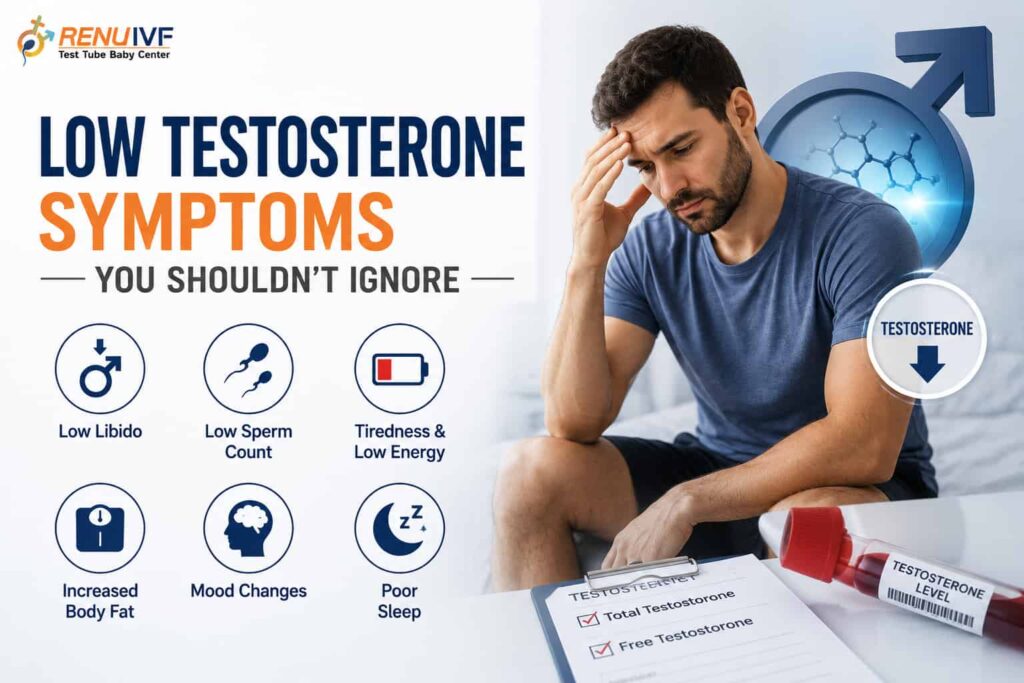
Many men brush off the early signs of low testosterone, assuming it’s just stress or ageing catching up with them. Common low testosterone symptoms include:
- Reduced libido and erectile dysfunction
- Low sperm count and fertility struggles
- Constant tiredness and difficulty concentrating
- Increased body fat and muscle weakness
- Mood changes, anxiety, or low mood
- Poor sleep quality
- Reduced facial or body hair and weaker bones over time
It’s worth noting that having one or two of these symptoms doesn’t automatically mean your testosterone is low. Many of these overlap with other conditions like stress, thyroid issues, or diabetes. That’s exactly why a proper testosterone test is important instead of self-diagnosing based on symptoms alone.
How Does Testosterone Therapy Affect Sperm Count?
This is the part most men get wrong. It seems logical to think that more testosterone should mean better fertility, but in reality, it often works the opposite way. When testosterone enters the body from an outside source, like an injection or gel, the brain senses that testosterone levels are already high enough. In response, it reduces the signals it sends to the testicles. Since the testicles no longer receive the signal to produce testosterone and sperm on their own, natural sperm production drops, sometimes drastically.
| What Happens | Effect on Fertility |
| External testosterone enters the body | Brain reduces natural hormone signals |
| LH and FSH levels drop | Testicles become less active |
| Natural testosterone production slows down | Sperm production decreases |
| Sperm count falls | Lower chances of natural pregnancy |
| Long-term therapy | Can take several months to recover after stopping |
In some men, testosterone therapy can lead to a very low sperm count, or in rare cases, no sperm in the semen at all. This is usually temporary, but it is a serious consideration for anyone who is planning to have children while on this treatment.
The good news is that fertility often returns after stopping testosterone therapy, though recovery isn’t instant. It can take several months, and how long it takes depends on your age, how long you were on testosterone therapy, your overall health, any pre-existing fertility issues, and lifestyle habits such as smoking or alcohol use. Doctors may also prescribe medications that help stimulate the body’s natural testosterone and sperm production during this recovery period, which can speed things along somewhat.
Who Should Be Careful With Testosterone Therapy?
Testosterone therapy isn’t right for everyone. Men should speak with a fertility specialist before starting it if they:
- Are currently trying to have a baby
- Have untreated prostate cancer or severe heart disease
- Have uncontrolled sleep apnea
- Already have a high red blood cell count
- Have unexplained fertility issues that haven’t been properly evaluated
Testosterone in Women
While testosterone is known as a male hormone, testosterone in women exists too, just in much smaller amounts, produced in the ovaries and adrenal glands. It plays a role in bone strength, muscle health, sex drive, mood, and energy in women as well. When testosterone in women becomes too high or too low, it can lead to hormonal imbalance, irregular periods, and even fertility challenges of its own, which is a reminder that hormone balance matters for both partners trying to conceive, not just the man.
How to Increase Testosterone Level Naturally
If your testosterone is only mildly low, or if you simply want to support healthy hormone levels without medication, there are natural ways to increase testosterone level over time. The habits that make the biggest difference include:
- Maintaining a healthy body weight
- Exercising regularly, especially strength training
- Sleeping seven to eight hours a night
- Managing chronic stress
- Eating enough protein and healthy fats
- Getting sufficient Vitamin D
- Limiting alcohol and avoiding smoking
- Keeping diabetes and obesity under control

None of these habits work overnight, but consistency over a few months tends to show real results for men whose levels are only mildly low. Diet plays a big part in this too, and certain foods are especially useful when you’re wondering how to increase testosterone naturally.
| Food | Benefit |
| Eggs | Rich in protein and healthy fats |
| Fish | Provides Omega-3 fatty acids |
| Pumpkin Seeds | High in zinc, important for testosterone |
| Spinach | Rich in magnesium |
| Nuts | Healthy fats that support hormones |
| Beans | Good source of plant protein |
| Milk and Yogurt | Provide calcium and protein |
| Avocados | Contain healthy fats |
| Olive Oil | Supports hormone health |
| Fresh Fruits | Rich in antioxidants |
Try to avoid too much processed food, sugary drinks, and trans fats, as these can work against hormone balance over time even if everything else in your routine is right.
Testosterone Therapy Cost
One of the most common questions men ask is about testosterone therapy cost. The truth is, there is no fixed price, because it depends on several factors including the type of medication used, whether it’s an injection, gel, patch, or pellet, the brand of medicine prescribed, how long the treatment lasts, doctor consultation charges, required lab tests, and follow-up visits. Because every patient’s treatment plan is different, testosterone therapy cost can vary quite a bit from one person to another. If you’re looking for expert guidance along with budget-friendly treatment options, Renu IVF is known as an affordable IVF centre in Kanpur that also helps patients understand hormone-related fertility concerns without unnecessary expenses. It’s always best to have a detailed cost discussion with your doctor before starting any treatment.
Does Testosterone Therapy Improve Sexual Performance?
For men with medically confirmed low testosterone, therapy can genuinely help with libido, energy levels, mood, and confidence, and in some cases, erectile function as well. However, it’s important to understand that improved sexual performance does not mean improved fertility. In fact, as explained earlier, it can work in the opposite direction for sperm production, which is a distinction many men don’t realise until they’re actively trying to conceive.
Possible Side Effects of Testosterone Therapy
Like any medical treatment, testosterone therapy comes with possible risks and side effects, including:
- Acne, oily skin, and hair loss
- Mood changes
- Reduced sperm count and testicular shrinkage
- Increased red blood cell count
- Worsening sleep apnea
- Breast enlargement in some men and fluid retention
Regular follow-ups with your doctor help catch and manage these side effects early, before they become more serious.
| Benefits | Risks |
| Better energy | Reduced sperm count |
| Improved libido | Temporary infertility |
| Increased muscle mass | Acne |
| Better mood | Testicular shrinkage |
| Improved bone health | Hair loss |
| Increased confidence | High red blood cell count |
When Should You See a Fertility Specialist?
It’s a good idea to consult a fertility specialist if you’ve been trying to conceive for over a year without success, if your semen analysis shows a low sperm count, or if you have ongoing low testosterone symptoms that haven’t been evaluated. This also applies if you’re considering testosterone therapy but also want children in the future, if you have erectile dysfunction along with fertility struggles, or if you’ve had testicular surgery or injury in the past. Early evaluation in any of these situations tends to lead to better outcomes than waiting.
Frequently Asked Questions (FAQs)
1. Can testosterone therapy increase sperm count?
No. In most cases, testosterone therapy actually reduces sperm count because it suppresses the natural hormone signals your body needs to produce sperm.
2. How is low testosterone diagnosed?
Through a testosterone test, along with a review of your symptoms and medical history. Doctors may also order additional hormone tests for a complete picture.
3. Can I increase testosterone naturally without medication?
Yes, if your levels aren’t severely low. Regular exercise, a balanced diet, good sleep, and stress management can all help increase testosterone level naturally over time.
4. Is testosterone therapy safe?
It can be safe when properly prescribed and monitored by a doctor. However, it may not be the right choice for men who are planning to have children soon, due to its effect on fertility.
5. How long does it take for fertility to return after stopping testosterone therapy?
It varies from person to person, but it can take anywhere from a few months to over a year, depending on how long you were on the therapy and your overall health.
Conclusion
Testosterone plays a huge role in a man’s health, energy, and fertility, but when it comes to therapy, more isn’t always better. While testosterone therapy can genuinely help men with confirmed low testosterone feel more energetic and confident, it can also lower sperm count and affect fertility, sometimes for months after stopping treatment. Understanding what testosterone is, recognising low testosterone symptoms, getting a proper testosterone test, and knowing the real impact of testosterone therapy are all essential steps before making any treatment decisions.
If you’re planning a family or have concerns about your fertility, don’t start testosterone therapy without speaking to a specialist first. At Renu IVF, our fertility experts offer honest, personalised guidance to help you understand what’s really going on with your hormones and reproductive health, so you can make informed decisions about your journey to parenthood.