


Many women get confused or even a little scared when they see dark brown period blood instead of the usual red colour they are used to. If your period blood is brown on the first day, or turns brown towards the end, it is natural to wonder whether something is wrong with your body, especially if you have never noticed this colour before. Periods are already something most women don’t openly talk about, so when the colour, thickness or smell changes even slightly, it is common to start searching for answers late at night, worrying about the worst possible reason. The good news is that in most cases, dark brown period blood is simply old blood that took longer to leave the uterus. When blood stays inside the body a little longer, it comes in contact with oxygen and slowly turns from red to brown or even blackish in colour. This is a normal biological process and does not always mean there is a health problem.
However, colour alone should never be the only thing you judge your period by. A woman’s cycle is made up of many small signals working together, such as flow, pain level, smell, clotting, and regularity, and dark brown period blood is just one small piece of that bigger picture. Sometimes it is completely harmless, and sometimes, especially when it appears alongside a heavy period, unusual pain, or delayed periods, it can be your body’s way of hinting that something needs attention. This blog will walk you through the science behind why this happens, the common and less common reasons, when you should relax, and when you should actually book an appointment instead of just Googling your symptoms.
Why Does Period Blood Become Brown?
The reason for brown blood during period is mostly related to timing, not to how “healthy” or “unhealthy” your body is. Fresh blood that leaves the body quickly is usually bright or dark red because it still contains oxygen and haemoglobin in its natural form. But when blood moves slowly through the uterus and vagina, it takes longer to come out, and by the time it does, oxidation has already changed its colour, the same way a cut apple turns brown after being left out in the air for some time. This is why so many women notice period blood brown colour especially at the start or end of their cycle, when the flow is lighter and slower, giving the blood more time to sit before it is released.
Brownish red period blood is also extremely common after a long gap, such as first thing in the morning, because blood that collected overnight has more time to oxidise before it comes out when you finally get up and use the washroom. Many women notice that their pad or underwear shows brown streaks in the morning even though the flow felt red the previous night, and this is completely normal. So if you are lying awake wondering, “why is my period blood brown,” the simple answer in most cases is that it is just older blood, not fresh blood, and your body is doing exactly what it is supposed to do.
There are several everyday situations where dark brown blood during period is considered completely normal, and recognising these patterns can save you a lot of unnecessary stress:
- At the very beginning of your period, when flow is still light and slow
- Towards the end of your period, as bleeding gradually slows down before stopping
- First thing in the morning, after several hours of sleep without movement
- During ovulation, when some women notice light brown spotting midway through their cycle
- When periods are slightly delayed and the blood has been sitting inside longer than usual
- After starting or changing birth control methods, as hormones adjust
- During times of stress, travel, or sudden changes in weight or diet
- In the months right after childbirth or after stopping breastfeeding, when cycles are still regulating
Common Reasons for Dark Brown Period Blood
While oxidation is the most common cause, there can be other reasons behind dark brown period as well. Some of these are harmless and temporary, while others may need a closer look from a doctor, especially if they keep repeating month after month or come together with other symptoms. It helps to think of your period blood colour as one clue among many, rather than a standalone diagnosis, because two women can have the exact same brown colour for two completely different reasons.
| Possible Reason | What It Usually Means |
| Old menstrual blood | Blood stayed inside longer before coming out and got oxidised |
| Light or slow flow | Common at the start or end of periods when bleeding is minimal |
| Hormonal changes | Shifts in estrogen and progesterone can affect flow speed and colour |
| Delayed periods | Blood that has been waiting longer inside the uterus often looks darker |
| Birth control | Hormonal contraceptives can change bleeding pattern, thickness and colour |
| Ovulation spotting | Light brown discharge around the middle of the cycle, usually very light |
| Infection | Brown discharge with bad smell, itching or burning needs checking by a doctor |
| Fibroids or polyps | Can sometimes cause irregular, prolonged or unusual bleeding patterns |
| Heavy period linked with anemia | Long-term heavy bleeding can lower iron levels and cause weakness, tiredness |
| Perimenopause | As periods become irregular with age, brown blood becomes more frequent |
| Post-pregnancy changes | Body adjusting after childbirth or miscarriage can show darker discharge |
A single cycle with brown blood is usually nothing to worry about. What matters more is whether this is a new pattern, a repeated pattern, or something that comes along with other symptoms like severe pain, unusual smell, or heavier than normal bleeding. Doctors generally advise women to track their cycles for two to three months before assuming something is seriously wrong, simply because the body can react to small lifestyle changes in ways that show up temporarily as brown period blood.
Is Dark Brown Period Blood Always Normal?
In most women, yes, it is a normal variation and not something that needs to be treated. Your period blood is brown because your body is simply releasing older blood along with the fresh flow, and this can happen occasionally or even every single cycle for some women, without indicating any disease at all. Some women naturally have a slower flow than others, and their period blood colour leans more towards brown throughout the entire cycle rather than just at the beginning or end, and this too can be perfectly normal for their body type.
However, you should pay closer attention if you notice any of the following, since these are the situations where colour combined with other signs becomes more meaningful than colour alone:
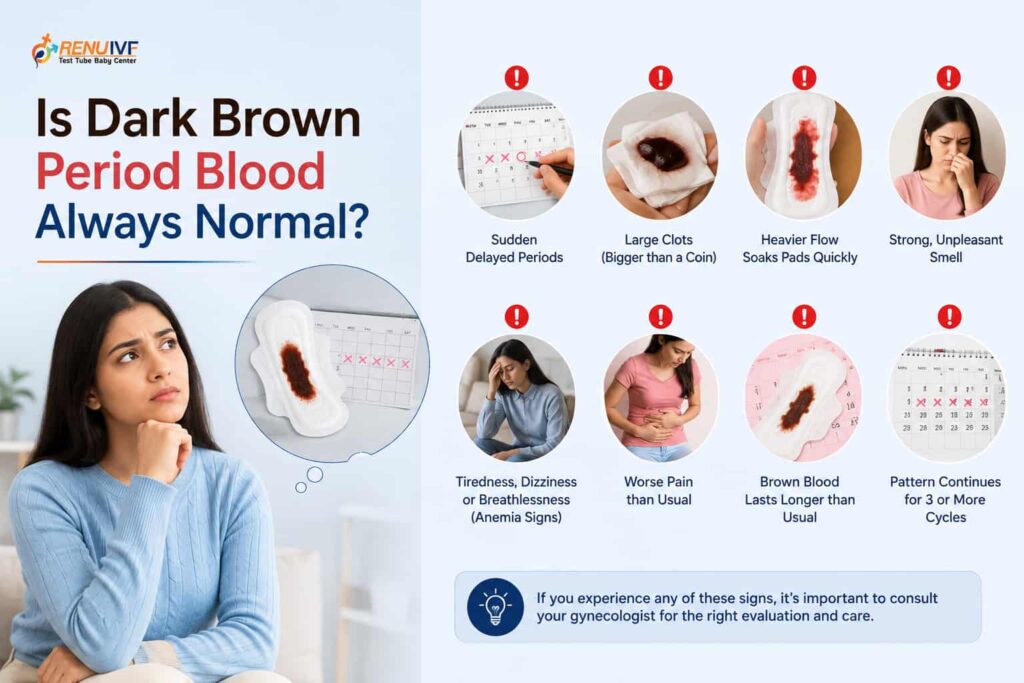
- Your periods that were once regular suddenly become delayed periods every single month
- You are passing large clots, especially ones bigger than a coin, along with the brown blood
- The bleeding is heavier than your usual heavy period and soaks through pads quickly
- There is a strong, unpleasant smell along with the discharge that wasn’t there before
- You feel unusually tired, dizzy, or breathless, which can be signs of anemia caused by long-term blood loss
- The pain during periods is much worse than your normal cramps and affects your daily routine
- The brown blood continues for far longer than your usual period length
- You notice this pattern for three or more consecutive cycles without any clear reason
Can Dark Brown Period Blood Mean Pregnancy?
This is one of the most common questions women ask, and it is completely understandable why. Brown spotting can sometimes appear in early pregnancy, so if your period is late and you have had unprotected intercourse, it is worth taking a pregnancy test rather than guessing based on colour alone. Implantation, which happens when a fertilised egg attaches to the uterine lining, can sometimes cause very light brown spotting around the time your period would normally be due, and many women mistake this for the start of their period.
In some cases, early pregnancy bleeding can be linked to a chemical pregnancy, which is a very early pregnancy loss that may look like a slightly delayed or unusual period, often happening so early that many women don’t even realise they were pregnant. In rarer situations, it may be connected to an ectopic pregnancy, where the pregnancy develops outside the uterus, usually in the fallopian tube, and this needs urgent medical attention because it can become dangerous if left untreated. If you get a positive pregnancy test along with brown bleeding, and you also experience severe abdominal pain, shoulder pain, dizziness, or fainting, you should see a doctor immediately rather than waiting it out at home. These symptoms together are considered a medical emergency and should never be ignored, no matter how mild the bleeding may initially seem.
It is also worth remembering that not every case of dark brown period blood near your expected period date means pregnancy. Stress, sudden weight changes, travel, illness, and even changes in birth control can delay a period and make the blood appear darker when it finally arrives, so a pregnancy test remains the most reliable way to know for sure instead of relying on assumptions.
Menstrual Hygiene and Dark Brown Blood
No matter what colour your period blood is, good menstrual hygiene remains important throughout your cycle. Change your pad, tampon, or menstrual cup regularly, and keep the genital area clean and dry during your period, since slow flow combined with poor hygiene can sometimes create a favourable environment for bacteria to grow. Ignoring hygiene during a period with dark brown blood can sometimes increase the risk of infection, especially if the flow is already slow and blood is sitting for longer periods on a pad without being changed.
If you ever notice an unusual smell, itching, or burning along with the brown discharge, it is best not to ignore it, since these can be early signs of an infection that a doctor should check rather than something you should try to manage on your own. Simple daily habits can go a long way in keeping your cycle healthy:
- Change pads or tampons every four to six hours, even on light-flow days
- Wash the genital area with plain water instead of scented products
- Avoid wearing tight, non-breathable underwear for long hours
- Stay hydrated and eat iron-rich foods, especially if your flow tends to be heavy
- Keep a simple record of your cycle length, flow, and colour changes each month
When Should You See a Doctor?
You do not need to worry every time you see dark brown period blood, but you should not ignore your body either if the pattern changes or repeats in a way that feels unusual for you. It is a good idea to consult a fertility specialist in Kanpur or a gynaecologist if:
- Your cycles have become very irregular with frequent delayed periods
- You are dealing with a heavy period along with brown blood and large clots
- You suspect pregnancy but also have unusual bleeding or pain
- You feel constantly tired or weak, which could point towards anemia
- The brown discharge has a bad smell or comes with itching and burning
- You are trying to conceive and are concerned about how it may be affecting your fertility
- You have crossed 35 years of age and are noticing new patterns of brown discharge along with irregular cycles
- Home remedies or over-the-counter medication have not helped after a few cycles
A proper examination, and sometimes a simple ultrasound or blood test, can help find out the real reason behind the change and rule out anything serious. Doctors usually start with basic history taking and a pelvic examination before moving on to more detailed tests, so there is no need to fear that one visit will immediately involve invasive procedures.
To understand this better in your own language, know more watch this video where the causes and warning signs of dark brown period blood are explained in detail.
Conclusion
Dark brown period blood is, in most cases, just old blood that took a little longer to leave the body and changed colour due to oxidation. It is commonly seen at the start or end of periods, during ovulation, or when periods are slightly delayed, and by itself it is rarely a cause for panic. Your body goes through natural month-to-month variations, and colour is only one small part of a much bigger picture that includes flow, pain, smell and cycle regularity. However, if this colour change comes along with heavy bleeding, severe pain, bad smell, signs of anemia, or a pattern of delayed periods that keeps repeating, it is important to get checked rather than assume everything is fine on its own.
At Renu IVF, known as one of the best fertility hospital options for women’s health concerns, our team helps women understand these changes properly through the right tests and personalised guidance, so you don’t have to keep guessing about what your body is trying to tell you. Whether it is a simple hormonal fluctuation or something that needs deeper investigation, getting the right advice early on can save you a lot of unnecessary worry and help protect your long-term reproductive health.
FAQs
Is dark brown period blood normal?
Yes, in most women dark brown period blood is completely normal. It usually happens because blood took extra time to leave the uterus and got oxidised, especially at the start or end of your period.
Is dark brown period blood a sign of pregnancy?
It can be, but not always. Some women notice brown spotting in early pregnancy, but the only reliable way to know is by taking a pregnancy test if your period is late, rather than relying on blood colour alone.
Dark brown period blood on birth control is that normal?
Yes, it is fairly common. Hormonal birth control can change the thickness, timing and colour of your flow, so brown blood, especially during the first few months of starting it, is usually not a cause for concern.
Is dark brown period blood bad?
On its own, no, it is not usually a bad sign. It becomes a concern only when it comes with heavy bleeding, severe pain, large clots, bad smell, or signs of anemia, in which case it is best to consult a doctor.


