

When couples are trying to conceive, most of the attention naturally goes to ovulation, egg quality, or sperm health. But there is another part of the menstrual cycle that plays an equally important role and often gets overlooked the luteal phase. This is the stage where the body either prepares successfully for pregnancy or resets for the next cycle. When something goes wrong here, it is called a luteal phase defect, and it can quietly make conceiving harder without giving any obvious warning signs. Understanding the luteal phase defect meaning, its symptoms, and the treatment options available can help you recognise a possible problem early and seek the right guidance instead of waiting and wondering what’s going on.
What Is Luteal Phase?
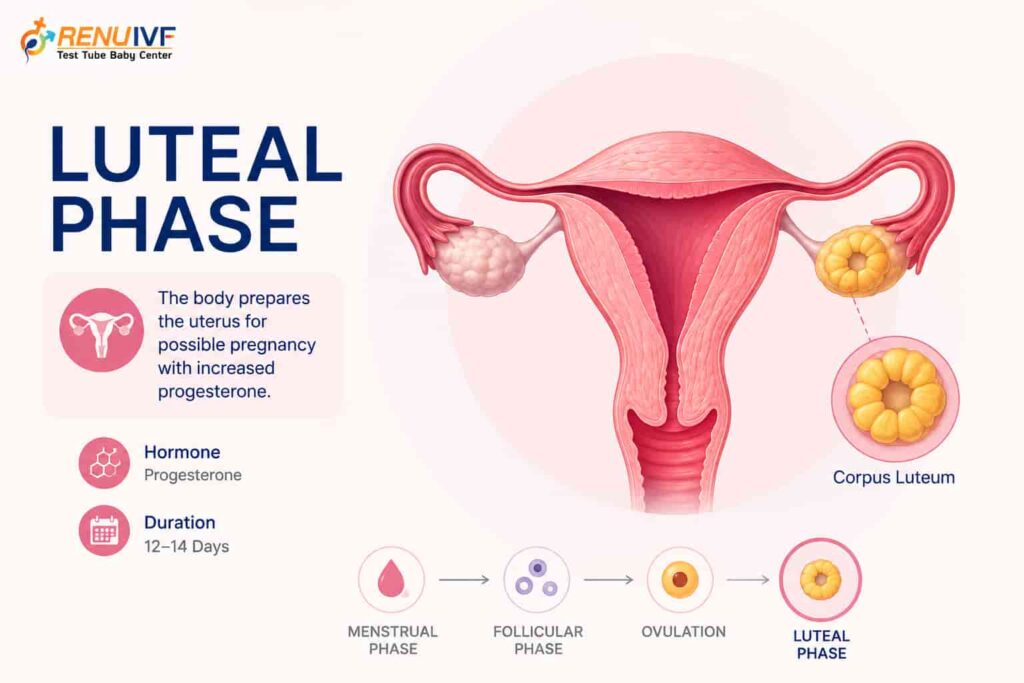
To understand what is luteal phase, it helps to picture the menstrual cycle in two halves. The first half, before ovulation, is about developing and releasing an egg. The second half, the luteal phase, is about preparing the uterus in case that egg gets fertilised. Once ovulation happens, the follicle that released the egg transforms into a temporary structure called the corpus luteum. This structure produces progesterone, a hormone that thickens and softens the uterine lining so a fertilised egg has a healthy place to implant. If pregnancy does not happen, progesterone levels drop, the lining sheds, and the next period begins.
In simple words, the luteal phase of the menstrual cycle is the window between ovulation and the next period, during which the body is actively working to support a possible pregnancy. A common question women ask is when does luteal phase start, and the answer is straightforward it begins immediately after ovulation. In a typical 28-day cycle, ovulation usually happens around day 14, which means the luteal phase starts around day 15 and continues until the next period. For most women, this phase lasts about 12 to 14 days, and if it consistently runs shorter than around 10 days, the uterus may not get enough time to prepare properly for implantation.
Follicular and Luteal Phase: Understanding the Difference
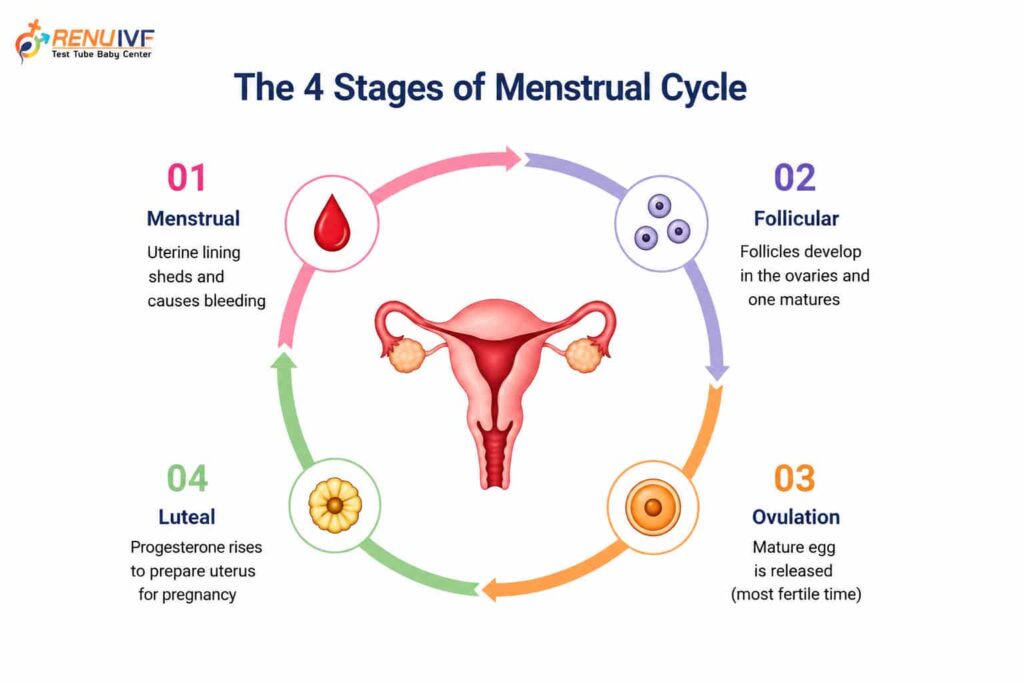
To fully understand luteal phase defect, it helps to see how it fits into the bigger picture of the menstrual cycle. The cycle has four stages. It begins with the menstrual phase, when the uterine lining sheds and causes bleeding. This is followed by the follicular phase, during which several follicles begin developing in the ovaries and one becomes dominant, maturing to release an egg. Next comes ovulation, the most fertile point in the cycle, when the mature egg is released. Finally, the luteal phase begins, and progesterone rises to prepare the uterus for a possible pregnancy. Estrogen dominates the first half of the cycle, while progesterone takes over in the second half, and this shift in hormones is really what separates the two phases functionally.
| Feature | Follicular Phase | Luteal Phase |
| Starts | First day of period | After ovulation |
| Ends | Ovulation | Next period or pregnancy |
| Main hormone | Estrogen | Progesterone |
| Main purpose | Egg development | Preparing uterus for pregnancy |
| Average duration | 10–16 days | 12–14 days |
Luteal Phase Defect Meaning
Now that the basics are clear, the luteal phase defect meaning becomes easier to understand. A luteal phase defect happens when the luteal phase is unusually short, or when the body simply does not produce enough progesterone after ovulation. Since progesterone is what prepares the uterine lining, low levels can mean the lining doesn’t thicken enough to properly support implantation. This can make it harder for a fertilised egg to implant, and in some cases it may contribute to early pregnancy loss.
It’s worth being upfront here luteal phase defect is not a condition every fertility specialist agrees on in exactly the same way. Some doctors consider it a clear, diagnosable issue, while others feel the diagnostic tests traditionally used for it aren’t reliable enough on their own to confirm the condition with certainty. This is exactly why a proper fertility work-up matters far more than trying to self-diagnose based on symptoms alone, and why seeing a specialist rather than guessing is the safer route.
What Causes Luteal Phase Defect?
There is rarely a single cause behind a luteal phase defect. More often, it develops from a combination of hormonal and lifestyle factors working together. Hormonal imbalance and poor functioning of the corpus luteum are among the most direct causes, since the corpus luteum is what actually produces progesterone after ovulation. Thyroid disorders and high prolactin levels can also disrupt the hormonal signals the ovaries depend on, while conditions like PCOS and endometriosis are commonly linked to irregular luteal phases as well. Beyond these medical conditions, everyday factors such as excessive stress, very low body weight or obesity, over-exercising, poor nutrition, and the natural decline in ovarian reserve that comes with age can all play a role too.
One of the biggest contributors specifically is low progesterone after ovulation. Normally, the corpus luteum produces enough progesterone to keep the uterine lining ready for pregnancy. When it doesn’t, the lining may stay thin, making implantation harder though it’s worth noting that low progesterone alone doesn’t automatically mean infertility for every woman. Causes of low progesterone often overlap with the causes of luteal phase defect itself, and commonly include irregular ovulation, poor egg quality, PCOS, thyroid disease, chronic stress, excessive weight loss, over-exercising, age-related decline, premature ovarian insufficiency, and other chronic health conditions that quietly interfere with normal hormone production.
Luteal Phase Symptoms
Many women with a luteal phase defect notice no symptoms at all, which is part of what makes it easy to miss. Others may experience signs that are worth paying attention to, such as unusually short menstrual cycles, spotting before periods, difficulty getting pregnant despite regular attempts, recurrent early miscarriage, irregular periods, breast tenderness, mood changes, and general fatigue that doesn’t have an obvious explanation.
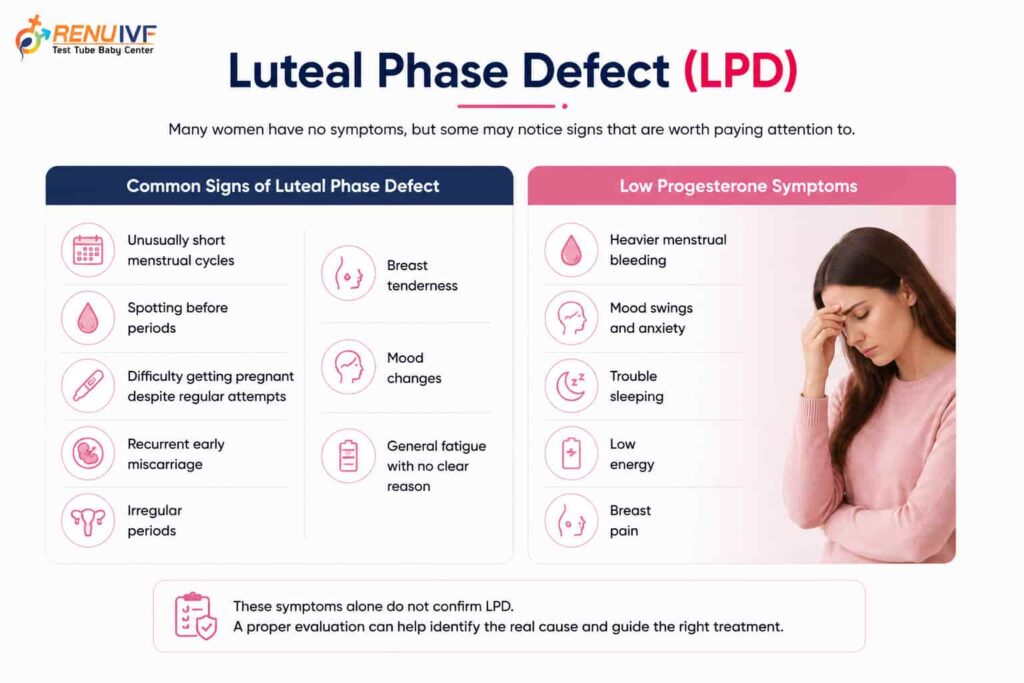
Since progesterone plays such a central role after ovulation, low progesterone symptoms tend to overlap with the above but also bring a few additional signs, including heavier menstrual bleeding, mood swings and anxiety, trouble sleeping, low energy, and breast pain, alongside the same core concerns of difficulty conceiving and early pregnancy loss. None of these symptoms on their own confirm a luteal phase defect; they simply signal that it may be worth getting checked properly.
| Normal Luteal Phase | Luteal Phase Defect |
| Lasts 12–14 days | Often shorter than 10 days |
| Normal progesterone levels | Low progesterone levels |
| Healthy uterine lining | Thin uterine lining |
| Supports implantation | Implantation may be difficult |
| Regular cycle | Spotting before periods possible |
Luteal Phase Discharge and Luteal Phase Pregnancy
Vaginal discharge naturally changes across the cycle, and luteal phase discharge is usually thick, creamy, and white or slightly yellow, much less slippery than the discharge seen around ovulation. This happens because progesterone becomes the dominant hormone once ovulation is over. Occasional light spotting before a period is common and not always a concern, but if it happens every single cycle, it’s worth mentioning to a doctor, since repeated spotting can sometimes point to low progesterone or a luteal phase defect.
The luteal phase pregnancy window is when the earliest, most fragile stage of pregnancy support happens. If fertilisation occurs, progesterone keeps the uterine lining thick, prevents early uterine contractions, and supports the embryo until the placenta develops enough to take over hormone production on its own. If progesterone drops too early, the lining can start breaking down before the pregnancy has a real chance to establish itself, which is one reason doctors sometimes prescribe progesterone support for women with a history of pregnancy loss or known fertility conditions. This kind of decision should always be made with a specialist, never self-prescribed.
How Is Luteal Phase Defect Diagnosed?
There’s no single definitive test for luteal phase defect, so diagnosis usually comes from a combination of medical history and targeted investigations. A doctor will typically start with a detailed look at your menstrual history and ovulation pattern, then move to blood tests measuring progesterone after ovulation, along with thyroid hormone and prolactin testing to rule out other hormonal contributors. Ultrasound monitoring helps confirm follicle development and ovulation timing, and screening for PCOS or endometriosis is often included since both conditions frequently overlap with luteal phase issues.
| Test | Purpose |
| Progesterone blood test | Measures progesterone after ovulation |
| Pelvic ultrasound | Confirms ovulation and follicle growth |
| Thyroid function test | Checks for thyroid disorders |
| Prolactin test | Identifies hormonal imbalance |
| Ovulation tracking | Confirms timing of ovulation |
| Fertility assessment | Rules out other infertility causes |
Luteal Phase Defect Treatment
Luteal phase defect treatment depends entirely on what’s causing it. Since it’s usually a symptom of an underlying hormonal issue rather than a standalone disease, treatment typically starts with correcting the root cause, whether that’s treating a thyroid disorder, managing PCOS, or correcting elevated prolactin levels. Alongside this, doctors may recommend lifestyle changes, ovulation-inducing medication where needed, or progesterone supplementation in selected cases. It’s important never to start progesterone on your own, since the right dose and timing depend on your specific ovulation pattern and overall medical picture this decision belongs with a fertility specialist, not a pharmacy counter.
When tests confirm low progesterone levels specifically, low progesterone treatment may involve progesterone tablets, vaginal suppositories or gels, or injections, depending on what suits the individual case. Alongside direct progesterone treatment, doctors often address ovulation with medication, treat any underlying thyroid or hormonal disorder, and recommend weight management, stress reduction, and better nutrition, since all of these influence how well the body produces and uses progesterone naturally.
Luteal Phase Support and IVF
Luteal phase support refers to the treatments and lifestyle steps that help maintain healthy progesterone after ovulation. It’s especially relevant for women going through IVF, since the ovarian stimulation medications used in the process can interfere with the body’s natural progesterone production. Support typically includes progesterone supplements, regular post-ovulation monitoring, good nutrition, stress management, adequate sleep, and avoiding smoking and alcohol, with the exact plan varying from person to person based on their treatment protocol.
A common question is whether Luteal Phase Defect IVF treatment is actually necessary. In most cases, if LPD is the only issue identified, IVF isn’t the first step doctors usually try correcting the hormonal imbalance and adding progesterone support first. IVF becomes more relevant when additional factors are involved, such as blocked fallopian tubes, significant male infertility, advanced maternal age, or when simpler treatments haven’t worked. During IVF cycles specifically, progesterone supplementation is routinely used as part of luteal phase support to help the uterine lining stay ready for embryo implantation.
Lifestyle Tips for a Healthy Luteal Phase
Lifestyle changes cannot fix every hormonal problem on their own, but they genuinely support the body’s ability to regulate hormones well. Eating a balanced diet with plenty of fruits and vegetables, along with proteins like eggs, fish, lentils, and beans, gives the body the building blocks it needs for hormone production. Choosing whole grains over refined carbohydrates and including foods rich in vitamin B6, magnesium, zinc, and healthy fats can also make a meaningful difference over time. Maintaining a healthy body weight, exercising moderately without overtraining, sleeping seven to eight hours a night, and managing stress through yoga or meditation all support a healthier hormonal environment. Avoiding smoking and limiting alcohol rounds out the basics, and of course, following your specialist’s guidance on any prescribed fertility treatment matters more than any lifestyle tweak on its own.

| Include More | Limit |
| Green leafy vegetables | Sugary drinks |
| Citrus fruits | Processed foods |
| Nuts and seeds | Fried foods |
| Whole grains | Excess sweets |
| Lentils and beans | Highly processed snacks |
| Eggs and fish | Excess alcohol |
| Yogurt | Excess caffeine |
When Should You See a Fertility Specialist?
- You’ve been trying to conceive for a year without success (six months if you’re over 35)
- Your cycles are consistently short or irregular
- You notice repeated spotting before your period
- You’ve had recurrent miscarriages
- You’ve been diagnosed with PCOS, endometriosis, or thyroid disease
- Blood tests show hormonal imbalance
- You suspect low progesterone after ovulation
- Previous fertility treatment hasn’t worked
If you’re searching for an infertility specialist in Kanpur or looking for an affordable IVF centre in Kanpur, getting a proper diagnostic evaluation early is the single biggest factor in improving your chances waiting and hoping rarely helps.
Frequently Asked Questions
What is the luteal phase?
It’s the second half of the menstrual cycle, starting right after ovulation and lasting until the next period or pregnancy.
What is Luteal Phase Defect?
A condition where the luteal phase is too short or progesterone production after ovulation is insufficient, which may affect implantation.
Can low progesterone affect pregnancy?
Yes, low progesterone after ovulation can make it harder for the uterine lining to support implantation and early pregnancy in some women.
Is LPD a common cause of infertility?
It’s considered one possible factor, not among the most common. Many women with LPD still conceive with the right evaluation and support.
Can luteal phase defect be treated?
Yes, treatment depends on the underlying cause and can include progesterone support, ovulation treatment, or managing an existing hormonal condition.
Conclusion
The luteal phase may not get as much attention as ovulation, but it plays just as important a role in the chances of conceiving. When this phase is too short, or when low progesterone levels prevent the uterine lining from developing properly, it can quietly make pregnancy harder to achieve, but it’s rarely the whole story, and it’s very often treatable once identified correctly. A complete fertility evaluation matters far more than trying to piece together symptoms on your own. If you’re dealing with irregular cycles, repeated spotting, or difficulty conceiving, Renu IVF offers experienced fertility specialists, thorough diagnostic evaluation, and personalised treatment plans to help you understand what’s actually going on and what your options are. As a trusted and affordable IVF centre in Kanpur, Renu IVF is here to guide you through this process with clarity and the right medical support, every step of the way.