

Introduction
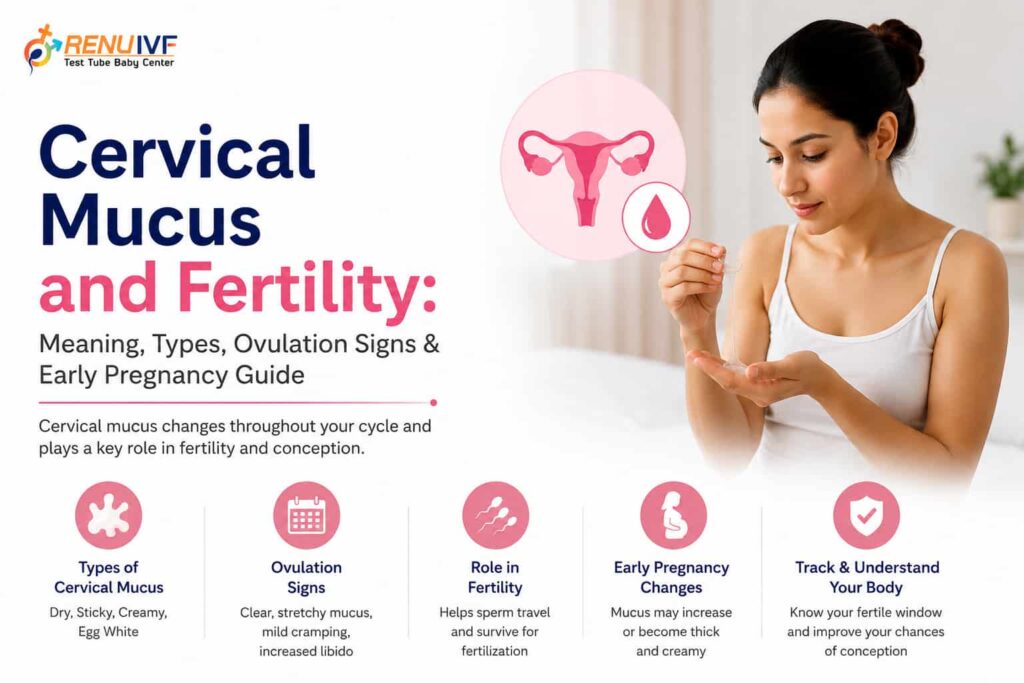
Most women notice some form of vaginal discharge every day but don’t think much about it. What many don’t realize is that this discharge known as cervical mucus or cervical fluid is one of the most useful natural indicators of fertility and reproductive health. Its texture, color, and amount shift throughout the menstrual cycle in response to hormones, and learning to read these changes can help with pregnancy planning, whether you’re trying to conceive or simply trying to understand your own body better.
This guide covers the cervical mucus meaning, how it changes during ovulation and after, what it can (and can’t) tell you about early pregnancy, and how it connects to overall female fertility.
What is Cervical Mucus?
Cervical mucus is a natural fluid produced by glands inside the cervix. Unlike random discharge, its consistency changes in a fairly predictable pattern tied to the menstrual cycle, driven mainly by two hormones estrogen and progesterone. At different points in the cycle, cervical secretions can be thick and sticky, creamy, watery, or clear and slippery.
Its core job is to support conception: it helps healthy sperm survive inside the reproductive tract, filters out weaker sperm, and makes it easier for sperm to travel toward the egg during the fertile window. Because of this, cervical mucus and fertility are closely linked tracking one gives you real insight into the other.
How Hormones Shape Cervical Mucus
In the first half of the cycle, rising estrogen makes cervical mucus progressively thinner, clearer, and more slippery ideal conditions for sperm survival. After ovulation, progesterone takes over and the mucus becomes thicker, creamier, and stickier, which helps protect the uterus and, if fertilization has occurred, supports implantation. Healthy hormone balance is what keeps this whole cycle functioning properly, so anything that disrupts estrogen or progesterone levels tends to show up in cervical mucus first.
Cervical Mucus Through the Menstrual Cycle
| Stage of Cycle | Typical Appearance |
| During period | Mixed with menstrual blood |
| Just after period | Little to no discharge, dry |
| Before ovulation | Creamy or sticky |
| Cervical mucus during ovulation | Clear, stretchy, slippery, egg white-like |
| Cervical mucus after ovulation | Thick, creamy, sticky |
| Cervical mucus before period | Reduced discharge or thick white mucus |
Types of Cervical Mucus
Different types of cervical mucus show up at different points in the cycle, and each one tells you something about where you stand fertility-wise.
- Dry: Little to no discharge, common right after periods, low fertility
- Sticky: Thick, slightly cloudy or white, fertility still relatively low
- Creamy: Smooth, lotion-like texture, fertility beginning to rise
- Watery: Thin and wet, easier for sperm to travel, fertility higher
- Egg white discharge: Clear, stretchy, slippery — the most fertile type, closely resembling raw egg white
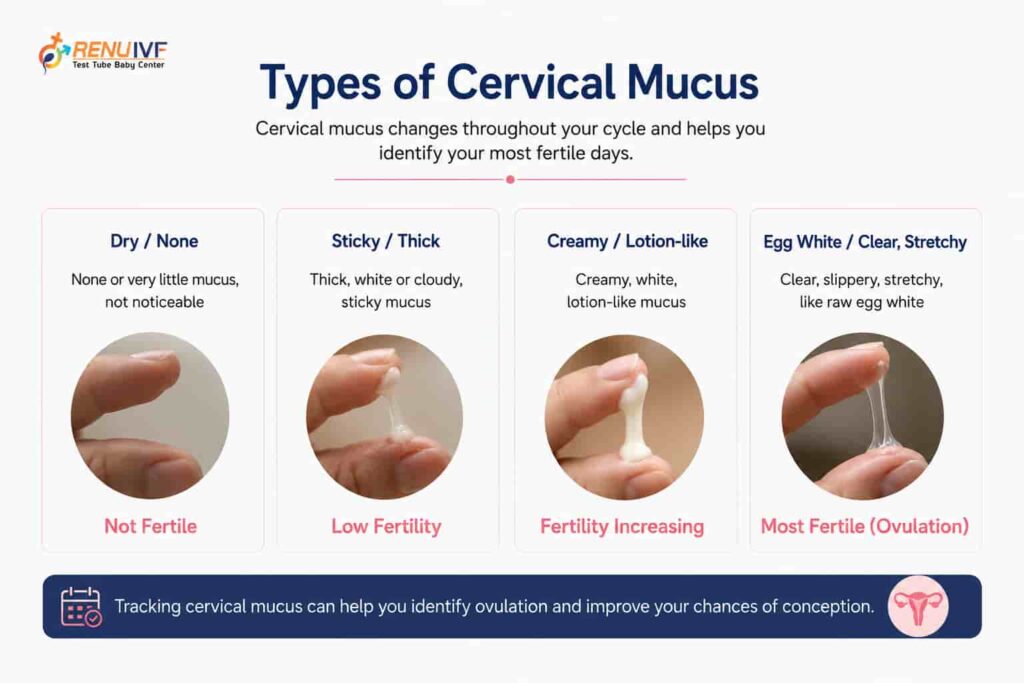
When egg white discharge shows up, ovulation is typically close, making it one of the clearest natural fertility signals available.
Cervical Mucus During Ovulation
At ovulation, estrogen peaks, and cervical mucus becomes clear, stretchy, wet, and slippery the classic ovulation discharge that makes it easiest for sperm to swim toward the egg and survive for several days inside the reproductive tract. This is generally considered the most fertile window in the cycle, and many fertility specialists recommend timing intercourse around it when actively trying to conceive. Some women track this alongside ovulation predictor kits or basal body temperature charts for extra confirmation, since mucus alone while useful isn’t always perfectly precise for everyone.
Understanding the Fertile Window
The fertile window generally covers the five days leading up to ovulation, the day of ovulation itself, and roughly one day after, since sperm can survive inside fertile mucus for several days. It’s worth keeping in mind that this is a general average rather than a fixed rule actual fertile windows shift slightly from woman to woman and even cycle to cycle, so tracking your own mucus pattern over a few months tends to be more reliable than relying on a single average figure.
Cervical Mucus After Ovulation
Once ovulation has passed, progesterone rises and estrogen falls, and cervical mucus after ovulation shifts to something thicker, creamier, and less slippery than the fertile-window discharge. This is completely normal the mucus’s job at this stage isn’t to help sperm travel anymore but to form a protective barrier for the uterus.
Cervical Mucus After Fertilization
If fertilization has occurred, cervical mucus after fertilization tends to change gradually rather than suddenly. Continued progesterone production usually keeps mucus creamy, thick, and moist, and some women notice a mild increase in discharge as the body starts supporting early pregnancy. That said, this varies a lot between women, and cervical mucus alone should never be treated as confirmation of pregnancy a proper pregnancy test remains the only reliable way to know.
Is Cervical Mucus an Early Pregnancy Sign?
This is one of the most searched questions on the topic, and the honest answer is: sometimes, but not reliably on its own. Possible cervical mucus early pregnancy signs include increased creamy white discharge, a milky tone, and a general sense of more moisture than usual. These changes happen because pregnancy hormones increase blood flow to reproductive organs and stimulate cervical secretions.
The complication is that very similar discharge shows up naturally before a period too, since progesterone is elevated after ovulation regardless of pregnancy. That overlap is exactly why cervical mucus should be read alongside other symptoms, not treated as a standalone signal.
Cervical Mucus Before Period vs Early Pregnancy
| Cervical Mucus Before Period | Cervical Mucus in Early Pregnancy |
| Thick and creamy | Creamy or milky |
| Often decreases before period | Often increases gradually |
| Stops when period begins | Continues past the expected period date |
| Progesterone starts dropping | Pregnancy hormones keep rising |
Even with these general differences, the two can look nearly identical in practice which is exactly why a test, not mucus-watching, is what actually confirms pregnancy.
What Does Healthy Cervical Mucus Discharge Look Like?
Healthy cervical mucus discharge is generally clear or white, has no strong or unpleasant smell, feels smooth rather than irritating, turns stretchy during ovulation and creamier afterward, and doesn’t come with itching, burning, or discomfort.
Signs of Unhealthy Cervical Mucus
Not every kind of discharge is normal. Watch for:
- Green, yellow, or grey discharge
- A strong, unpleasant smell
- Thick, cottage cheese-like texture
- Burning or itching
- Pelvic pain
- Blood-streaked discharge unrelated to your period
These symptoms point toward infection or another condition that needs medical attention rather than home tracking.
What Affects Cervical Mucus Production?
A number of factors can disrupt normal cervical secretions, including hormonal imbalance, low estrogen, vaginal infections, PCOS, thyroid disorders, certain medications, smoking, chronic stress, dehydration, and prior cervical surgery. Treating whichever underlying cause applies is usually what restores normal mucus patterns, rather than trying to manage the discharge symptom directly.
Can Poor Cervical Mucus Affect Fertility?
Yes, to a degree. Since healthy mucus is what allows sperm to travel through the cervix and survive long enough to reach the egg, insufficient or unhealthy mucus can make conception take longer by reducing sperm movement and survival. That said, poor cervical mucus is rarely the sole reason behind infertility it’s usually assessed alongside ovulation patterns and hormone levels rather than in isolation.
If you’ve noticed very little fertile mucus over several cycles or are facing ongoing difficulty conceiving, it’s worth consulting a fertility specialist in Kanpur for a proper evaluation. A thorough assessment can identify whether the issue is hormonal, ovulation-related, or specific to cervical mucus itself something that’s genuinely hard to figure out through self-tracking alone.
Lifestyle Habits That Support Healthy Cervical Mucus
- Drink plenty of water through the day
- Eat a balanced diet with fruits, vegetables, and healthy fats
- Maintain a healthy body weight
- Sleep 7–8 hours a night
- Manage stress through yoga or meditation
- Avoid smoking and limit alcohol
- Exercise moderately, without overtraining
These habits support general hormone balance, which in turn supports healthier cervical secretions though they work best as one part of a broader reproductive health routine, not a replacement for medical evaluation when something’s genuinely off.
When Should You See a Doctor?
Get evaluated if you notice very little cervical mucus most months, are struggling to conceive after a year of trying, have had recurrent miscarriages, experience pain during ovulation, or notice persistent abnormal, foul-smelling, or irritating discharge. Couples dealing with these patterns for several cycles often benefit from a full evaluation at a leading IVF centre in Kanpur, where ovulation, hormone levels, and cervical health can all be checked together rather than guessed at individually.
Conclusion
Cervical mucus is far more than ordinary discharge it’s a genuine, trackable signal of where you stand in your menstrual cycle and how fertile you currently are. Understanding its normal patterns, from ovulation discharge through to what happens before your period, makes it easier to plan around your fertile window and recognize when something might need attention. At Renu IVF, our specialists help couples make sense of these signals properly, combining cervical mucus patterns with hormone testing and ovulation tracking to build a clear, personalized picture of fertility rather than leaving anyone to guess on their own.