
Pregnancy needs a healthy reproductive system, and certain infections quietly damage the organs involved in conception without giving any warning. PID is one such infection. Many women don’t know they have it until they struggle to conceive or start feeling constant pelvic pain. Since PID disease can progress silently, catching it early is the only real way to protect your fertility. This blog covers what PID is, why it happens, how to recognise it, and what to do about it.
PID Full Form: What Is PID?
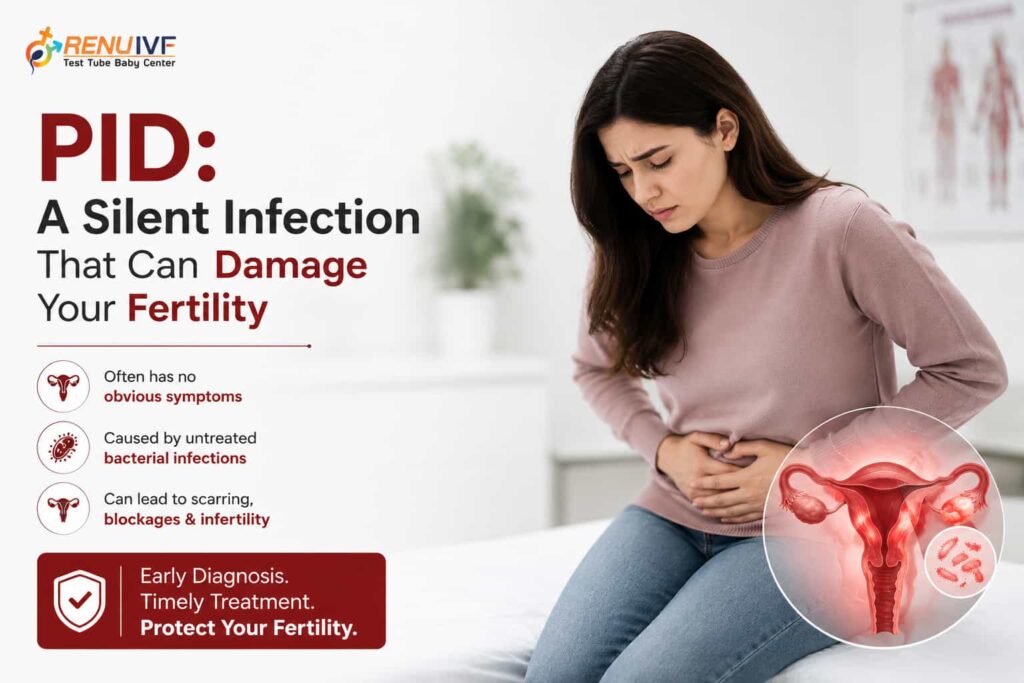
The PID full form is Pelvic Inflammatory Disease. It’s a bacterial infection affecting the uterus, fallopian tubes, ovaries, and surrounding tissue. It starts when bacteria enter through the vagina and move upward through the cervix. Left untreated, it leads to inflammation, scarring, blocked tubes, chronic pelvic pain, ectopic pregnancy, and infertility.
The tricky part about PID disease is that it doesn’t always show clear symptoms some women feel nothing until something’s already gone wrong.
What Is PID Infection and How Does It Spread?
A PID infection develops when bacteria travel from the lower genital tract into the upper reproductive organs, most often linked to untreated chlamydia or gonorrhea, though non-STI bacterial infections can cause it too. Once bacteria reach the uterus and tubes, the body responds with inflammation, which if it lingers turns into scar tissue. Since the fallopian tubes are where egg and sperm meet, even minor scarring lowers natural conception chances.
PID Causes: Why Does This Infection Happen?
- Untreated chlamydia or gonorrhea
- Bacterial vaginosis
- Multiple sexual partners without protection
- Unprotected intercourse
- A past episode of PID
- Recent childbirth, miscarriage, or abortion
- Gynecological procedures without proper infection control
- IUD insertion when infection is already present
- Poor hygiene combined with existing bacterial infection
| Cause / Risk Factor | How It Raises PID Risk |
| Chlamydia | Spreads bacteria into upper reproductive tract |
| Gonorrhea | Triggers inflammation in reproductive organs |
| Unprotected sex | Increases bacterial exposure |
| Multiple partners | Raises STI acquisition risk |
| Previous PID | Increases recurrence chance |
| Bacterial vaginosis | Lets harmful bacteria multiply |
| Recent childbirth/miscarriage | Opens entry path for bacteria |
| Gynecological procedures | Can introduce bacteria if infection exists |
Symptoms of PID in Women
- Persistent lower abdomen or pelvic pain
- Pain during intercourse
- Burning while urinating
- Fever, with or without chills
- Irregular or heavy periods
- Bleeding after sex or between periods
- Fatigue
- Lower back pain
- Difficulty getting pregnant despite trying for months
One symptom alone doesn’t confirm PID. Multiple symptoms together especially pain with unusual discharge or fever need a checkup, not a wait-and-watch approach.
PID Discharge: What Does It Actually Look Like?
Normal discharge is clear or white with mild smell. PID discharge tends to be:
- Yellow or green
- Thick, with a strong or foul odour
- Cloudy or pus-like
- Heavier than usual
- Paired with pelvic pain or fever
Abnormal discharge alone doesn’t confirm PID yeast infections and bacterial vaginosis look similar so it needs testing either way.
PID vs UTI vs Yeast Infection: How to Tell the Difference
Women often confuse these three because the symptoms overlap on the surface. Here’s where they actually differ:
| Condition | Main Symptom | Discharge | Pain Location |
| PID | Pelvic pain, fever | Yellow/green, foul-smelling | Lower abdomen, deep pelvic |
| UTI | Burning urination, frequency | Usually none | Bladder area, lower urinary tract |
| Yeast infection | Itching, irritation | Thick, white, cottage-cheese-like | Vaginal, external |

If symptoms don’t clearly match one category, don’t self-diagnose get a proper evaluation, since treating the wrong condition delays real treatment.
How Is PID Diagnosed?
- Medical and sexual history
- Pelvic examination
- Vaginal and cervical swabs
- Blood tests
- Urine test (mainly to rule out UTI)
- Pelvic ultrasound
- Chlamydia and gonorrhea testing
- Pregnancy test, to rule out ectopic pregnancy
- Laparoscopy in complicated cases
PID During Pregnancy: A Separate Risk
PID is far less common once pregnancy has already begun, since the mucus plug largely blocks bacteria from moving upward. But PID contracted just before conception, or missed and left untreated into early pregnancy, raises risk of ectopic pregnancy, miscarriage, and preterm labour. Any pelvic pain or unusual discharge during pregnancy needs immediate evaluation this isn’t a “wait and see” symptom in this context.
Can PID Cause Infertility?
Yes, particularly when left untreated. Inflammation from PID leaves scarring inside the fallopian tubes, blocking the egg and sperm from meeting. Even after the infection clears, fertility can stay affected if the tubes were already damaged and each repeat PID episode raises the odds of long-term difficulty conceiving.
This is where a proper fertility assessment matters not assumption. If pregnancy hasn’t happened after several months of trying following a PID episode, get evaluated instead of waiting longer.
PID Treatment: Can It Be Cured?
PID treatment works well when caught early. Antibiotics are the main line of treatment, but they only clear infection they can’t undo existing scarring.
- Mild to moderate cases: oral antibiotics
- Severe cases: IV antibiotics with monitoring
- Abscess or non-responsive infection: surgery, in rare cases
- Sexual partners should also get tested and treated
Recovery Timeline After PID Treatment
- Days 1–3: Antibiotics started, pain and fever typically start easing
- Days 4–7: Discharge and inflammation should visibly reduce
- Weeks 2–3: Follow-up visit to confirm infection has cleared
- Months 1–3: If trying to conceive, this is when a fertility specialist in Kanpur may run a tubal check (HSG) to confirm no lasting blockage
Stopping antibiotics early because symptoms improved is one of the most common reasons PID returns or persists complete the full course regardless of how you feel.
How Can PID Be Prevented?
- Use protection consistently
- Limit number of sexual partners
- Get tested for STIs if sexually active
- Don’t ignore abnormal discharge or pelvic pain
- Complete the full antibiotic course if prescribed
- Keep up with regular gynecological checkups
- Avoid excessive douching
- Don’t self-medicate vaginal infections
- Get partners tested if an STI is diagnosed

What If PID Has Already Affected Your Fertility?
If pregnancy still isn’t happening after PID, the next step is proper evaluation, not guesswork. A fertility specialist in Kanpur can check hormone levels, run an ultrasound, and order a tubal patency test (HSG) to confirm whether the tubes are open or blocked. Depending on results, natural conception may still be realistic, or IVF may be the more practical path.
If you’re comparing clinics for a top IVF center in Kanpur, the deciding factor should be whether they run a full fertility workup before recommending treatment not how quickly they push you into a protocol. At Renu IVF, this workup comes first, before any treatment plan is suggested.
PID Symptoms vs Normal Vaginal Changes
| Feature | Normal | Possible PID |
| Discharge | Clear/white, mild smell | Yellow/green, thick, foul-smelling |
| Pelvic pain | Mild cramps | Persistent or severe |
| Fever | Absent | Present in moderate-severe cases |
| Bleeding | During periods only | Between periods or after sex |
| Pain during sex | Usually absent | Frequently present |
| Fertility | Unaffected | May decline if untreated |
FAQs
1. Can PID be cured permanently?
Yes, antibiotics clear the infection if caught early. They can’t reverse existing scarring, so timing matters more than the treatment itself.
2. Can a woman with PID still get pregnant?
Often yes, especially with mild or promptly treated PID. Significant tubal damage makes natural conception harder, and IVF may be needed.
3. What does PID discharge look like?
Usually yellow, green, thick, or foul-smelling, sometimes with pelvic pain or fever. Similar discharge can come from other infections, so testing is necessary.
4. Can PID be seen in urine?
No. Urine testing rules out a UTI but can’t diagnose PID. Diagnosis needs a pelvic exam, swabs, and imaging.
Conclusion
PID isn’t a passing infection left untreated, it can quietly damage your fertility before you notice anything’s wrong. Recognising symptoms early and treating without delay is what actually protects your reproductive health. If you’ve had PID and you’re concerned about fertility, get evaluated instead of waiting. Renu IVF offers a full fertility assessment and personalised treatment planning for exactly this situation. Book a consultation now to know where you actually stand.