
Pregnancy is a deeply personal journey, and every woman deserves safe, informed medical care when making decisions about her reproductive health. Sometimes, due to personal, medical, or social reasons, a woman may face an unwanted pregnancy and consider ending it. A safe abortion performed under a qualified doctor’s guidance is generally low-risk. However, an unsafe abortion, meaning one done without proper medical supervision, can lead to serious complications, especially for women who have already had three cesarean section deliveries. Repeated c-section surgeries leave the uterus with layers of scar tissue, making it more vulnerable to heavy bleeding, injury, and infection if an abortion is attempted without proper evaluation. This blog explains the abortion meaning, the risks specific to women with three previous c-sections, warning symptoms, treatment options, and how to prevent unwanted pregnancy, all in simple language.
What Is Abortion?
Before going further, it helps to understand the abortion meaning clearly. Abortion is the medical process of ending a pregnancy before the baby can survive outside the uterus. Depending on how many weeks pregnant a woman is and her overall health, this can be done using medicines, known as a medical abortion, or through a minor procedure. When carried out legally by a trained doctor using approved methods, abortion is a safe, well-established part of reproductive healthcare. Problems arise only when it happens outside proper supervision, in unhygienic conditions, or without confirming details like how far along the pregnancy is.
Many women delay seeking medical advice because of fear, stigma, or not knowing where to go, and this delay often turns a manageable situation into a dangerous one. Understanding the correct abortion meaning, and knowing that safe options exist, helps women avoid risky shortcuts.
What Is an Unsafe Abortion?
An unsafe abortion is any abortion carried out without proper medical supervision. This includes taking an abortion pill or abortion tablets bought without a prescription, visiting an untrained provider, or trying home remedies to end a pregnancy.
An abortion is more likely to become unsafe when:
- The pregnancy has not been confirmed with an ultrasound
- Medicines are taken without knowing exactly how many weeks pregnant the woman is
- The woman has a history of uterine surgery, such as a c section delivery
- The procedure happens in an unhygienic setting
- Signs of incomplete abortion are ignored
- Heavy bleeding or pain is not treated promptly
For women who have had multiple cesarean deliveries, these risks are significantly higher because the uterus already carries scar tissue from previous surgeries.
What Is a Cesarean Section?
A cesarean section, commonly called a c section, is a surgery used to deliver a baby through incisions in the mother’s abdomen and uterus, instead of a vaginal birth. The c section delivery meaning is simply childbirth through surgery rather than through the birth canal. Doctors recommend it when a vaginal delivery could put the mother or baby at risk, such as when the baby is in a breech position, the placenta covers the cervix, there are signs of fetal distress, labor is not progressing, or the mother has a condition like severe hypertension.
Cesarean delivery is common and often life-saving, but every surgery leaves a scar on the uterus. With each additional c-section, that scar tissue builds up, and the uterus can gradually become less elastic and more prone to complications in future pregnancies or procedures, including abortion.

Types of Cesarean Section
| Type of Cesarean Section | Description |
| Elective Cesarean Section | Planned in advance, before labor begins |
| Emergency Cesarean Section | Performed urgently when complications arise during labor |
| Lower Segment Cesarean Section (LSCS) | The most common type, with a lower uterine incision |
| Classical Cesarean Section | A vertical incision on the upper uterus, used only in special cases |
Why Are Three Cesarean Deliveries Considered High Risk?
Every c-section leaves scar tissue inside the uterus. After a single surgery, most women heal well. But after two or three surgeries, this scar tissue becomes thicker, and the uterus may lose some natural strength and elasticity.
After three c section deliveries, women face a higher chance of a weak or thin uterine scar, dense internal adhesions, placenta-related complications in future pregnancies, heavy bleeding during any uterine procedure, uterine rupture in advanced pregnancy or induced labor, injury to nearby organs during surgery, and a longer c section recovery time after any future procedure.
This is why any pregnancy, or any abortion procedure, after three cesarean deliveries should always be managed by an experienced gynecologist.
Why Is Abortion After 3 Cesarean Deliveries More Complicated?
A woman with three previous c-sections has a uterus with several layers of scar tissue. If she has an unwanted pregnancy and considers an abortion, this scarred area needs careful assessment before any medicine or procedure is used. The risk also depends heavily on how many weeks pregnant she is; a first-trimester medical abortion carries a different risk profile than a more advanced pregnancy.
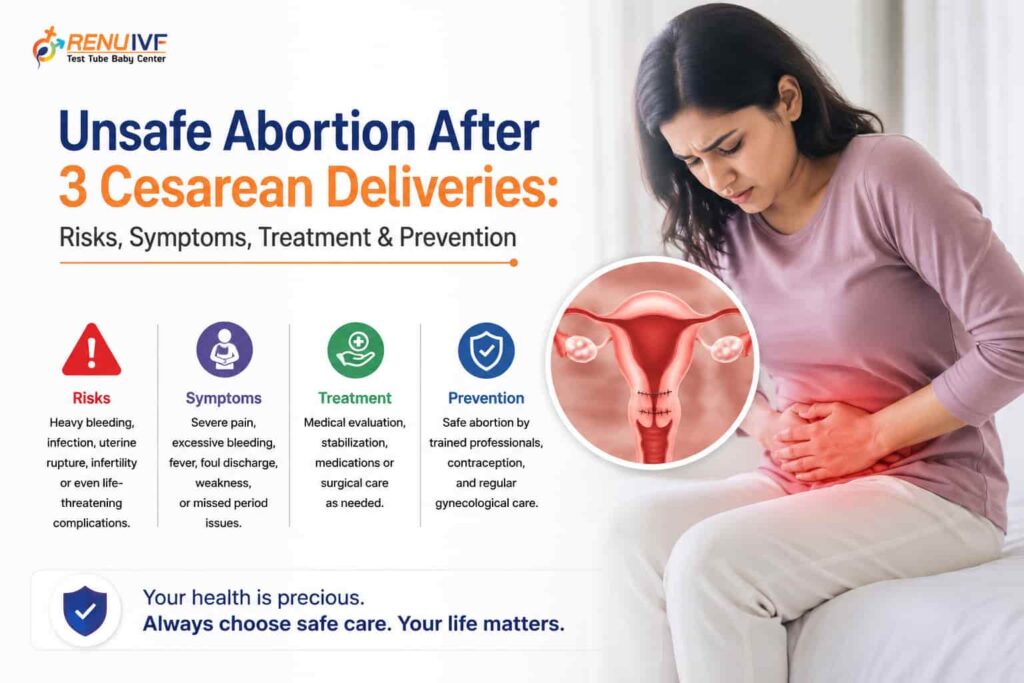
Without proper evaluation, possible complications include excessive bleeding, incomplete abortion with tissue left behind, injury to the existing cesarean scar, pelvic infection, and in rare, more advanced cases, uterine rupture or emergency surgery. This is exactly why every woman with a previous c section delivery should have an ultrasound before considering any abortion procedure.
Medical Abortion, Abortion Pills, and Mifepristone
A medical abortion means ending an early pregnancy using medicines rather than surgery, generally recommended only after confirming the pregnancy’s location and duration through an ultrasound, and always supervised by a doctor.
A common misconception is that any abortion pill or abortion tablets bought without medical advice is automatically safe. This is not accurate, particularly for women who have had multiple c-sections, where the uterus needs closer monitoring during the process.
The main medicine used in a medical abortion is Mifepristone, sometimes misspelled online as “mifeprimestone.” It works by blocking progesterone, the hormone the body needs to continue a pregnancy. This is usually followed by a second medicine, Misoprostol, which causes the uterus to contract and pass the pregnancy tissue.
Medical abortion works best, and is safest, when it is confirmed by ultrasound beforehand, prescribed by a qualified doctor, used within the recommended gestational limit, and followed by a scheduled medical review. Self-medication without any of these steps is where the real danger lies, not the medicine itself when used correctly.
Common Causes of Unwanted Pregnancy After C-Section
Many women assume pregnancy cannot happen soon after a c section delivery, but this is a common misconception. Ovulation can return before regular periods do, meaning an unwanted pregnancy is possible within just a few months of childbirth. Common reasons include not starting contraception after delivery, irregular ovulation, believing breastfeeding alone prevents pregnancy, missed contraceptive pills, a method not working as expected, and delaying family planning discussions with a doctor.
Symptoms of Unsafe Abortion After 3 Cesarean Deliveries
Some mild cramping and light bleeding are expected after a medically supervised abortion. However, in women with a history of three cesarean deliveries, certain symptoms should never be brushed off, since the scarred uterus may not respond the way an unscarred one would.
Warning signs to watch for include:
- Heavy vaginal bleeding, or soaking through pads quickly
- Severe or worsening lower abdominal pain
- Fever or chills
- Foul-smelling vaginal discharge
- Dizziness or fainting
- Rapid heartbeat
- Persistent vomiting
- Passing very large blood clots
- Signs that pregnancy tissue has not fully passed

Heavy Bleeding
Some bleeding is normal after any abortion, but soaking multiple pads within an hour or passing large clots is an emergency. In women with three previous c-sections, this can happen because the scarred area of the uterus may not contract as effectively as normal uterine tissue. Emergency treatment can involve IV fluids, medicines to control bleeding, a blood transfusion, or surgery if needed.
Infection After Abortion
Infection after abortion is a serious complication that can turn life-threatening if untreated. It usually develops when tissue remains inside the uterus or the abortion was performed in unhygienic conditions. Common signs include fever above 38°C, chills, worsening pelvic pain, foul-smelling discharge, and general weakness. If the infection spreads into the bloodstream, it can lead to sepsis, which needs immediate hospital care.
Uterine Rupture
Uterine rupture is uncommon overall, but the risk is higher in women with multiple previous cesarean scars, particularly when strong uterine contractions occur in a more advanced pregnancy. Symptoms include sudden severe abdominal pain, a rapid drop in blood pressure, heavy bleeding, and fainting. This condition needs emergency surgery immediately.
Uterine Perforation and Organ Injury
When an abortion procedure, especially a D&C, is performed by an untrained person or without proper ultrasound guidance, there is a risk of uterine perforation, meaning a hole or tear in the uterine wall. In women with three previous cesarean scars, the uterus is already weaker in certain areas, which makes perforation more likely if the procedure is not done carefully.
A uterine perforation can also injure nearby organs, such as the bowel or the bladder, since they sit close to the uterus. This kind of injury is a serious surgical emergency and usually needs immediate imaging, close monitoring, and often surgery to repair the damage.
Warning signs that may point to this kind of injury include: Severe, unrelenting abdominal pain that does not improve Signs of internal bleeding, such as dizziness or a rapid drop in blood pressure Difficulty urinating or blood in urine, which may indicate bladder injury Fever or signs of infection developing after the procedure
This is one of the strongest reasons an abortion procedure after multiple c-sections should only ever be performed by a trained gynecologist using proper ultrasound guidance, never by an untrained provider.
🎥 Watch: [3 Cesarean के बाद Unsafe Abortion पड़ा भारी | जानलेवा हो सकती हैं ये गलतियां | Dr. Renu Singh]https://youtube.com/shorts/2k3YwavjDWs?
Incomplete Abortion
An incomplete abortion happens when some pregnancy tissue is left behind in the uterus. This can cause ongoing bleeding, cramping, fever, and delayed recovery. Doctors typically confirm this with an ultrasound and treat it accordingly.
How Doctors Diagnose Complications
If bleeding, pain, or fever develop after any abortion procedure, doctors move quickly to identify the cause. Diagnosis usually involves:
- A detailed medical history, including previous c-sections
- A physical and pelvic examination
- An ultrasound scan
- Blood tests, including hemoglobin levels and blood group
- Tests for signs of infection
These help doctors work out whether there is retained tissue, an injury to the uterus, infection, or significant blood loss.
Treatment of Unsafe Abortion Complications
Treatment depends on how serious the complication is. Some women need only medicines and monitoring, while others need urgent surgery.
| Condition | Treatment |
| Heavy bleeding | IV fluids, medicines, blood transfusion if needed |
| Incomplete abortion | Removal of retained tissue through a safe abortion procedure |
| Infection after abortion | Intravenous antibiotics and hospital care |
| Uterine rupture | Emergency surgery |
| Severe anemia | Blood transfusion and iron therapy |
| Shock | Intensive care and emergency stabilization |
What Does the Abortion Procedure Involve?
The right abortion procedure depends on how far along the pregnancy is, the woman’s overall health, and her surgical history. Options doctors may consider include:
- Medical abortion using approved medicines in early pregnancy
- Vacuum aspiration in selected early pregnancies
- Dilatation and evacuation (D&E) in certain situations, done by an experienced specialist
- Surgical management if the abortion was incomplete
- Emergency surgery if serious complications develop
Women with three previous c-sections should never attempt any abortion procedure without a proper evaluation first, since their risk of complications is meaningfully higher than average.
Recovery After Treatment
Recovery depends on how serious the complications were and how quickly treatment began. Doctors typically advise adequate rest, drinking enough fluids, eating iron-rich foods, taking all prescribed medicines as directed, avoiding heavy lifting for a few weeks, attending every follow-up appointment, and reporting any fever, heavy bleeding, or severe pain right away.
Recovery after treating complications can take longer than a normal c section recovery time, especially after emergency surgery or a serious infection.
Understanding C-Section Recovery Time
The c section recovery time varies between women. The skin incision usually heals in a few weeks, but the uterus itself takes much longer to fully recover.
| Recovery Stage | Expected Time |
| Hospital stay | 2 to 4 days, may vary |
| Skin wound healing | Around 2 to 4 weeks |
| Return to routine activities | About 6 to 8 weeks |
| Internal uterine healing | Several months |
| Recommended gap before next pregnancy | Usually 18 to 24 months |
Women who have had repeated c-sections should follow their doctor’s advice closely during this period, since it directly affects the safety of any future pregnancy or procedure.
How to Avoid Pregnancy After a C-Section
A common misconception is that pregnancy cannot happen soon after c section delivery. In reality, ovulation can return before periods resume, so pregnancy is possible within just a few months.
Practical steps on how to avoid pregnancy include starting a reliable contraceptive method as advised by your doctor, using condoms consistently if no other method is in place, not relying on breastfeeding alone unless your doctor confirms it is appropriate, attending your postpartum follow-up visits, discussing future pregnancy plans openly with your doctor, and not delaying contraception if your family is complete.
Family Planning After Three Cesarean Deliveries
Good family planning is one of the most effective ways to prevent an unwanted pregnancy and reduce the chances of ever needing an abortion. After c section delivery, discussing contraception with your doctor should be a routine part of your postpartum care.
Depending on your health and future plans, options may include:
- Condoms
- Oral contraceptive pills
- Copper-T (IUCD), when suitable
- Hormonal intrauterine devices
- Contraceptive injections
- Contraceptive implants
- Permanent sterilization, if your family is complete
The right choice depends on your age, medical history, breastfeeding status, and future fertility goals, so it is worth a personalized discussion with your doctor rather than guessing.
Healthy Lifestyle After Abortion
Whether an abortion was medical or surgical, the body needs time to heal. Eat a balanced diet rich in protein, iron, and vitamins, drink plenty of water, take all prescribed medicines on time, get adequate rest, avoid smoking and alcohol, maintain good hygiene, avoid strenuous activity until your doctor says it is safe, and attend all follow-up appointments.
Emotional Recovery Matters Too
Recovery is not only physical. Many women feel anxiety, guilt, sadness, or worry about future pregnancies after an abortion or after complications from an unsafe one. These feelings are common and valid. Talking openly with your doctor, partner, family, or a trained counselor can make a real difference, and asking for support is not a weakness.
Myths and Facts About Abortion After Multiple C-Sections
| Myth | Fact |
| Any abortion pill is safe to take on your own | It should only be used under medical supervision after proper evaluation |
| Three previous c-sections make no difference to abortion risk | Multiple cesarean scars raise the risk of complications |
| Heavy bleeding after abortion is always normal | Mild bleeding is expected, but heavy bleeding needs emergency care |
| Home remedies can safely end a pregnancy | Home remedies are unsafe and can delay life-saving treatment |
| Once symptoms improve, follow-up is not necessary | Follow-up confirms full recovery and catches complications early |
When Should You See a Doctor Immediately?
Do not wait for symptoms to get worse. Seek emergency care right away if you notice:
- Very heavy vaginal bleeding
- Severe abdominal pain
- High fever
- Foul-smelling discharge
- Fainting or dizziness
- Persistent vomiting
- Severe weakness
- No improvement after taking prescribed medicines
Frequently Asked Questions
Can I have an abortion after three C-sections?
Yes, but only after a thorough medical evaluation and under a qualified gynecologist’s supervision. Self-medication is not safe.
Are abortion tablets safe after multiple cesarean deliveries?
Only when prescribed and supervised by a doctor. Women with previous c-sections need careful assessment before any medical abortion is planned.
What is the biggest risk of unsafe abortion after three C-sections?
The main risks are heavy bleeding, infection after abortion, incomplete abortion, and in rare advanced cases, uterine rupture.
How can I reduce the risk of an unwanted pregnancy?
Through consistent family planning and using a contraceptive method that suits you, discussed with your doctor after delivery.
How long does recovery take after treatment?
It depends on how serious the complication was. It can take longer than the usual c section recovery time, especially after surgery.
Can an unsafe abortion affect future fertility?
Yes, in some cases. Severe infection or uterine damage from delayed treatment can affect future fertility, which is why early diagnosis matters.
When should I consult a specialist?
If you have had previous c-sections and are facing an unwanted pregnancy, see a qualified gynecologist as early as possible rather than attempting anything on your own.
Conclusion
An abortion after three cesarean deliveries is not something to manage alone. The uterus already carries multiple scars, which raises the risk of bleeding, infection, and other complications if the process is not properly supervised. A medical abortion, when confirmed by ultrasound and guided by a qualified doctor, can be safe even after previous c-sections, but self-medication with unsupervised abortion tablets is where real danger begins. Alongside safe treatment, understanding how to avoid pregnancy through proper family planning is just as important for protecting your long-term health after multiple cesarean deliveries.
If you have had multiple c-sections and are dealing with an unwanted pregnancy, planning a future pregnancy, or have any concerns about your reproductive health, do not wait to seek expert guidance. At Renu IVF, a trusted ivf centre in kanpur, our experienced ivf specialist in kanpur and gynecology team are committed to providing compassionate, evidence-based care and personalized guidance to help you make safe, informed decisions about your reproductive health and future fertility.