
Introduction
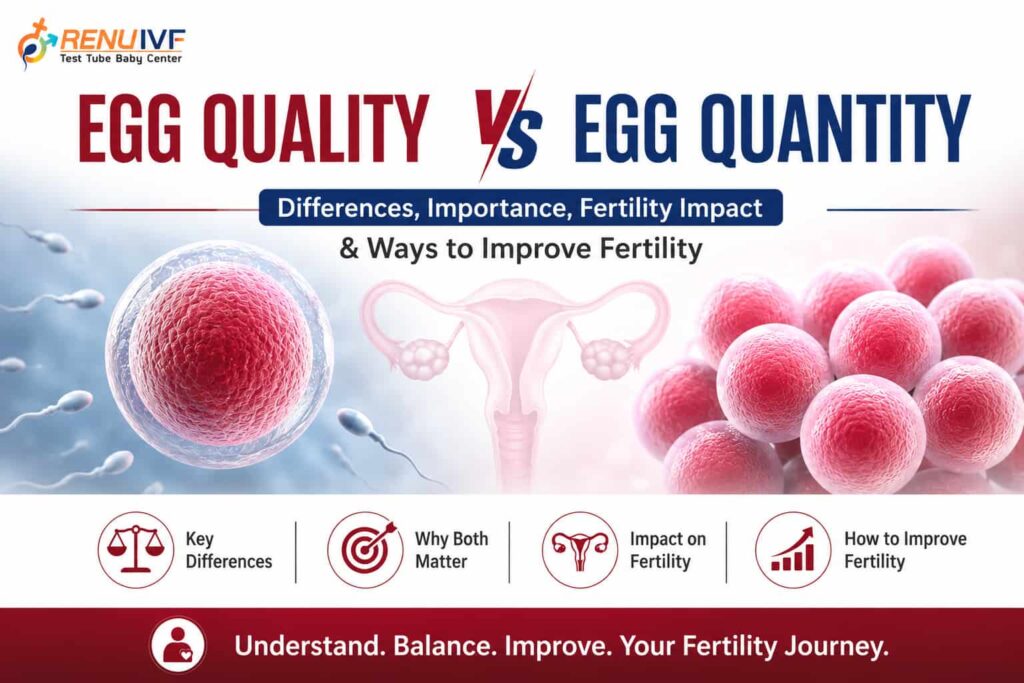
If you have started planning a pregnancy, you may have come across two terms that sound similar but mean very different things: egg quality and egg quantity. Many women assume that having a large number of eggs automatically means good fertility. This is not entirely true. Egg quantity tells you how many eggs are left in your ovaries, while egg quality tells you how healthy those eggs actually are. Both play a role in your ability to conceive, but they are not interchangeable, and confusing the two can lead to unnecessary worry or false reassurance.
This blog breaks down egg quality vs egg quantity in simple language what each one means, how they affect your chances of pregnancy, the signs of bad egg quality to watch for, and practical, doctor-approved ways to improve your fertility. Whether you are trying to conceive naturally or considering IVF, understanding this difference will help you ask your doctor the right questions and make informed decisions.
What Is Egg Quality?
Egg quality refers to the genetic and cellular health of an egg. A good-quality egg has the correct number of chromosomes, which means it can be fertilized normally and has a strong chance of developing into a healthy embryo. A poor-quality egg, even if it looks normal on an ultrasound, may carry chromosomal abnormalities that prevent fertilization, stop embryo development early, or lead to miscarriage.
Egg quality naturally declines with age, and this decline speeds up after 35. This is one of the main reasons fertility drops as women get older, even when periods remain regular and ovulation happens every month.
Healthy eggs are more likely to:
- Fertilize successfully with sperm
- Divide normally and form a healthy embryo
- Implant properly in the uterine lining
- Lower the risk of early miscarriage
- Support a full-term, healthy pregnancy
What Is Egg Quantity?
Egg quantity, also called ovarian reserve, is simply the number of eggs remaining in your ovaries. Every woman is born with all the eggs she will ever have there is no ongoing production like there is with sperm in men. A baby girl is born with roughly 1–2 million eggs. By puberty, this number has already dropped to around 300,000–400,000. From there, it declines steadily every single month, whether or not a pregnancy is being planned.
Doctors typically estimate egg quantity using:
- AMH (Anti-Müllerian Hormone) blood test
- Antral Follicle Count (AFC) via transvaginal ultrasound
- Other supporting hormone tests, such as FSH, when needed
A low egg count does not automatically mean you cannot get pregnant. It means fewer eggs are available the eggs that remain could still be perfectly healthy.
Egg Quality vs Egg Quantity: Key Differences
| Feature | Egg Quality | Egg Quantity |
| What it means | Genetic and cellular health of the egg | Number of eggs left in the ovaries |
| Determines | Ability to form a healthy embryo | Ovarian reserve |
| Changes with age | Declines sharply after 35 | Declines gradually from birth onward |
| How it’s measured | Indirectly — through embryo development, age, genetics | AMH blood test, AFC ultrasound |
| Main impact | Fertilization success, miscarriage risk | Number of eggs available for ovulation or IVF |
| Affects IVF outcomes? | Yes — strongly | Yes — affects number of eggs retrieved |
Why Both Egg Quality and Egg Quantity Matter
Think of it like planting a garden. A packet with a hundred seeds sounds impressive, but if most of the seeds are weak, few plants will actually grow. A smaller packet of strong, healthy seeds can outperform it. Fertility works in a similar way quantity gives you more attempts, but quality determines whether each attempt can actually succeed.
A woman with many eggs but poor egg quality may face:
- Difficulty conceiving despite regular cycles
- Repeated IVF failures
- Poor embryo development in the lab
- Higher risk of miscarriage
A woman with excellent egg quality but low egg quantity may face:
- Fewer opportunities each month or each IVF cycle
- Fewer eggs retrieved during ovarian stimulation
- A need to start fertility treatment sooner rather than later
This is exactly why fertility specialists never look at egg count alone — they assess quality and quantity together before recommending any treatment path.
How Age Affects Egg Quality and Egg Quantity
| Age Group | Egg Quantity | Egg Quality | Pregnancy Chances |
| Under 30 | Very High | Excellent | Highest |
| 30–34 years | High | Very Good | High |
| 35–37 years | Moderate | Starts Declining | Slightly Lower |
| 38–40 years | Lower | Noticeably Reduced | Moderate |
| Above 40 years | Low | Significantly Reduced | Lower |
This does not mean pregnancy becomes impossible after 35 or 40 many women conceive naturally or with fertility support at these ages. But the table above is a good reason not to delay a fertility check-up if you’re planning pregnancy later in life.
Does More Eggs Always Mean Better Fertility?
No and this is one of the most common misunderstandings in fertility conversations. Conditions like PCOS often cause the ovaries to hold a large number of eggs, but ovulation may be irregular and egg quality inconsistent. On the flip side, a woman with a lower ovarian reserve can still conceive if the eggs she does have are healthy.
That’s why doctors combine multiple factors before making any fertility assessment, including:
- Age
- Egg quality indicators
- Ovulation regularity
- Hormonal balance
- Uterine and fallopian tube health
- Partner’s sperm quality
- Overall medical history
Signs of Bad Egg Quality
Poor egg quality usually doesn’t come with obvious symptoms many women continue to have completely regular periods even as egg quality declines. This is what makes it tricky to detect without proper testing. That said, some signs of bad egg quality that doctors look out for include:
- Difficulty conceiving despite regular, unprotected intercourse
- Recurrent or repeated miscarriage
- Poor embryo development during IVF cycles
- Repeated failed IVF attempts
- Lower-than-expected fertilization rates
- Delayed conception at age 35 or above
- Low ovarian response during fertility stimulation
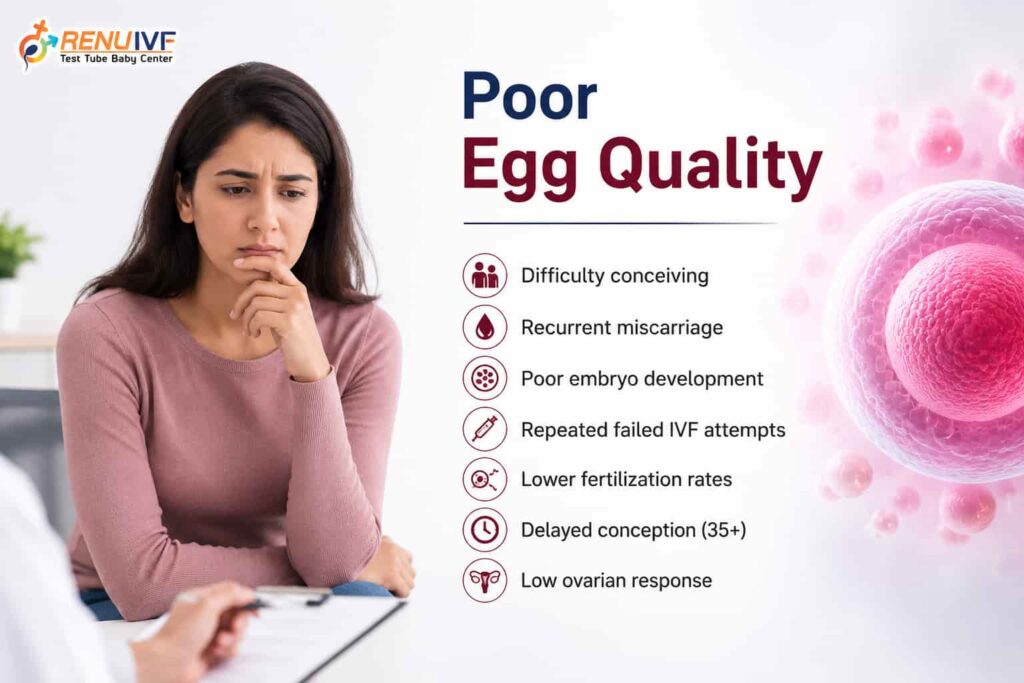
None of these signs confirm poor egg quality on their own they simply indicate that a fertility evaluation is worth doing.
How to Improve Egg Quality Naturally
If you’re researching how to improve egg quality, it helps to know upfront: you cannot create new eggs, and age-related decline cannot be reversed. What you can do is support the health of the eggs currently maturing, since an egg takes roughly three months to develop before ovulation. That three-month window is where lifestyle changes can genuinely make a difference.
How to Improve Egg Quality in Women
Some of the most practical, medically-backed steps for how to improve egg quality in women include:
- Eating a balanced diet with plenty of fresh fruits and vegetables
- Including healthy fats — nuts, seeds, olive oil
- Getting enough protein from pulses, dairy, eggs, fish, or lean meat
- Maintaining a healthy body weight (not too high, not too low)
- Exercising regularly without overtraining
- Sleeping 7–8 hours a night, consistently
- Managing stress through yoga, meditation, or relaxation techniques
- Avoiding smoking and tobacco completely
- Limiting alcohol intake
- Staying well hydrated
- Getting conditions like PCOS, diabetes, or thyroid disorders properly treated
- Taking supplements only when your doctor recommends them
Best Egg Quality Improvement Food
No single food guarantees pregnancy, but a nutrient-dense diet supports the biological environment eggs develop in. Here’s a simple egg quality improvement food reference:
| Food | Why It Helps |
| Green leafy vegetables | Rich in folate, iron, antioxidants |
| Berries | Help reduce oxidative stress |
| Citrus fruits | High in Vitamin C |
| Walnuts and almonds | Healthy fats and Vitamin E |
| Pumpkin and sunflower seeds | Zinc and essential minerals |
| Eggs | Protein and choline |
| Fatty fish (salmon, sardines) | Omega-3 fatty acids |
| Whole grains | Support hormonal balance |
| Lentils and beans | Plant-based protein and iron |
| Avocados | Healthy fats and folate |
| Dairy products | Calcium and protein |
| Pomegranate | Rich in antioxidants |
At the same time, it’s worth limiting sugary drinks, deep-fried and highly processed food, trans fats, excess refined sugar, and heavy caffeine or alcohol intake. None of this needs to be a strict diet the goal is simply eating fresh, home-cooked meals most of the time.
How to Improve Female Egg Quality: Supplements
Many fertility supplements are sold over the counter, but none should be taken without medical guidance. For women asking how to improve female egg quality through supplementation, doctors may recommend, depending on individual need:
- Folic acid
- Vitamin D
- Coenzyme Q10 (CoQ10)
- Omega-3 fatty acids
- Iron
- Vitamin B12
- Zinc
- Selenium
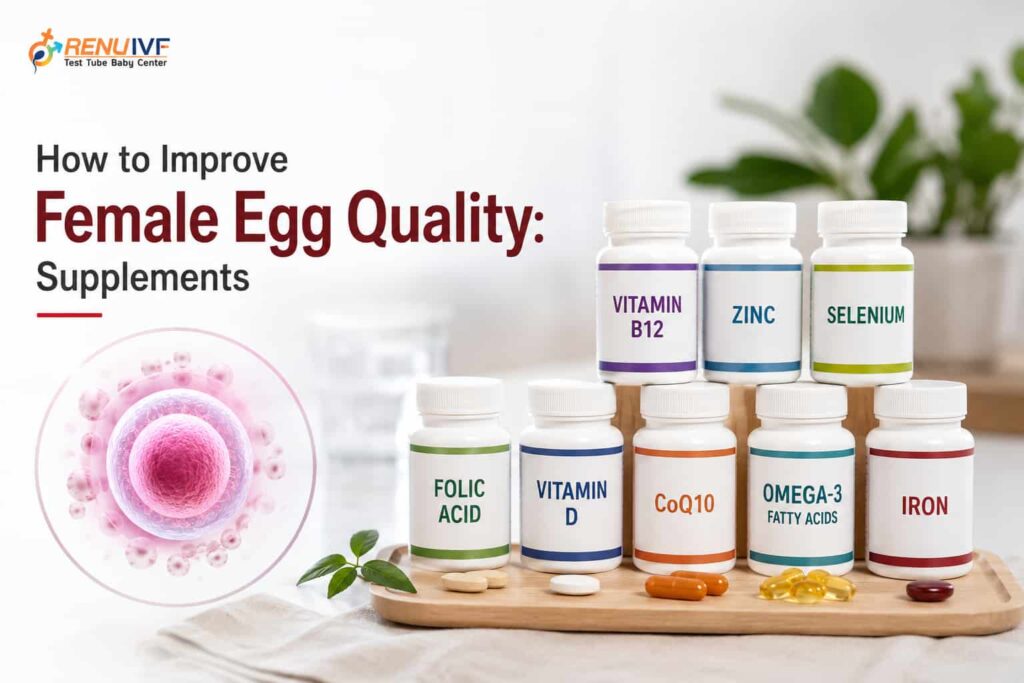
The right combination depends on your age, nutrition levels, and medical history self-prescribing supplements without guidance rarely helps and can sometimes do more harm than good.
How to Improve Egg Quality for Pregnancy
If you’re actively trying to conceive, ideally start preparing your body at least three months in advance. Here’s a simple checklist for how to improve egg quality for pregnancy:
- Book a preconception health check-up
- Get any chronic conditions under control
- Eat a nutrient-rich, balanced diet
- Stay physically active
- Maintain a healthy weight
- Take folic acid if your doctor advises it
- Keep stress levels in check
- Prioritize consistent sleep
- Track ovulation if recommended
- See a fertility specialist early if conception is delayed
Common Myths About Egg Quality and Egg Quantity
| Myth | Reality |
| More eggs always means better fertility | Fertility also depends on egg quality, sperm health, and other factors |
| Regular periods mean healthy eggs | Cycles can stay regular even as egg quality declines |
| Supplements alone fix every fertility issue | They may help in some cases but cannot reverse age-related decline |
| IVF fully overcomes poor egg quality | IVF improves the odds but doesn’t correct poor egg quality |
| Pregnancy after 35 is impossible | Many women conceive naturally or with treatment after 35 |
When Should You See a Fertility Specialist?
Don’t wait too long to get evaluated if conception isn’t happening as expected. Consider a consultation if:
- You’re under 35 and haven’t conceived after a year of trying
- You’re 35 or older and haven’t conceived after six months
- Your cycles are irregular
- You have PCOS or endometriosis
- You’ve had repeated miscarriages
- You’ve had ovarian surgery in the past
- There’s a family history of early menopause
- Your partner has a known fertility concern
Early evaluation almost always means more treatment options and better outcomes down the line.
Frequently Asked Questions (FAQs)
1. Does 4 follicles mean 4 eggs?
Not necessarily. Follicles are fluid-filled sacs that may contain a maturing egg, but not every follicle seen on an ultrasound will release a healthy, retrievable egg. During an IVF cycle, some follicles may be empty, too small, or contain an egg that isn’t mature enough to fertilize. So a follicle count gives an estimate, not a guarantee, of how many usable eggs will actually be retrieved.
2. Is IVF successful with poor egg quality?
IVF can still work with poor egg quality, but success rates are generally lower compared to cycles with healthy eggs. Poor-quality eggs are more likely to fail fertilization, produce weaker embryos, or lead to failed implantation. In such cases, doctors may recommend adjusted protocols, additional supplementation, or in some cases, donor eggs, depending on the individual’s age and ovarian response.
3. Does it really take 3 months to improve egg quality?
An egg takes around three months to mature before it’s released during ovulation. This is why doctors often recommend starting healthy habits diet, sleep, stress management, quitting smoking at least three months before trying to conceive. It’s not a guaranteed fix, but it gives lifestyle changes enough time to influence the egg that’s currently developing.
4. Can eggs fertilize after 24 hours in IVF?
Once an egg is retrieved, it generally needs to be fertilized within roughly 24 hours, as egg viability drops sharply after this window. In a natural cycle, an egg can survive for about 12–24 hours after ovulation before it’s no longer fertilizable. This is why timing is so tightly managed in both IVF labs and natural conception tracking.
Conclusion
Egg quality vs egg quantity isn’t a competition between two factors they work together, and both matter when it comes to your fertility journey. Egg quantity tells you how many chances you have; egg quality tells you how likely each of those chances is to succeed. Understanding this difference helps you interpret your fertility test results correctly and avoid unnecessary panic or false reassurance from a single number like AMH.
While age-related decline can’t be reversed, healthy habits, the right nutrition, stress management, and timely medical care can genuinely support your reproductive health. If you’ve been trying to conceive without success, or simply want clarity on where you stand, don’t wait to get evaluated.
At Renu IVF, recognized as a top IVF centre in Kanpur, our specialists offer personalized fertility evaluations, advanced diagnostic testing, and evidenc based treatment plans built around your specific situation whether the concern is egg quality, egg quantity, or both. With experienced doctors and a patient-first approach, Renu IVF is here to guide you confidently toward parenthood.